

The Houthis Turned Riyadh’s Airport Into a Battlefield. Three People Are Dead
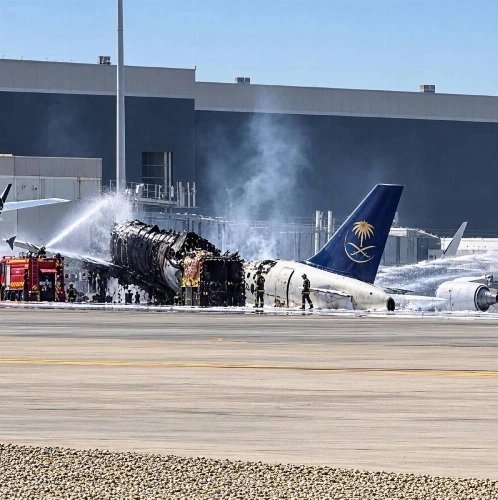
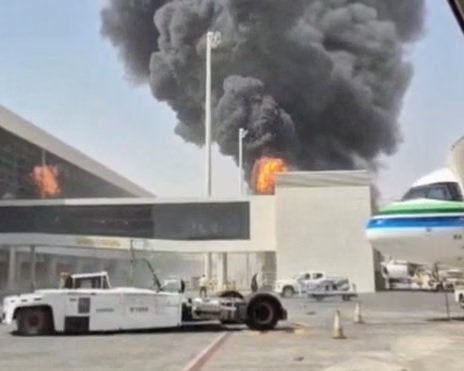
Three Saudi nationals were killed in attacks on Riyadh’s King Khalid International Airport on Thursday, October 8, Saudi aviation authorities said publicly, as missiles struck airport facilities and damaged an aircraft operated by national carrier Saudia. The Houthis claimed responsibility, but the public evidence available so far does not independently establish every detail of the attack or resolve conflicting descriptions of the weapons used.
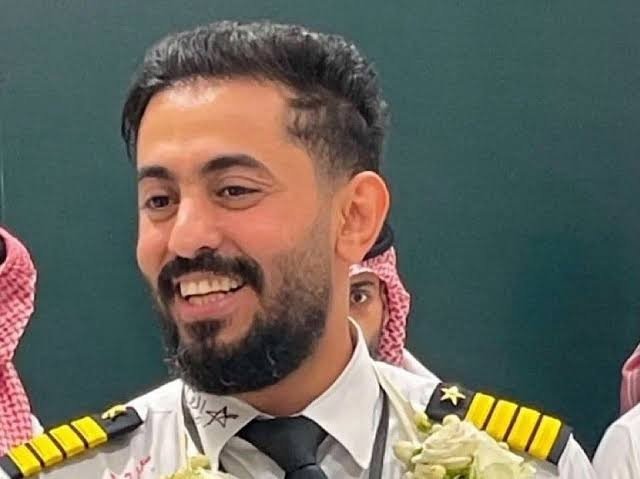
The deaths included Saudia pilot Captain Hamoud Ali Alkalthami, whom the airline identified in a statement. Several other people of different nationalities were injured, according to the General Authority of Civil Aviation, though a final consolidated injury count was not provided. Airport operations reportedly resumed. Reopening the airport, however, did not mean airlines had restored every service.
Also see: Omani Co-Pilot Interrogation Reveals Planned Attack
Also see: Plane Incident: Flydubai Pilot Attack on FZ1073
Two attacks, three deaths
The General Authority of Civil Aviation said the Thursday attacks involved airport facilities and a Saudia aircraft. The airline announced the death of Captain Alkalthami, describing his passing as connected to an “incident” at Riyadh airport. The available statement does not establish the precise circumstances in which he was killed or whether he was aboard the damaged aircraft.
The Houthis, an armed movement based in Yemen, publicly claimed attacks against Riyadh. Contemporaneous reports also described the weapons differently: one account referred to a ballistic missile, while another attributed a claim involving two cruise missiles to the group.
Saudi authorities separately reported that debris from an intercepted ballistic missile fell in Riyadh on Thursday, damaging a kindergarten and a medical clinic complex. Civil Defence said response teams attended the scene.
Earlier in the same week, Saudi authorities had reported three civilian deaths and 36 injuries in separate attacks involving Abha and King Khalid airports. Adding those figures may indicate the scale of the week’s violence.
Also see: Mecca Under Attack? Saudi Says Houthi Drone Intercepted
Flights disrupted beyond the runway
The airport reportedly resumed operations at 6 p.m. local time on October 8, according to a report of Saudi state television’s announcement. That was an operational update, not proof that every airline considered the route safe or returned to its normal timetable. Several carriers suspended or cancelled services to Riyadh and other Saudi destinations.
The European Union Aviation Safety Agency had already issued a Saudi-airspace conflict-zone bulletin on September 30, before the fatal October 8 incident. Its published notice was listed as active and valid until November 16, unless reviewed earlier. After the attacks, the agency expanded its warning to include northwestern Saudi Arabia, citing the increased risk from missile activity.
Also see: Terrorism in Pakistan Hits a New Peak as Masood Azhar Case Exposes a Deeper Security Crisis
A wider war, not an isolated runway incident
The airport attacks came as fighting intensified across Yemen. On October 9, United Nations Special Envoy Hans Grundberg told the Security Council that Yemen had “slid back into full-scale war,” with hostilities spreading across multiple frontlines. He cited fighting around Taiz and Lahj and in Marib, al-Jawf and Hajjah, following advances by Ansar Allah, the name used by the Houthi movement and a counteroffensive launched by Yemen’s internationally recognised government.
Saudi-led coalition forces said they had destroyed three rocket-launch platforms used by the Houthis. Saudi airstrikes were also reported in Sanaa, the Yemeni capital, as the conflict escalated.
For now, the strongest verified account is stark enough without embellishment: Saudi authorities reported three deaths, an airline aircraft was damaged, other people were injured, and the Houthis claimed responsibility. The airport’s reopening restored a facility, not certainty. The next decisive evidence will be an official incident record, a technical assessment or independently verified findings that resolve the unanswered questions.
Also see: Sri Lanka Had the Warnings. So Who the Hell Let Easter Sunday Happen?
Also see: Russian Ballistic Missile Strike on Kyiv Kills Two as Attacks Intensify Across Ukraine