
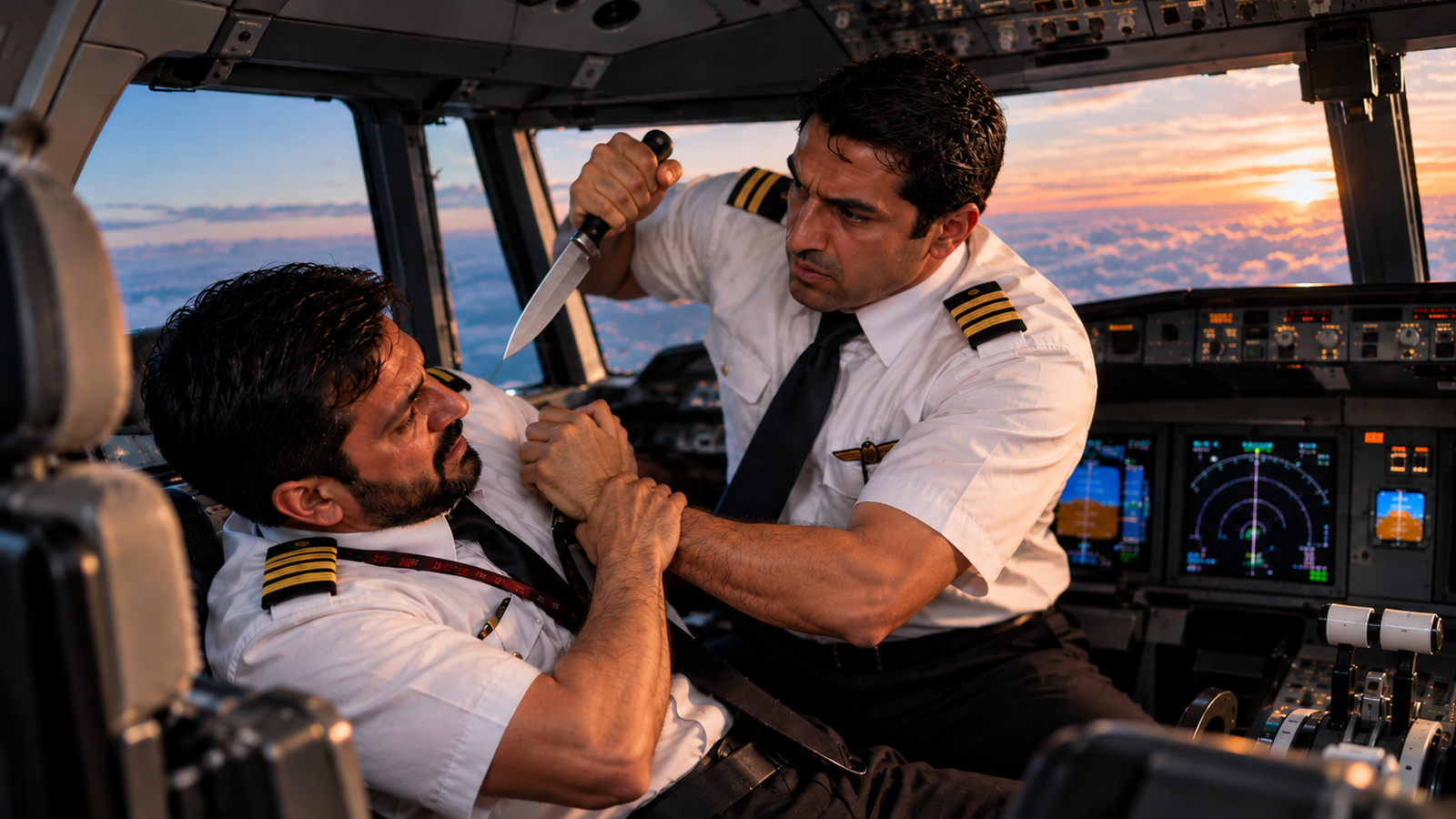
A cockpit fight turned a routine Flydubai plane journey from Dubai to Tel Aviv into an emergency on September 30, after the unidentified Omani first officer allegedly stabbed Captain Smit Machchhar and tried to take control of the aircraft, according to Israeli officials. The claim has not been independently established in a completed investigation, but the confrontation, rapid descent and emergency diversion are confirmed by the airline, aviation authorities, passenger accounts and flight-tracking data.
The first officer remains unnamed. Authorities have identified him as an Omani national, but no reliable official source has released his full name, age, previous airline, flight-training history or total flying hours. Reports attempting to fill those gaps have not produced a verified identity.
What happened inside the cockpit
Flight FZ1073 was operating from Dubai International Airport to Ben Gurion International Airport with 174 people aboard, according to official and government accounts. During the flight, an altercation erupted in the cockpit. Flydubai initially described it only as an “altercation” and said the aircraft was subsequently secured by off-duty crew members travelling as passengers. The UAE General Civil Aviation Authority called it a security incident and said it was brought under control.
Also see: Goldy Brar: FBI Most Wanted With $1 Million Reward
Also see: Jaipur Murder: Pregnant Woman Found Buried in Garden
Also see: Sri Lanka Had the Warnings. So Who the Hell Let Easter Sunday Happen?
Israeli officials gave a more specific account. They said the Omani co-pilot stabbed Machchhar and attempted to crash the plane. The aircraft plunged almost 14,000 feet in less than 30 seconds during the struggle. Flight-tracking data independently shows an extreme descent.
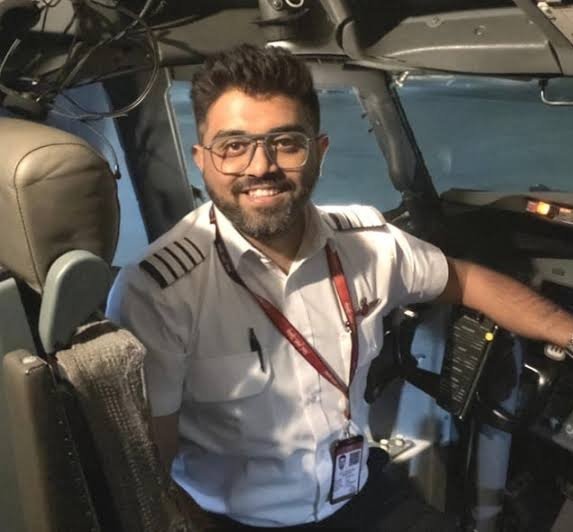
Machchhar was seriously injured but apparently remained capable of reaching the cockpit door. Passenger accounts say he managed to open it, allowing people in the cabin to intervene. Passengers and crew then entered the cockpit and restrained the other pilot. Additional Flydubai pilots travelling on the plane took control and diverted the aircraft to Tabuk, Saudi Arabia.
Available evidence does not show that the Omani pilot “lost control” of the plane. It shows a cockpit confrontation followed by a rapid descent, physical intervention and a diversion. But the exact control inputs, order of actions and pilot’s intention have not been established publicly.
Also see: Travis Kelce Named Victim in $35 Million Fraud Case
Also see: Mecca Under Attack? Saudi Says Houthi Drone Intercepted
The missing identity
The Omani first officer is the central unanswered question. Public reporting has described him as relatively new to Flydubai, with one colleague reportedly saying he had joined the airline roughly eight or nine months before the incident. That account has not been matched publicly with an employment record released by the airline. No verified public biography has established where he trained, which airline he previously worked for, when he obtained his licences or how many hours he had flown.
A colleague also alleged that the first officer displayed unusually strict religious behaviour, including frequent prayer and refusing to shake hands with women. That account is single-sourced and does not establish extremist ideology, terrorist affiliation or motive. Flydubai has warned against premature speculation and said the reasons for the incident remained unknown.
Omani nationality is a fact reported by Israeli officials. A religious description from an unnamed colleague is an allegation. A terrorist motive is an Israeli characterization under investigation and not a completed finding.

The plane’s descent is key evidence
The aircraft’s flight path provides a measurable record of the crisis. The plane transmitted emergency squawk code 7700, associated with a general emergency and later 7500, associated with unlawful interference, before returning to an emergency state. Flight-tracking data shows the aircraft diverting toward Tabuk after the cockpit incident.
The aircraft landed safely at Prince Sultan bin Abdulaziz International Airport in Tabuk. Both pilots were taken to hospital. Passengers were later transferred toward Israel on another aircraft. Flydubai subsequently suspended flights to and from Israel while the investigation continued.
Physical evidence could answer questions eyewitnesses cannot. Investigators can examine the cockpit voice recorder, flight-data recorder, autopilot status, control inputs, cockpit damage and any weapon recovered after landing. Those records could establish whether the descent was deliberately commanded, how control changed during the struggle and what happened immediately before the aircraft began losing altitude.
What remains unknown
The biggest gaps concern the Omani first officer. His identity has not been reliably disclosed. His employment and aviation history remain largely unavailable. The origin of the weapon has not been publicly established. Nor has any official investigation publicly explained why the confrontation began, whether the attack was planned or whether anyone else was involved.
There is also an unresolved security question: how was an Omani national assigned to operate a flight bound for Israel? That does not itself imply wrongdoing, but investigators can verify it through crew manifests, airline security records, clearance documentation and licensing records.
For now, the evidence supports a narrower conclusion than some early descriptions. A Flydubai plane suffered a violent cockpit security incident; Captain Smit Machchhar was injured; the Omani first officer was accused of attacking him and attempting to crash the aircraft; passengers and additional crew intervened; and the plane landed safely in Saudi Arabia.
The person at the centre of the confrontation, however, remains a blank space in the public record. Until investigators release his identity, background and evidence explaining his actions, the most unsettling fact is also the simplest: the passengers know who was in the cockpit, but the public still does not know who the other pilot was.
Also see: Terrorism in Pakistan Hits a New Peak as Masood Azhar Case Exposes a Deeper Security Crisis
Also see: 261 Rapes, 762 Molestations and the Pain No Prison Sentence Can Erase
Also see: Delhi Building Collapse Kills 7, 45 Students Were Inside’