

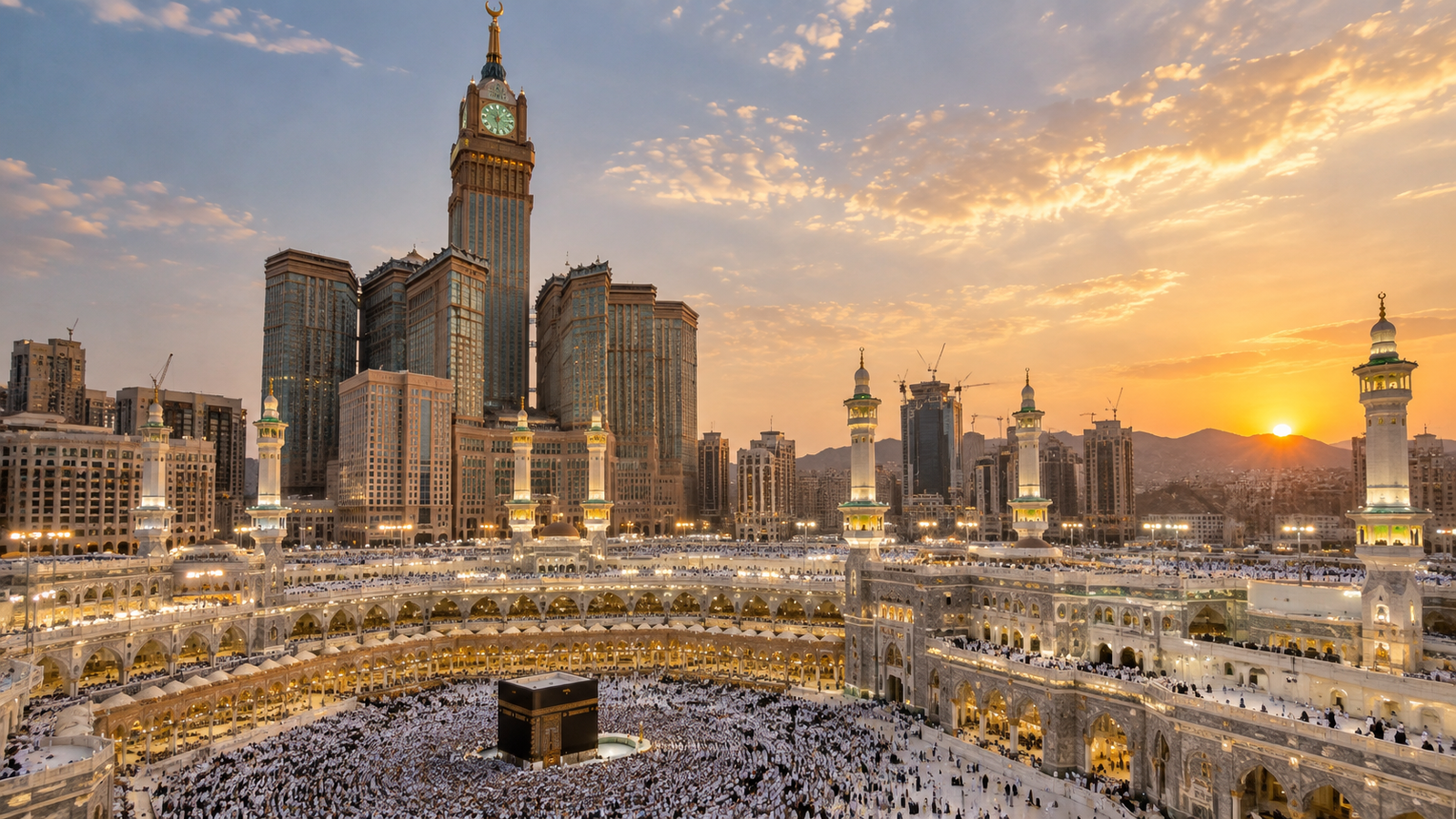
Saudi Arabia said its air defences intercepted and destroyed a Houthi drone south of Mecca on Tuesday evening, before it entered the restricted airspace of Islam’s holiest city. The claim came hours after Saudi authorities activated an emergency warning in Mecca, adding a new layer to an escalating series of attacks involving Saudi territory and Yemen.
According to Brig Gen Turki al-Maliki, spokesman for the Saudi-led coalition, the interception occurred at 6:50 p.m. on September 15. He said the drone had been launched by the Houthis and was destroyed south of Mecca before crossing into the prohibited area. Saudi authorities have not publicly released the drone’s model, launch coordinates, flight path, payload or physical evidence establishing where it originated.
The Saudi account makes Mecca the intended destination. That point is not independently established. A Houthi political-bureau member, Mohammed al-Farah, rejected the allegation, saying that claims of an attack on Mecca from Yemen were false and had no basis. The denial was published by Yemen’s SABA news agency.

Photo credit: Saudi Ministry of Defense
Also see: UAE Iran BRICS Meeting Opens a New Diplomatic Channel in New Delhi
Also see: World Map Distortion: Why Country Sizes Look Wrong
Also see:South China Sea: China Warned Philippines Mid-Speech
Mecca warning came before interception claim
Saudi Civil Defense issued an early-warning alert for Mecca on September 15, alongside warnings for Jeddah and Taif. The alerts were lifted within minutes. The authority did not initially disclose what danger had triggered the warning.
The timing is significant for verification, but it does not prove that the warning and the later-reported drone interception involved the same object. The public evidence establishes the alert and the subsequent Saudi military statement, while leaving the connection between them dependent on the official account.
The episode also differs from a confirmed strike on Mecca. Saudi Arabia says the drone was intercepted before entering the city’s prohibited airspace. There is no evidence in the available record that the Grand Mosque or other sites in Mecca were hit, nor that the drone reached the city.
Also see: Trump-Xi summit ends with modest trade signals as deeper US-China tensions persist
Also see: Trump and Xi Strike Tone in Beijing as US-China Tensions Simmer
A disputed history of attacks near Mecca
Al-Maliki described the September incident as the second Houthi attempt to target Mecca, following a ballistic-missile launch on July 27, 2017. The historical record, however, is more complicated.
In October 2016, Saudi authorities said a ballistic missile had been launched toward Mecca and was intercepted about 65 kilometres from the city. Houthi sources disputed the intended target, saying the missile was aimed at Jeddah airport. The Organisation of Islamic Cooperation later formally described the 2016 launch as an attack directed toward Makkah.
In July 2017, another missile was intercepted about 69 kilometres from Mecca. Saudi authorities said it was headed toward the holy city, while Houthi sources said it was aimed at King Fahd Air Base in Taif. A subsequent technical assessment by the Center for Strategic and International Studies said the intended target remained uncertain.

Photo credit: IRNA
That history makes the phrase “second attempt” dependent on how the earlier incidents are classified. If the disputed 2016 launch is counted as an attempted attack on Mecca, the September 2026 incident would not be the second such episode in the historical record.
Escalation around Saudi territory
The Mecca incident came after several days of attacks involving Saudi Arabia and the Houthis. Saudi authorities said attacks on Khamis Mushait, Abha and Taif on September 14 injured 13 civilians and damaged seven homes and two vehicles.
The wider escalation provides context for the Mecca alert, but it does not establish that the drone was launched as part of the same operation. Nor does the evidence reviewed establish the drone’s exact route or intended impact point.
The Organisation of Islamic Cooperation issued a statement on September 16 condemning what it described as Houthi attacks on the Makkah and Madinah region. That statement records the organization’s position, but it does not independently establish the drone’s origin or intended target.
For now, the strongest verified finding is narrower than the headline claim. Saudi Arabia says a Houthi drone was intercepted south of Mecca before entering restricted airspace, and Saudi authorities did issue an emergency warning in the city. The Houthis deny targeting Mecca. No independent imagery or wreckage analysis has been publicly documented. The unresolved questions are the drone’s origin, flight path and intended destination, and those details will determine whether the incident can be independently established as an attempted attack on the holy city.
Also see: DOLLY PARTON’s Final Curtain: The Woman Who Became an Icon
Also see: From Sexual Harassment Allegations to Anti-Feminism Remarks: Elon Musk Faces Fresh Scrutiny
Also see: ISRO Launches EOS-05, Expanding India’s Space Reach
Also see: The $48.8 Billion Enterprise AI Boom Is Here. Most Businesses Aren’t Ready