
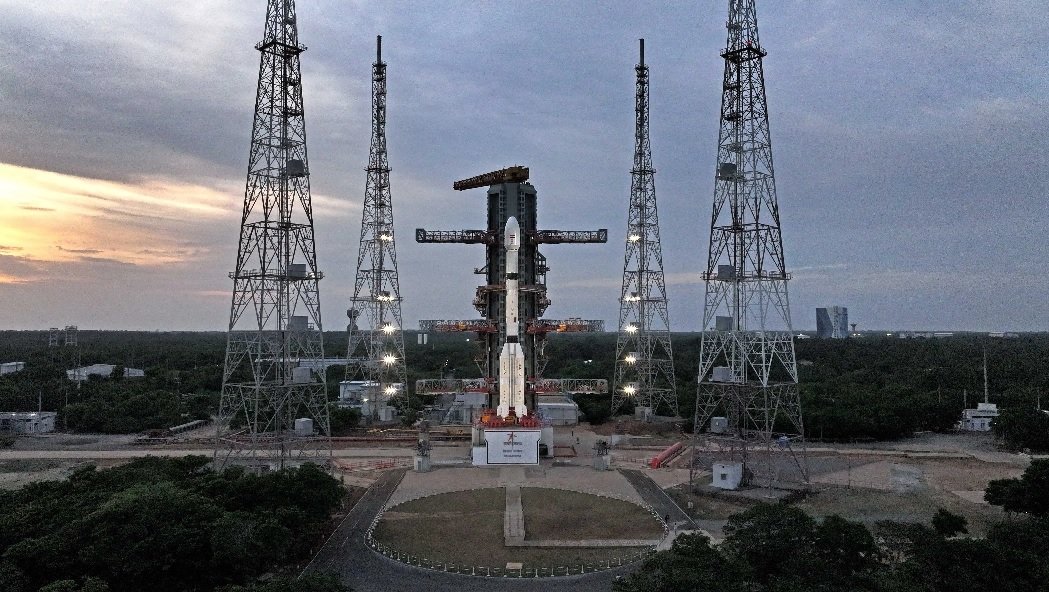
ISRO has finally broken its 2026 launch drought. The Indian Space Research Organisation’s GSLV-F17 lifted off from the Second Launch Pad at Satish Dhawan Space Centre, Sriharikota, at 2:55 am on September 4 carrying the 2,367-kg EOS-05 Earth observation satellite. About 18 minutes later, the spacecraft was injected into a Sub-Geosynchronous Transfer Orbit. It has not yet reached its final geosynchronous operating position.
EOS-05 is designed to become India’s first dedicated imaging satellite operating from geosynchronous orbit, roughly 36,000 km above Earth. From there, it can repeatedly observe a broad region instead of waiting for a low-Earth-orbit satellite to pass overhead. ISRO says the spacecraft will support real-time imagery for agriculture and disaster management, while officials have also pointed to strategic applications.
Read updates on: GSLV-F17
Watch the live launch: GSLV-F17/EOS-05 Mission – Launch Streaming
Also see: Aule Space: India’s ‘Power Bank’ for Satellites
THE ROCKET PASSED ITS HARDEST EXAM, AFTER A ROUGH HISTORY
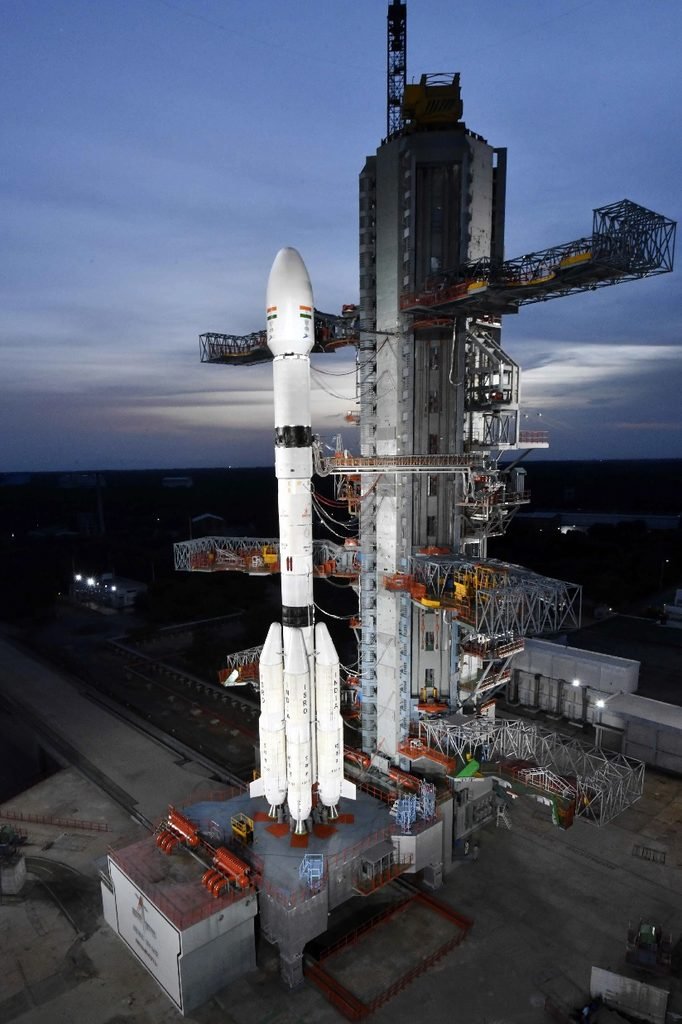
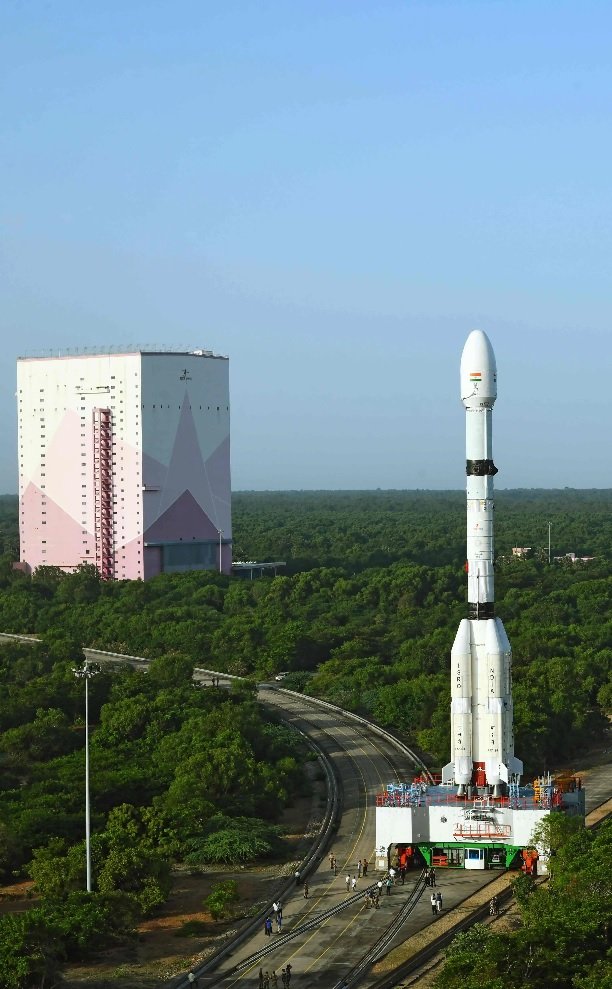
GSLV-F17 is the 19th flight of India’s Geosynchronous Satellite Launch Vehicle. ISRO’s launch record shows that six of the first 18 GSLV missions did not achieve full success: four were unsuccessful and two were partial successes. The recent record is stronger. GSLV-F12, F14 and F16 successfully placed their payloads into intended orbits before F17. The F17 mission is therefore another successful GSLV flight.
In the past, on August 12, 2021, GSLV-F10 carrying EOS-03, also known as GISAT-1, failed when the cryogenic upper stage did not ignite. ISRO’s Failure Analysis Committee found that a deviation in cryogenic-stage performance began at 297.3 seconds and the onboard computer aborted the mission at 307 seconds. The committee linked the failure to abnormal liquid-hydrogen tank pressure and recommended simulations and ground tests.
The rocket is 51.7 metres tall, weighs 420.5 tonnes at liftoff and uses three stages, including a CUS15 cryogenic upper stage. The official mission brochure puts the nominal Sub-GTO perigee at 170 km and apogee at 28,934 km, with an inclination of 19.28 degrees. The approximately 2,367-kg spacecraft is the heaviest payload GSLV has carried into a GTO or Sub-GTO orbit, according to Mission Director Thomas Kurien. He called the spacecraft uniquely configured for near-real-time imaging.
The technical milestone comes with a caveat. EOS-05 was injected into a transfer orbit, not directly into the final geosynchronous orbit. ISRO says orbit-raising manoeuvres will follow. Only after those manoeuvres will the spacecraft occupy its operational geo platform. Reports that describe it as already “in geosynchronous orbit” blur an important part of the mission sequence.
Also see: 50-Year Search Ends as Scientists Confirm Wind Blowing From Milky Way’s Central Black Hole
Also see: AI Debt Panic Wipes $600 Billion Off SpaceX
Also see: Artemis II Moon Mission: NASA Sends Humans Back After 50 Years
Also see: Prada and Axiom Unveil Lunar Cooling Garment for NASA Moon Missions
THE SUCCESS ALSO COMES AFTER TWO VERY DIFFERENT FAILURES
The timing is important because ISRO’s recent launch record has not been spotless. On May 18, 2025, PSLV-C61 carrying EOS-09 encountered an anomaly during its third stage and failed to accomplish the mission. ISRO later said a national level committee investigated the failure; modified HPS3 hardware underwent static tests in October and November 2025.
Then came PSLV-C62/EOS-N1 on January 12, 2026. The mission encountered an anomaly during the end of the PS3 stage and failed. ISRO again said, a national-level expert committee is reviewing the reason for the anomaly. The January failure preceded the gap before F17, making this ISRO’s first successful mission of 2026.
There is another reliability issue that rarely fits the celebratory version. GSLV-F15 successfully delivered NVS-02 into its transfer orbit on January 29, 2025, but the satellite could not perform its orbit-raising manoeuvres. An ISRO apex committee later concluded that the drive signal did not reach a pyro valve in the oxidizer line, most likely because contacts in both the main and redundant connector paths had disengaged. ISRO said corrective measures were incorporated into CMS-03.
Also see: September Full Moon 2026: Saturn, Neptune and More
Also see: The $48.8 Billion Enterprise AI Boom Is Here. Most Businesses Aren’t Ready
THE “EYE IN THE SKY” COULD CHANGE HOW INDIA WATCHES DISASTERS; AND ITS BORDERS
EOS-05’s value is temporal rather than simply photographic. A satellite that repeatedly views the same broad region can be useful during cyclones, floods, forest fires, cloudbursts and fast-moving environmental events. ISRO’s wider Earth-observation programme already supplies data for agriculture, water resources, urban planning, forestry, mineral prospecting and disaster management. EOS-05 adds a geosynchronous vantage point.
The strategic dimension is harder to quantify publicly. Defence reporting has focused on persistent monitoring of India’s borders and strategic areas, but detailed tasking, resolution and data-access arrangements are not fully disclosed in the launch material. The satellite’s existence does not automatically mean continuous, high-resolution surveillance of every border sector.
Prime Minister Narendra Modi called the mission “an outstanding achievement” and a “proud moment” for the nation. ISRO Chairman V. Narayanan said, “The health of the satellite is perfectly alright.” He also described EOS-05 as the first EOS intended for the geo platform for national activities.
There is an economic story here too. India’s Department of Space received ₹13,705.63 crore in the 2026-27 Union Budget, while the government said private investment in the space sector had reached $618.5 million by March 31, 2026. A successful mission strengthens the case for a larger domestic space ecosystem, but it also raises the bar for reliability, data utilisation and commercial returns.
Its value depends on commissioning and reliable delivery of usable imagery at scale. The next milestone is not the launch photograph. It is the orbit-raising sequence, commissioning and actual delivery of usable imagery. If EOS-05 reaches its intended operational position and performs as designed, ISRO will have done more than just a stage dramatic pre-dawn launch: it will have closed a five year technological loop that began with the loss of EOS-03 in 2021.
Also see: US Army Chief Forced Out Amid War: Pentagon Alarm
Also see: Michael Dell Pentagon Contract Follows $6.25 Billion Donation
Also see: India Rebukes Pakistan at UN, Reasserts Kashmir Claim Amid Fresh Row Over Gilgit-Baltistan Elections
Also see: G7 Summit 2026: Modi Calls for Trust and Cooperation as Global Leaders Meet in France
Also see: France Economic Slowdown: Job Market Concerns & Reform Urgency