
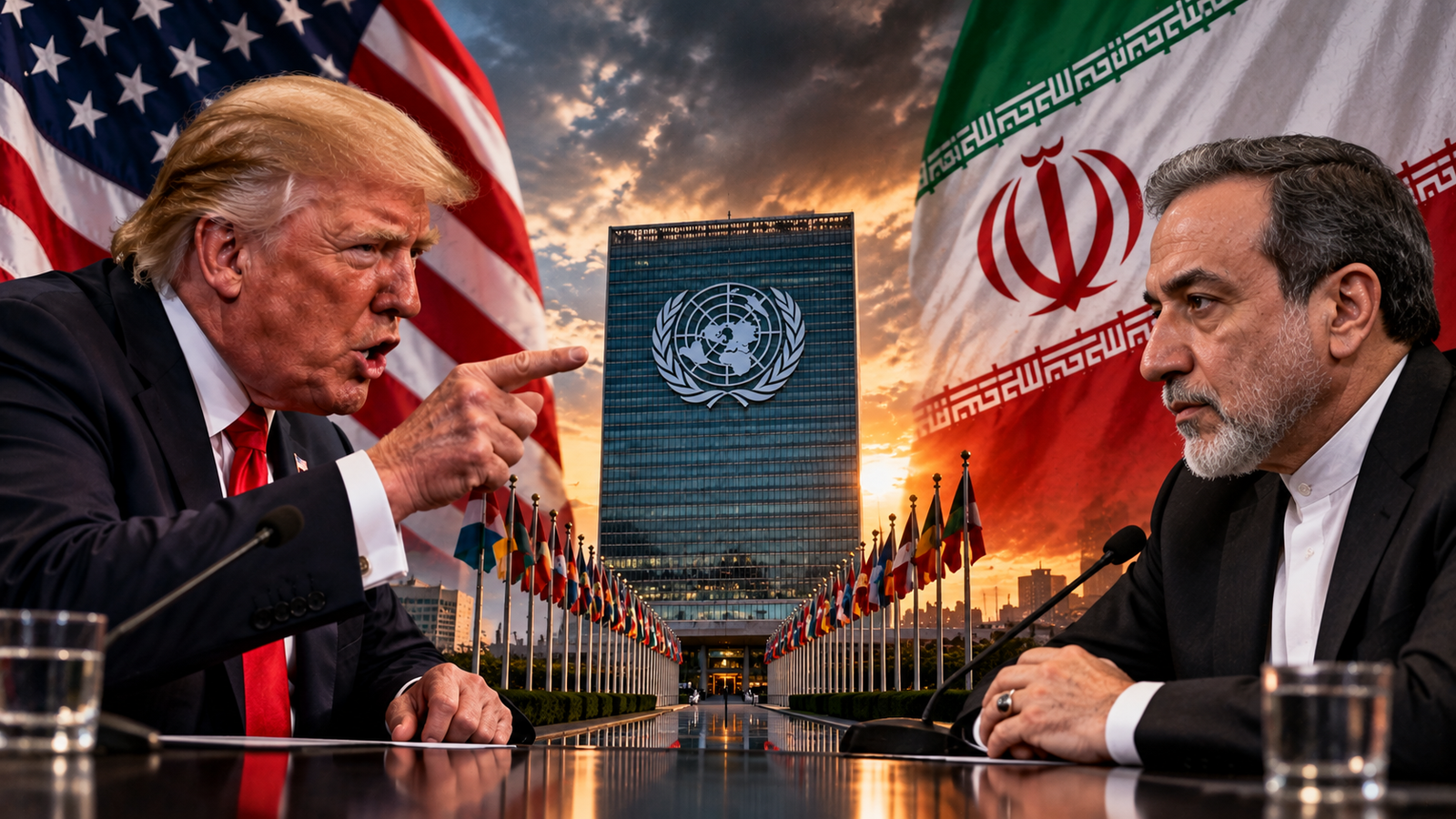
U.S. President Donald Trump threatened at the United Nations to “annihilate” Iran on September 22, then disclosed hours later that representatives had spent three hours discussing a possible deal in New York. The same day produced two sharply different messages: Trump presented Iran with what he called “potential greatness or obliteration,” while his envoys pursued a diplomatic channel that both sides left open for further discussions.
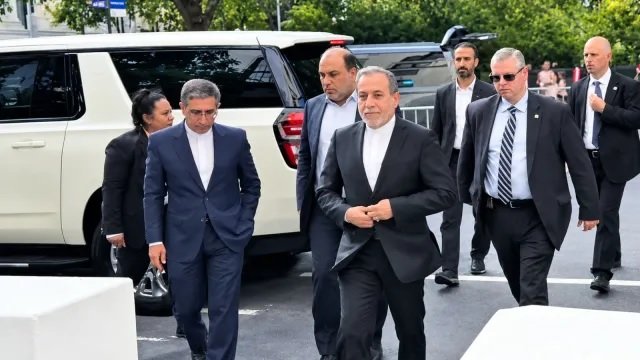
The Trump Iran talks took place on the sidelines of the 81st United Nations General Assembly, where Iranian Foreign Minister Abbas Araghchi conveyed Tehran’s conditions through the negotiating process. Trump said the meeting was “very good” and “very productive” and that another meeting was scheduled “in the very near future.”
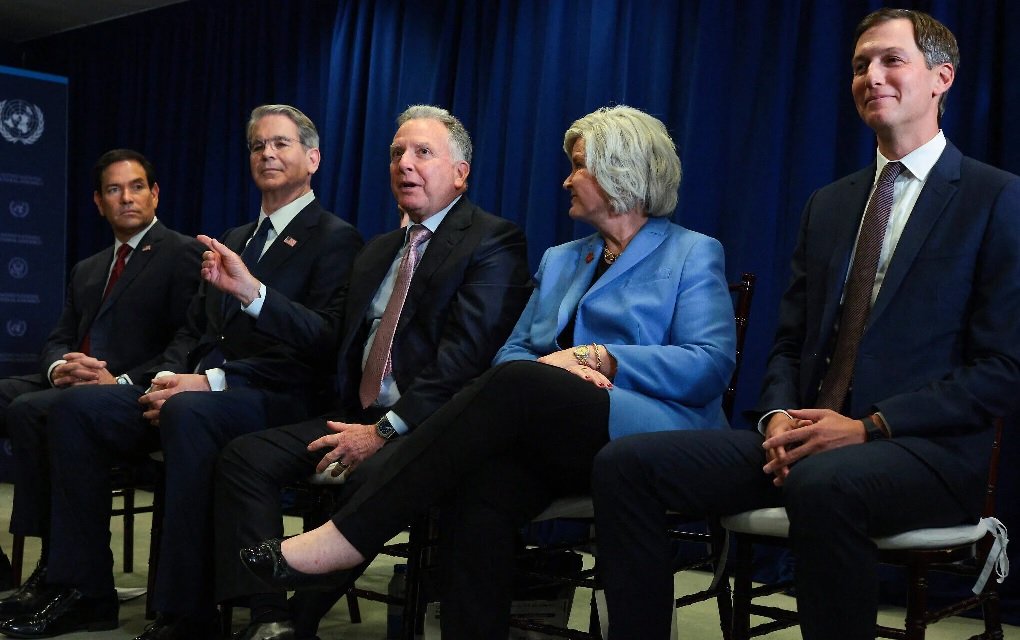
The central detail remains unclear. Trump said his special envoy Steve Witkoff and Jared Kushner, his son-in-law and adviser, met Iranian officials. Witkoff later described the contact differently, saying the American side had engaged the Iranian delegation “through the mediators, who shuttled between the two sides throughout the day.” That distinction means the contact was not necessarily a direct negotiation between the two delegations.
Also read: Strait of Hormuz: US Strikes Iran, Trump Warns Tehran
Also read: Trump-Netanyahu Rift Explodes Over Lebanon Strikes as Iran Talks Stall
Also read: Months After $6.25 Billion Trump-Linked Donation, Dell Lands $9.7 Billion Pentagon Deal
Trump’s language shifts from deal to destruction
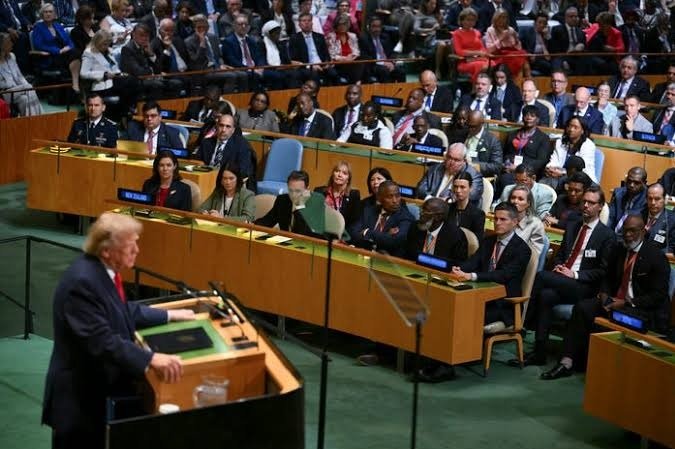
Trump’s UN speech put the threat before the diplomacy. He described Iran as “the number one sponsor of terror” and said the “fanatical Iranian regime” ruled “by bloodshed and mass murder,” accusing it of spreading “death and carnage and chaos.” He also said Iran had been “the bully of the Middle East,” but “is the bully no more.”
Trump then framed the decision in stark terms. “Will a deal be made with Iran that lets them rebuild and create a far greater country than it ever was before,” he asked, “or do I annihilate the Islamic Republic and do it quickly?” He followed with another threat: “Do I drive them into hell with no chance of survival and no hope of future greatness or generations?”
Yet the same speech included a prediction of diplomacy. Trump said, “I believe we’ll make a deal right after the election,” referring to the U.S. midterm elections scheduled for November 3. He said Iran was waiting to see how Republicans performed, while insisting the election did not influence his Iran policy.
Addressing claims that American forces were running short of ammunition, Trump called those making the claim “cowards and traitors” and said the United States had “more munitions than we could ever possibly think of using.” A Pentagon inspector general report issued shortly before the speech had said munitions expenditure during Operation Epic Fury had produced “strategic inventory shortfalls” and exposed industrial-base bottlenecks. Trump’s statement and the Pentagon finding therefore describe the stockpile situation differently.
Also read: Trump Yet to Approve Proposed U.S.-Iran 60-Day Ceasefire Deal as Nuclear Talks Intensify
Also read: Trump Pauses Planned Iran Strike After Gulf Pressure as Oil, Security Fears Mount
Also read: Trump Pauses Planned Iran Strike After Gulf Pressure as Oil, Security Fears Mount
What Iran brought to the UN channel
The diplomatic contact had a concrete subject beyond general calls for peace: the Strait of Hormuz. Iranian state media reported that Araghchi conveyed Tehran’s conditions for reopening the strategic waterway. They included immediate lifting of the U.S. naval blockade, release of frozen Iranian assets and an end to the war across what Tehran describes as its “resistance” fronts.
Those demands connect the UN discussions to the conflict’s most important economic pressure point. The Strait of Hormuz carried about one-fifth of global oil and liquefied natural-gas supplies before the war. Disruption there has affected shipping, energy prices and supply chains.
The war began on February 28, when U.S. and Israeli forces launched strikes against Iran. A June 17 interim agreement created a 60-day framework for negotiations over a permanent truce, Iran’s nuclear program and the reopening of Hormuz. By late June, renewed strikes had threatened that arrangement, and the two governments agreed to halt fresh hostilities and resume talks.
The September encounter is another attempt to reopen diplomacy after repeated military escalation and fragile ceasefire arrangements. The United States had also permitted Iran’s senior delegation, including President Masoud Pezeshkian and Araghchi, to attend the UN gathering despite the ongoing conflict.
Also read: The Internet Is Not in the Cloud… It’s Sitting on the Ocean Floor
Also read: Merchant Discount Rate on Select UPI Payments Explained
Also read: Ed Sheeran Cut Macklemore Over Palestine: Tour Fallout
Official White House Photo
The contradictions inside one day
The most striking contradiction is between the public language and the private diplomatic track. Trump described annihilation as one possible outcome while simultaneously saying a deal was likely. He also said the Iranian delegation was “not the highest level, but it’s something,” showing Washington did not regard it as a leader-level negotiation.
There is a second discrepancy over how the meeting occurred. Trump’s account suggested direct contact by Witkoff and Kushner with Iranian officials. Witkoff’s own account said mediators moved between the sides. Public reporting did not establish a complete list of participants or provide a transcript of the three-hour discussions.
There was also no announced agreement on September 22. Trump said momentum existed and that another meeting was expected, but the terms of any settlement remained unresolved. Iran’s reported conditions on Hormuz, frozen assets and the wider war were still far from a completed agreement.
The next diplomatic marker is clearer than the outcome. Iran’s President Masoud Pezeshkian was scheduled to address the General Assembly on September 23, while the U.S. and Iranian sides were expected to continue using mediators. The record contains both the harshest language of the confrontation and evidence that communication has not stopped.
Trump’s message to Iran was therefore not simply a threat or an offer. It was both, delivered within hours of the same diplomatic contact. The question is whether the next meeting turns that contact into negotiated terms on the nuclear program, sanctions, Hormuz and the war, or leaves “obliteration” as the louder side of the equation.
Also read: Travis Kelce Named Victim in $35 Million Fraud Case
Also read: What Is Reliance Intelligence? Ambani’s AI Plan Explained
Also read: Spiritual Tech Is Turning Faith Into a Global Digital Market