
BENGALURU: A satellite can be fully functional and still be forced into retirement for one blunt reason: it runs out of propellant. A Bengaluru startup now wants to put a small spacecraft behind those ageing assets and keep them in orbit for years.
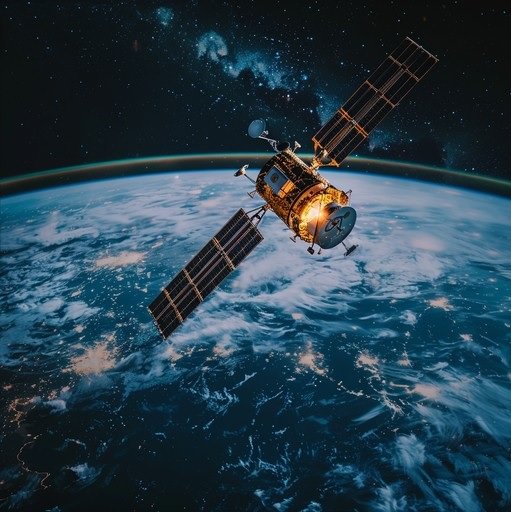
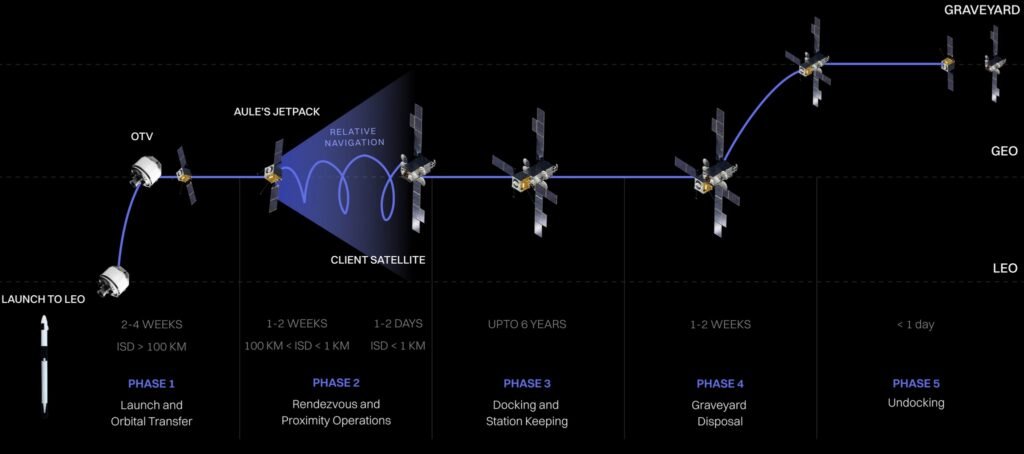
Aule Space is developing autonomous “jetpack” satellites that would fly to existing spacecraft, latch on and take over station-keeping. The company says each jetpack could extend a satellite’s operational life by up to five years, potentially protecting communications assets that can cost more than $300 million to build.
What exactly is Aule Space trying to attach to?
The idea is not a refuelling tanker. Aule’s spacecraft would bring its own propulsion system and remain attached to the client satellite. CEO Jay Panchal described the concept as satellites that can dock with spacecraft “which don’t have any installed ports” and extend their life so they can keep generating revenue. “It’s like a power bank,” he said.
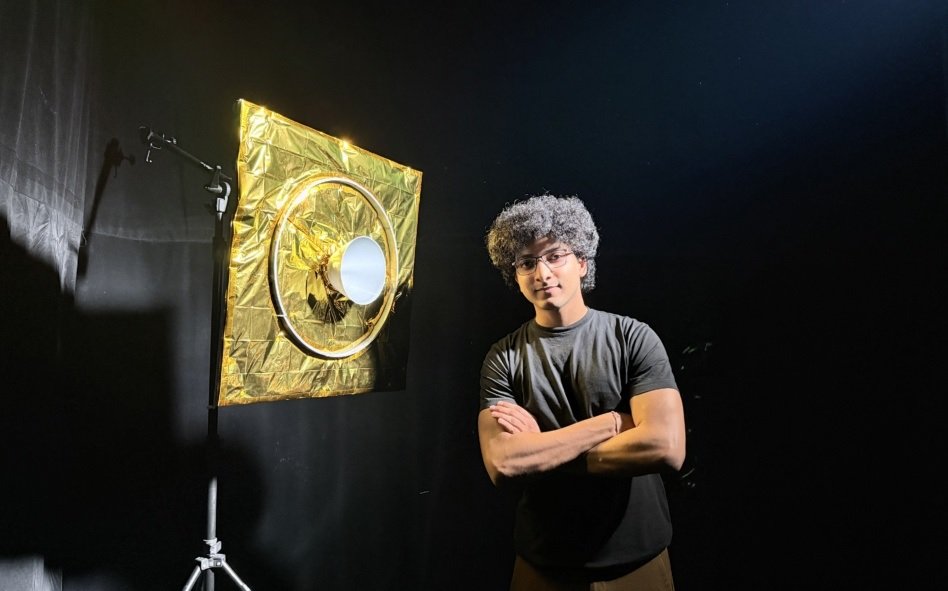
The distinction matters. Conventional satellite servicing often assumes some form of cooperation or a prepared interface. Aule is targeting legacy geostationary communications satellites that were never designed to receive a servicing spacecraft. Its proposed jetpack would use the liquid apogee motor nozzle, or LAM nozzle, as the attachment point.
That puts the hardest engineering problem at the centre of the business: getting close enough to a moving spacecraft, identifying its geometry, matching its motion and attaching without damaging either vehicle. Aule says its approach is built around non-cooperative rendezvous, proximity operations and docking, or RPOD, combined with autonomous guidance, navigation and control.
Also see: AI Debt Panic Wipes $600 Billion Off SpaceX
Also see: Prada and Axiom Unveil Lunar Cooling Garment for NASA Moon Missions
Also see: Astronomers Say Six Red Dwarf Stars May Have Consumed Rocky Planets
Did India’s SpaDeX mission make this possible?
The timing is also significant. India has spent the past two years building and demonstrating its own docking capability through ISRO’s SpaDeX programme. ISRO first docked the two SpaDeX spacecraft on January 16, 2025, then successfully undocked them on March 13. On April 20 and 21, ISRO carried out a second autonomous docking and demonstrated power transfer between the spacecraft for about four minutes.
SpaDeX was not a commercial servicing mission, but it created a national test bed for technologies that future servicing systems need. ISRO says docking technology is important for future applications including in-space robotics and that the mission was designed to demonstrate power transfer as well as rendezvous, docking and undocking.
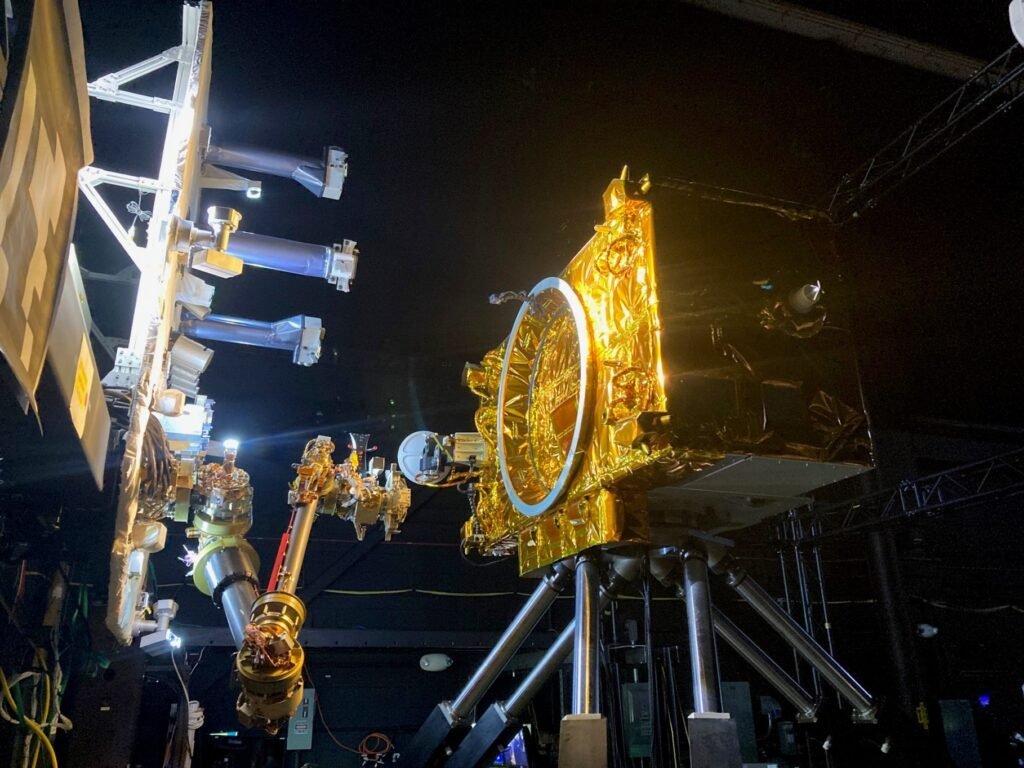
Aule says it has now tested its camera-based guidance, navigation and control system at the Rendezvous Simulation Laboratory inside ISRO’s ISITE facility. Panchal said that Aule was “the first non-govt entity to access RSL.” That is a significant claim, but the company’s statement should be distinguished from an independently published ISRO confirmation; no public ISRO release reviewed for this report independently verifies the “first” designation.
The company’s navigation architecture is also unusual. Instead of combining LiDAR, infrared cameras and several specialised sensors, Aule says its final approach will rely on a single optical camera with onboard AI. Its visual-navigation models are trained using data generated in Aule’s own facilities and then validated at the ISRO testbed.
Also see: Total Solar Eclipse 2026 Set for Europe
Also see: Artemis II Moon Mission: NASA Sends Humans Back After 50 Years
Also see: Strawberry Moon 2026: When to See June’s Rare Full Moon
Is Aule really building the world’s first private camera-only docking mission?
The technology, however, is not being invented in a vacuum. Optical navigation for non-cooperative spacecraft has been studied and flight-tested internationally for years. A 2012 DLR report documented the ARGON experiment on the PRISMA mission, which demonstrated non-cooperative rendezvous using optical angles-only measurements. Research has also explored monocular-camera pose estimation and autonomous navigation for unprepared spacecraft.
More recently, the commercial race has moved closer to operational missions. Starfish Space and Impulse Space announced in December 2025 that their Remora mission achieved fully autonomous rendezvous and proximity operations in LEO using a single lightweight camera. The spacecraft came within approximately 1,250 metres of another Mira vehicle.
But Remora was a rendezvous demonstration, not a docking with an unprepared target. That distinction is crucial when assessing Aule’s claim that its planned mission could become the first private demonstration of non-cooperative docking in LEO using camera-only navigation. Aule has not yet demonstrated that capability in orbit. Its target is 2027.
Aule’s own January 2026 funding announcement gives another piece of the picture. The company raised $2 million in pre-seed funding led by pi Ventures, with participation from angel investors including former Intelsat board member Eash Sundaram and Tonbo Imaging CEO Arvind Lakshmikumar. The money was earmarked for engineering expansion, ground docking infrastructure and the first demonstration satellites.
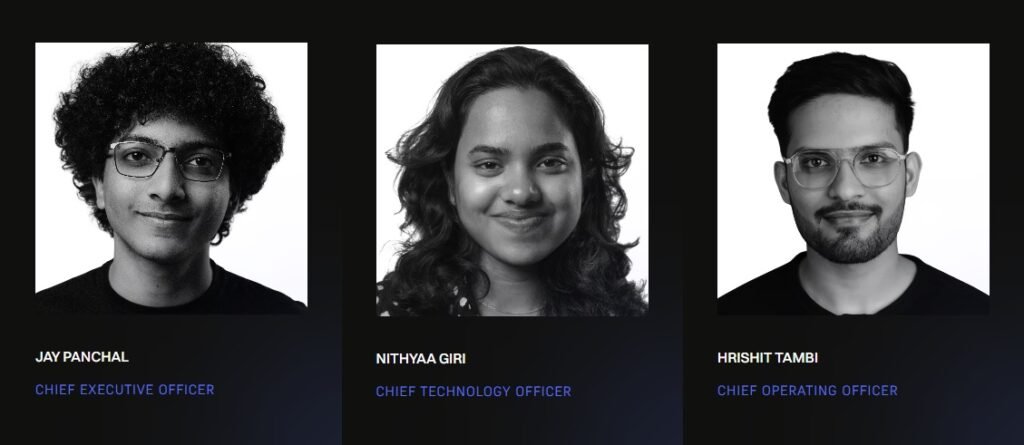
Aule was founded in 2024 by Panchal, Nithyaa Giri and Hrishit Tambi. Panchal previously worked at Pixxel, Giri was a founding engineer at Trify EV, and Tambi had worked with European Space Agency scientists at LibreCube. The company says its longer-term targets include satellite inspection, debris removal and defence applications, not just life extension.
There is already proof that the commercial model can work in principle. Northrop Grumman’s Mission Extension Vehicle-1 docked with Intelsat 901 in February 2020, the first docking of two commercial spacecraft in geostationary orbit. Intelsat 901 returned to service in April 2020, with MEV-1 contracted to provide five years of life-extension service.
But that precedent also shows why Aule’s challenge is harder than the phrase “power bank” suggests. MEV-1 used a mechanical docking system designed around existing features of the client spacecraft. Aule wants to service satellites without dedicated docking ports. NASA’s cancelled OSAM-1 project offers another warning: in 2024, NASA discontinued the mission after technical, cost and schedule problems, along with a lack of a committed partner and a broader shift away from refuelling unprepared spacecraft.
Also see: Full Moon on July 29, 2026: Horoscope, Meaning & Rituals
Also see: AI-Run Store Opens in San Francisco Under AI Manager Luna
Also see: G7 Summit 2026: Modi Calls for Trust and Cooperation as Global Leaders Meet in France
What happens if the 2027 test fails?
Aule’s biggest unanswered question is therefore not whether satellite life extension is technically possible. It is whether a low-cost, camera-only, non-cooperative docking system can perform repeatedly and safely on real legacy spacecraft.
The company is targeting an in-orbit demonstration in 2027, with two satellites planned to autonomously dock in low Earth orbit. That mission, if it launches and succeeds, would be the first real test of whether Aule’s ground-tested navigation system can survive the lighting, geometry, relative motion and failure consequences of actual space operations.
There is also a commercial gap that the current reporting leaves open. Aule has not publicly identified a customer for the first jetpack service, disclosed the expected mass or propulsion capacity of the servicing spacecraft, published a price for the service, or explained what happens if the client satellite is tumbling or its LAM nozzle is damaged or inaccessible.
The economic case is potentially large. Aule says more than $100 billion worth of commercial communication satellites in GEO could eventually stop generating revenue because of fuel depletion. The figure is a company estimate, not an independently audited market total, but the underlying problem is real: ESA lists commercial GEO satellite platforms with design lifetimes of about 15 years, and station-keeping propellant is a finite resource.
The global industry is moving in the same direction. ESA is developing active debris-removal and in-orbit-servicing technologies, while private companies are pursuing servicing, inspection and disposal missions. India’s policy framework also allows non-government entities to undertake end-to-end space activities subject to IN-SPACe authorisation.
For Aule, the next milestone is therefore much less glamorous than the “power bank” headline. It is the first autonomous approach, the first successful capture and the first time the jetpack has to keep a real client in its assigned orbit. Until those events happen, the five-year life extension remains a target, not a delivered service.
Also see: Best AI Tools for Students in 2026: 10 Free AI Apps That Actually Make Studying Smarter
Also see: UK TECH TAX: A Critical Crossroad for the UK and Global Tech Giants
Also see: USA 2-0 Bosnia and Herzegovina: Tillman Seals Historic World Cup Knockout Victory
Also see: Messi World Cup Record: Argentina Beat Jordan 3-1
Also see: FIFA World Cup 2026 Round of 32: Fixtures & Bracket