

China Put a Brain Implant on the Market While America Is Still Testing Its Own
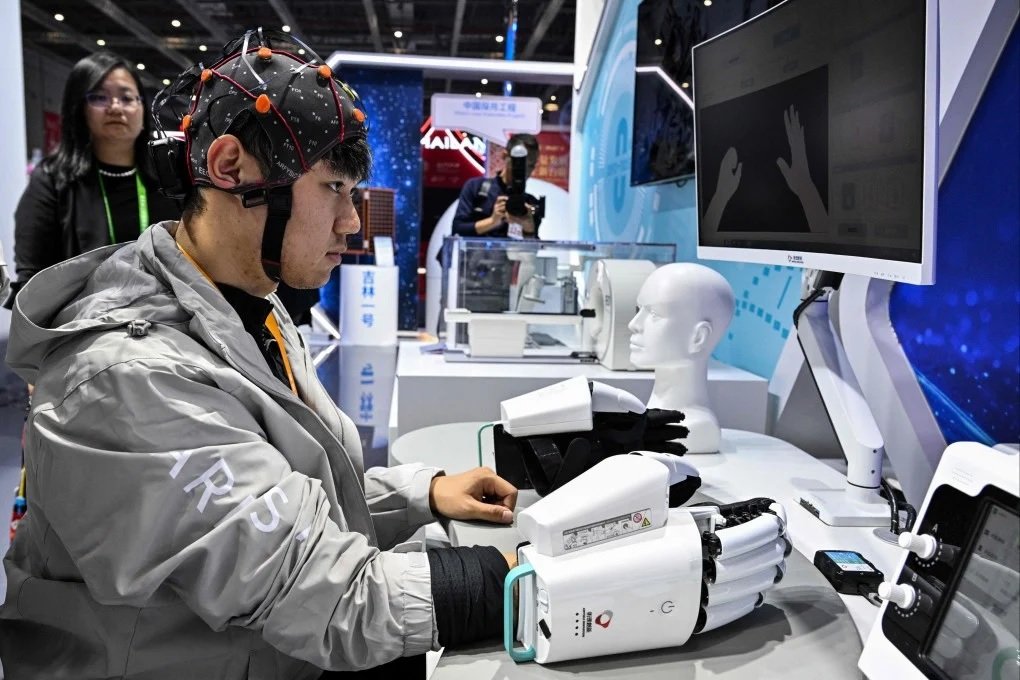
China has already done something the United States has not: put an invasive BCI implant into the commercial medical market. On March 13, 2026, China’s National Medical Products Administration approved an implantable brain-computer interface developed by Borui Kang Medical Technology (Shanghai). The device is designed for adults with tetraplegia caused by cervical spinal-cord injuries who cannot grasp with their hands. It does not read thoughts in the science-fiction sense. It records brain signals linked to intended movement and uses those signals to operate a pneumatic glove that helps the patient grasp objects.
The approval covers people aged 18 to 60 with qualifying C2-C6 cervical spinal-cord injuries and some remaining upper-arm function. The system combines an implanted BCI, electrodes, a signal transceiver, decoding software and the pneumatic glove. The Chinese regulator described it as the world’s first invasive BCI medical device to enter the clinical application stage.
Also see: The $48.8 Billion Enterprise AI Boom Is Here. Most Businesses Aren’t Ready
Also see: Aule Space: India’s ‘Power Bank’ for Satellites
What the BCI implant actually does
The basic idea is to create a communication channel between neural activity and a machine. A person intends to move a hand; electrodes detect electrical activity associated with that intention; software interprets the signal; an external device performs the desired action. In the approved Chinese system, the output is deliberately practical: helping someone with paralysis regain a limited hand-grasping function.
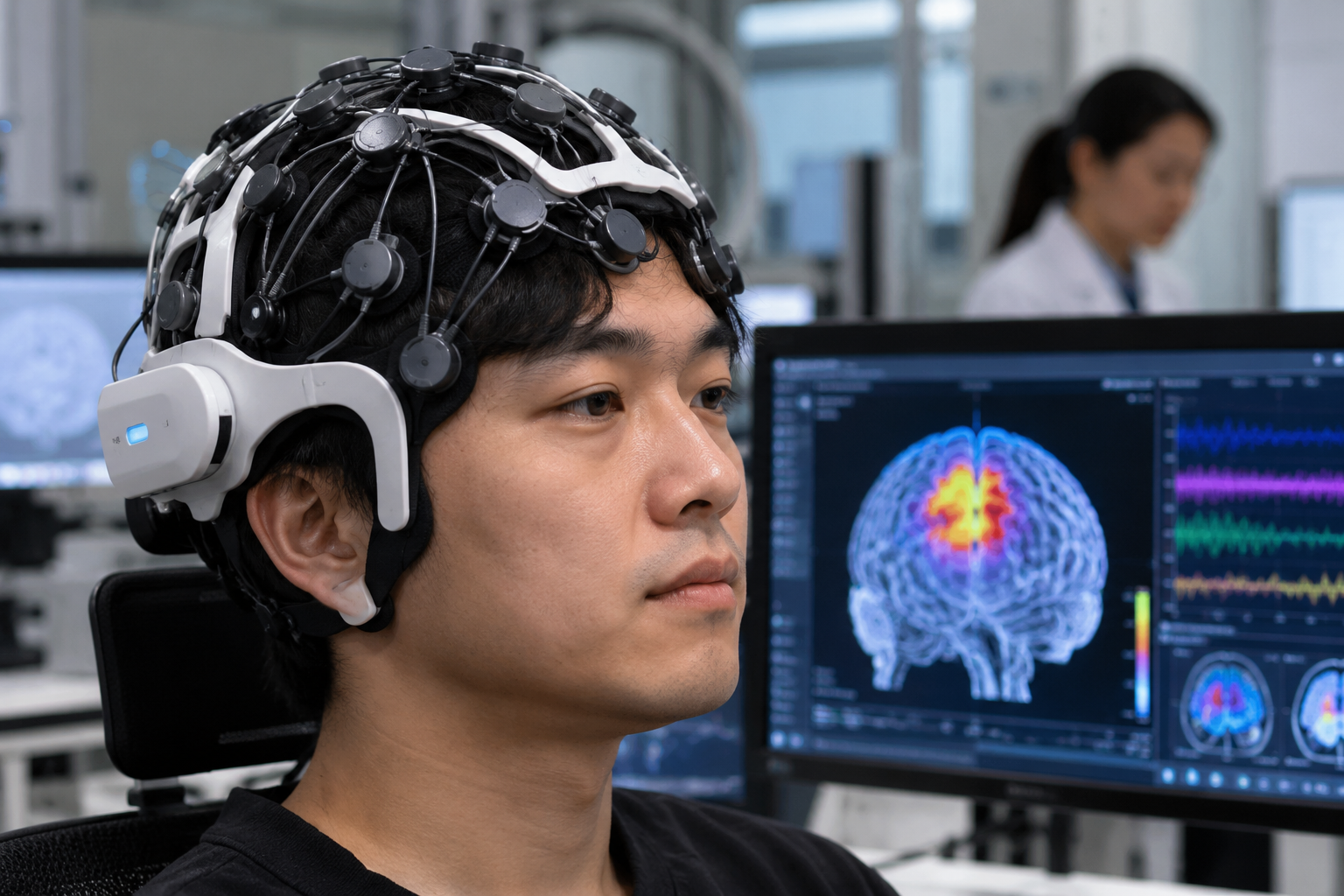
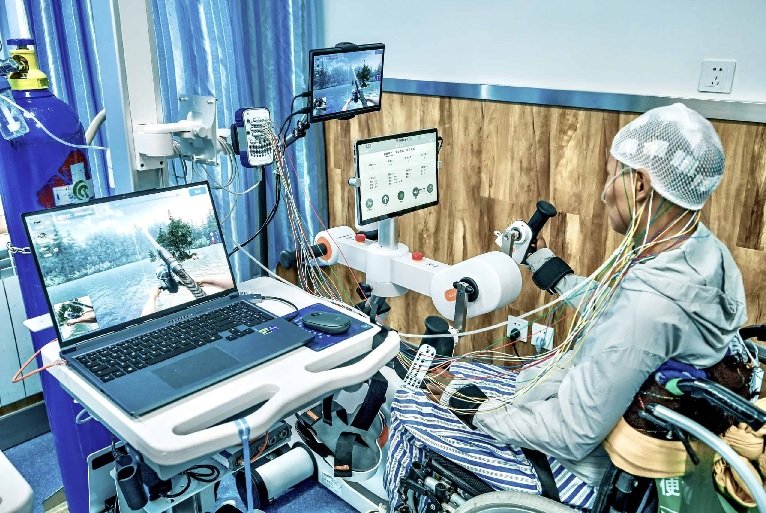
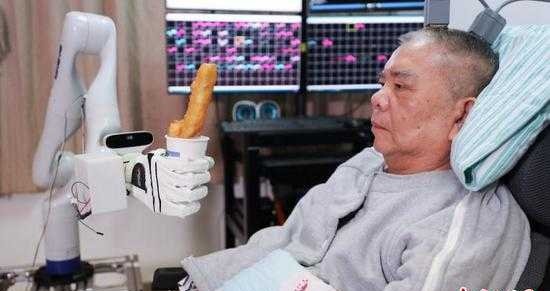
The technology is not limited to implants. Non-invasive systems use scalp sensors to measure brain activity without surgery. Chinese hospitals are testing BCI for rehabilitation, diagnosis and neurological treatment, while companies develop systems for sleep, gaming and other uses. Research has also demonstrated brain-controlled robotic arms.
China’s regulatory system is moving quickly. In March 2026, the national healthcare authority assigned the approved device, a medical-insurance coding number two days after market approval. Earlier, in 2025, national authorities had established pricing categories for BCI-related medical services. Shanghai and other regions followed with local pricing frameworks. The sequence shows an attempt to build infrastructure around the technology, not merely demonstrate it in laboratories.
Also see: ISRO Launches EOS-05, Expanding India’s Space Reach
Also see: Curiosity Rover: NASA Gave It 2 Years. Mars Kept It for 14
China is pushing BCI from laboratories into industry
Beijing has now placed BCI inside national industrial policy. The 2026 government work report listed brain-computer interfaces among the country’s “industries of the future,” alongside quantum technology, embodied artificial intelligence and 6G. A separate five-year-plan outline calls for BCI to become a new driver of growth through 2030.
The push extends into universities and industrial clusters. Tianjin University established China’s first undergraduate major dedicated specifically to brain-computer science and technology, with its first cohort beginning in 2026. Shanghai has paired hospitals with BCI companies to accelerate clinical translation. Beijing’s Haidian district said it already had 27 core BCI companies and aims to attract about 100 innovative small and medium-sized enterprises by 2030.
The commercial numbers show how early the market remains. Reporting based on company disclosures said that by late September, 13 systems had been sold and eight implanted. The reported price was 475,000 yuan (₹ 68,30,770) per system. The figures demonstrate commercialization, not mass adoption.
China is building a pipeline beyond the first approved product. NeuroXess is conducting a registered clinical trial involving 32 planned participants for an invasive BCI system. NeuCyber and the Chinese Institute for Brain Research have developed Beinao systems, while other companies pursue semi-invasive and non-invasive approaches. Officials have set targets for more clinical trials and wider industrial applications through 2028 and 2030.
America still holds major technological ground
China’s commercial lead does not mean it leads every part of BCI technology. The United States has a deeper ecosystem of human clinical programs and several major developers. Neuralink received US regulatory permission in 2023 to begin its first human trial of a fully implantable, wireless BCI. Its stated initial goal is to let people with paralysis control a computer cursor or keyboard using decoded movement intentions.
Synchron, whose technology originated in Australia and is being tested in the United States, entered human clinical testing earlier. Its Stentrode is implanted through blood vessels rather than by opening the skull. That makes the comparison with China’s device especially important: different companies are pursuing different trade-offs between surgical risk, signal quality, durability and clinical usefulness.
Also see: The Internet Is Not in the Cloud… It’s Sitting on the Ocean Floor
Also see: Genetically Modified Apples: Have They Helped the World or Just Reduced Waste?
There is also evidence from inside China that the technological race is not one-sided. In March 2026, NeuCyber’s rotating chief executive, Li Yuan, said that the company’s Beinao-2 system was roughly three years behind Neuralink, citing the American company’s human-patient experience. That admission complicates any claim that China has already overtaken the United States.
The countries are leading in different ways. China has moved fastest on regulatory approval, national industrial policy and commercial deployment of an invasive BCI. The United States remains a major center for advanced human trials and competing implant technologies. Australia matters because Synchron originated there, although major clinical development has shifted into the US system.
The purpose of the Chinese BCI implant is not to put people’s thoughts online. It is to restore a physical capability to people whose spinal-cord injuries have taken it away. The larger contest is whether that medical breakthrough can become a reliable industry.
For now, China has crossed one line its competitors have not: its invasive BCI is no longer only a research project. It has regulatory approval, a defined patient population, a price and implants. The test is whether those first devices can become safe, effective and affordable enough to move beyond a handful of patients.
Also see: Merchant Discount Rate on Select UPI Payments Explained
Also see: Bumble Sounds Alarm as AI Companion Apps Surge and Millions Turn to Virtual Relationships