
Nepal floods rescue breaks through after nine days underground
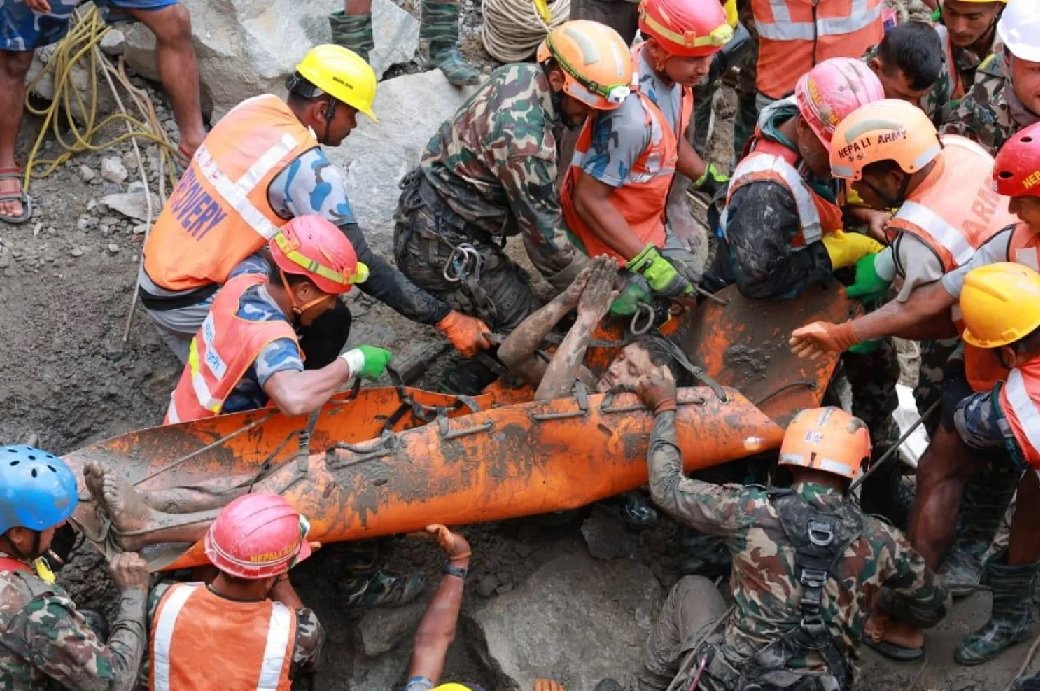
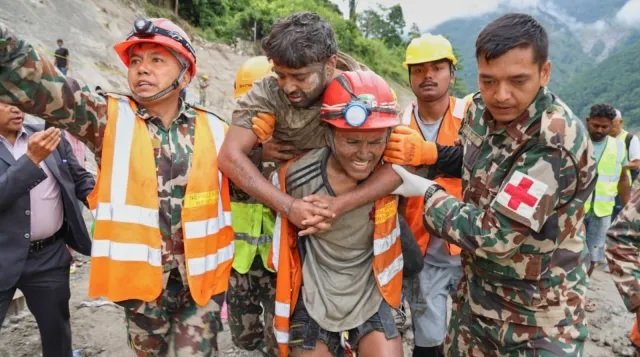
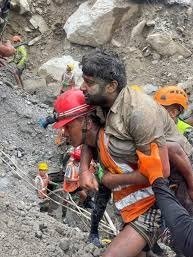
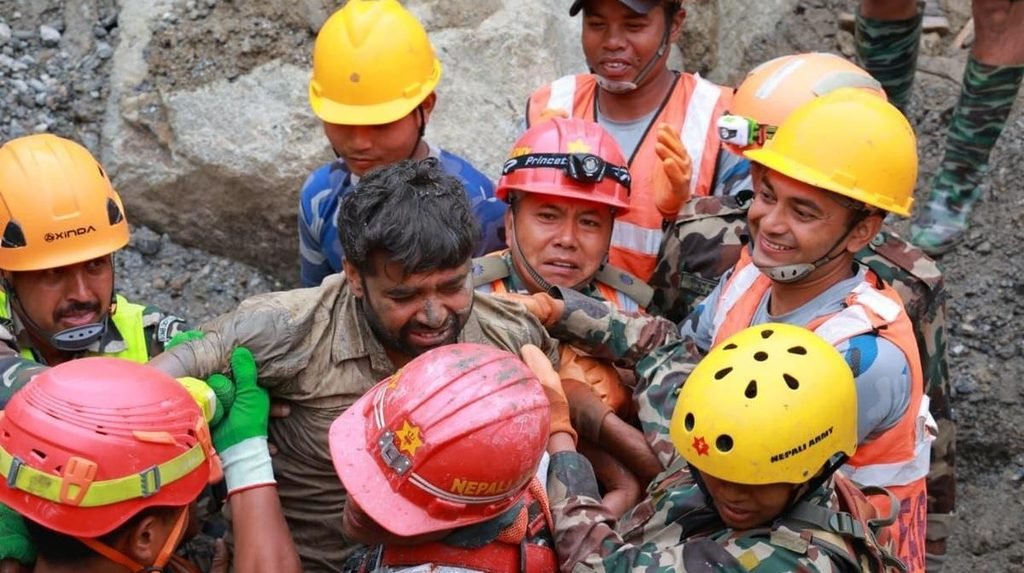
The Nepal floods have produced their biggest rescue breakthrough yet: Sanjay Sah and Kabir Maharjan were pulled alive from a hydropower tunnel on September 4, nine days after the disaster buried the site under mud, rock and debris. The two men were found about 170 metres inside the Upper Trishuli 3A Hydropower Station tunnel in Rasuwa district. Sah, a mechanical foreman, suffered non-critical injuries, while Maharjan, a mechanical supervisor, was reportedly unable to move his hands and legs and was taken for medical treatment.
The rescue did not come after an easy breakthrough. Teams had spent days cutting through material blocking access to the tunnel, with rescuers working alongside security personnel and engineers who understood the underground layout. The operation intensified after rescuers heard voices from inside. The response from the trapped workers was brief but critical. Rescue teams told them, “Do not panic, we are rescuing you,” and people inside answered, “Okay.”
Also see: Nepal Floods: 933 Hydropower Workers Unaccounted
Also see: Nepal PM’s ‘Encroachment’ Remark Sparks Political Storm Over India Border Dispute
Also see: Rahul Gandhi seeks toughest action after police rescue 12 bonded labourers from UP factory
For families waiting since August 26, those voices changed the entire calculation. Until Friday, no confirmed survivor had been recovered from the buried hydropower tunnels. Now there is proof that people can survive underground for more than a week after the Nepal floods, potentially inside air pockets or sections of tunnel that remained partly accessible.
The scale of the remaining operation is enormous. At least 557 workers are reported unaccounted for at Trishuli 3A, with about 115 believed to be inside the main tunnel, according to the Independent Power Producers Association of Nepal. Across hydropower projects hit by the disaster, authorities have been working with figures of roughly 900 missing workers, while around 500 are believed to be trapped inside tunnels.
Two survivors change the rescue race
The rescue of Sah and Maharjan is more than a symbolic victory. It gives search teams evidence that tunnel survival remains possible and strengthens the case for continuing excavation at other hydropower sites.
The Upper Trishuli 3A operation is particularly difficult because the entrances were buried beneath enormous quantities of debris. Engineers have been using tunnel drawings, machinery and technical information to identify possible routes to workers. A separate network of more than 500 engineers has been sharing tunnel plans and technical advice during the emergency, helping rescuers work out where missing workers may have been located.
The human stakes are rising alongside the engineering challenge. Nepal’s disaster authorities reported 1,259 bodies recovered by September 3, with only 95 identified and returned to families. About 5,083 people were listed as out of contact, while 12,038 people had been rescued. The figures are being revised as authorities reconcile reports from districts, police, families and project operators.
That means the tunnel searches cannot be separated from the wider missing-person crisis. A person listed as missing is not automatically presumed dead. The two men pulled from Trishuli 3A are now the clearest evidence of why authorities are still searching.
Kabir Maharjan’s brother Amir described the family’s reaction after hearing the news: “The entire family is very happy.” But the relief of one family sits beside hundreds of others still waiting for confirmation about relatives who disappeared when the flood struck.
The rescue operation is also becoming increasingly international. Specialist teams and technical assistance from neighbouring and other countries have been involved at different tunnel locations, while Nepali security forces continue to lead searches. An Indian tunnel-rescue team has been working alongside Nepali personnel in Chilime, where access conditions include deep mud and difficult underground terrain.
Also see: Pakistan Launches Cross-Border Operation After Karachi Attack, Says 29 Militants Killed
Also see: India Rebukes Pakistan at UN, Reasserts Kashmir Claim Amid Fresh Row Over Gilgit-Baltistan Elections
Also see: Pakistan $3 Billion Saudi Loan: Survival or Debt Trap
The flood buried more than tunnels
The rescue story cannot be separated from the extraordinary force that created the disaster. Nepal’s Ministry of Home Affairs records the flood as beginning at about 8:40 a.m. on August 26 in Rasuwa’s Bhote Koshi River system, with severe impacts extending into Nuwakot, Dhading and Gorkha.
Scientific assessments have increasingly pointed to a glacier-associated ice-and-rock avalanche or rapid slope failure rather than a conventional rainfall flood. The resulting mass of ice, rock, mud and water swept through the Trishuli valley and destroyed or severely damaged infrastructure along the river.
The danger is not confined to the rescue sites. Preliminary assessments found 431.1 MW of operating hydropower capacity affected, while another 15 projects under construction, representing about 470 MW of planned capacity, were also hit. UNDP estimates about 2.2 million tonnes of debris across assessed areas.
That infrastructure damage is now directly connected to the worker rescue crisis. Nepal’s mountain rivers are packed with hydropower installations, tunnels and construction sites. When a catastrophic flood enters those corridors, the same infrastructure that generates electricity can become a deadly underground trap.
There is also a troubling historical precedent. In July 2025, the Lhende/Bhote Koshi corridor suffered another deadly flood linked to a high-altitude glacial event. At least nine people were killed, 19 were reported missing, and major infrastructure including the Miteri Bridge and hydropower facilities was damaged.
The 2026 disaster therefore struck a landscape that had already experienced a major glacial flood. The question now facing Nepal is not simply how quickly rescuers can reach the next tunnel. It is whether lessons from the previous disaster were translated into stronger monitoring, worker evacuation plans and warning systems.
For now, the immediate priority is brutally simple: find the others. Two men have come out alive after nine days beneath the debris. Their survival has given rescuers something the operation badly needed, evidence that the tunnels may still contain people waiting to be reached.
The machines are still digging. The search is still on.
And after Friday’s breakthrough, stopping now would be impossible to justify.
Also see: Quad Ministers Meeting Held in New Delhi Amid China Tensions
Also see: Trump and Xi Strike Tone in Beijing as US-China Tensions Simmer
Also see: Indian Army Uniform 2026 Introduces Major Dress Reforms
Also see: France Economic Slowdown: Job Market Concerns & Reform Urgency