
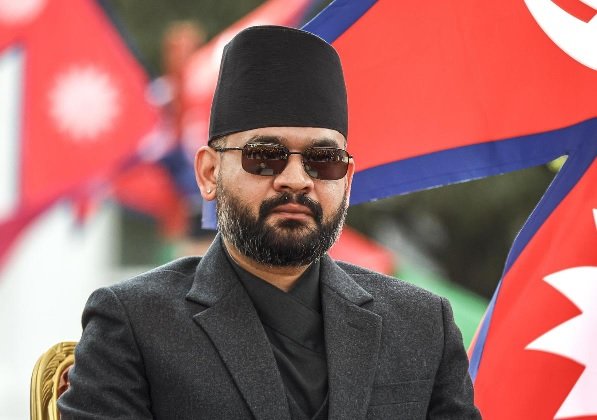
“The Nepal India border dispute returned to the spotlight after Prime Minister Balendra Shah’s controversial remarks in Parliament.“
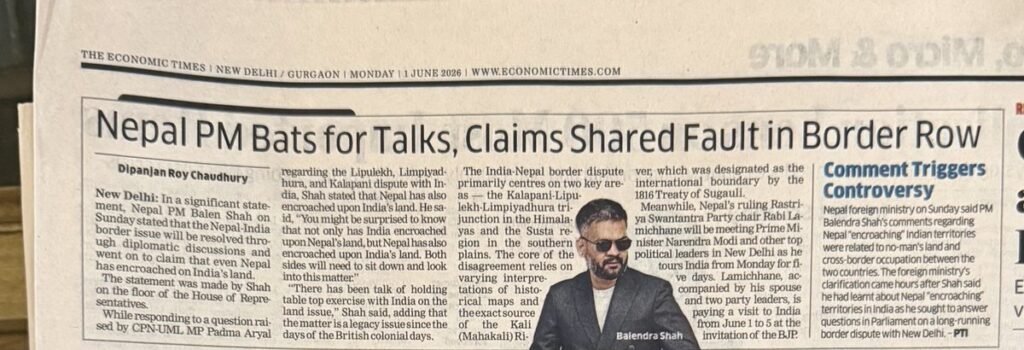
Kathmandu – Nepal Prime Minister Balendra Shah triggered a political uproar on Sunday after telling Parliament that Nepal has also “encroached upon” Indian territory in some places, an unusually blunt statement that immediately drew protests from opposition lawmakers and forced a clarification from his own government hours later.
Shah made the remark while responding to questions about the long-running Kalapani border dispute with India. “It’s not just India”, Shah said during the parliamentary session on May 31. “Nepal too has encroached upon Indian territories in many places”. The comment landed badly inside the chamber.
Lawmakers from the Nepali Congress and the Nepal Communist Party interrupted proceedings and demanded evidence. Nepali Congress Chief Whip Basana Thapa questioned the Prime Minister directly: “Where exactly has this happened? The Prime Minister must make the House aware of this.”
What’s happening around the world: Michael Dell Pentagon Contract Follows $6.25 Billion Donation
Also see: India Slovakia Comprehensive Partnership Unveiled
Also see: US Strike on Tanker Carrying Indian Crew Sparks Diplomatic Clash Near Strait of Hormuz
Foreign Ministry Steps In
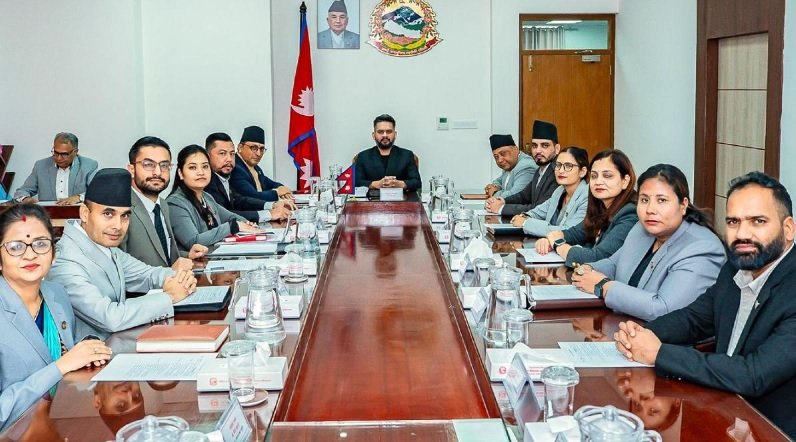
By evening, Nepal’s Ministry of Foreign Affairs issued a statement narrowing Shah’s remarks, saying the Prime Minister was referring mainly to technical border irregularities, including cross-border cultivation and occupation in “Dasgaja”, the no-man’s-land zone separating the two countries. “Studies conducted by the technical committee have shown that, in some places, land currently being used and occupied by Nepal may actually fall on the Indian side of the border”, the ministry said. The statement stopped short of identifying specific areas.
Nepal and India share a roughly 1,770-km open border, though several sectors remain disputed. The biggest flashpoint remains the Kalapani-Lipulekh-Limpiyadhura region near the India-China-Nepal tri-junction.
Also see: Michael Dell Pentagon Contract Follows $6.25 Billion Donation
Also see: Trump Yet to Approve Proposed U.S.-Iran 60-Day Ceasefire Deal as Nuclear Talks Intensify
Also see: Marco Rubio India Visit Begins in Kolkata Ahead of Quad Talks
Old Dispute, New Pressure
The issue intensified again after India and China agreed to reopen trade and pilgrimage routes through Lipulekh Pass for the Kailash Mansarovar Yatra. Kathmandu protested the move, arguing Lipulekh falls inside Nepali territory. Nepal formally expanded its political map in 2020 under then-prime minister K.P. Sharma Oli, adding Kalapani, Lipulekh and Limpiyadhura to official state maps after India published a revised map in November 2019. India rejected Nepal’s claims at the time.
Shah, 36, took office on March 27 after elections held following Nepal’s Gen Z-led protest movement last year. He had already faced criticism for skipping parliamentary sessions and postponing a planned May 11 meeting with Indian Foreign Secretary Vikram Misri. “This is not a trivial matter”, Nepal Communist Party lawmaker Ramesh Malla warned during Sunday’s debate. “How serious is this matter?”
Also see: Dalal Street Selloff Fears Rise After Iran Oil Shock
Also see: World Cup 2026 Roundup: Six Matches Produce Historic Milestones