
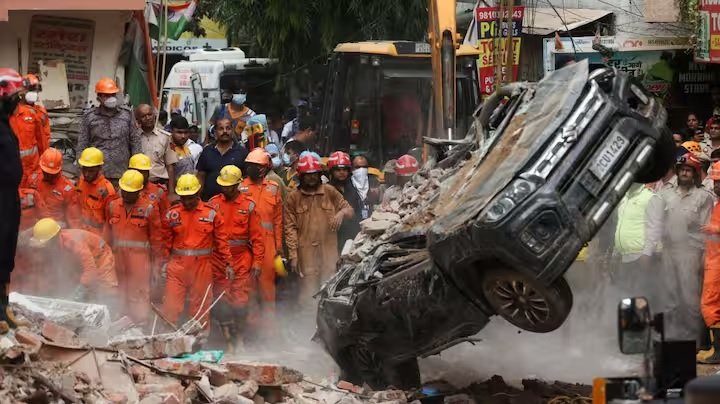
Seven people are dead, five of them students, after a five-storey paying guest building in Delhi’s Satya Niketan collapsed while repair work was reportedly underway. Behind the death toll is a disturbing combination of young tenants, cramped accommodation, an ageing structure and allegations that four additional floors were built despite concerns about the building’s ability to carry the extra weight.
The victims included Abhishek Kumar, 20, Yuvraj Soni, 20, Pawan Kumar, 17, Arpit Jahaj, 18, and Akshat Singh Yadav, 18, according to reports citing police and the FIR. Two labourers also died. Five others: Asgar Ali, 30, Neeraj Bawan, 19, Aditya Kumar, 19, Nitish Chib, 19, and Mohammad Ayan, 18 were injured and taken to hospitals including the AIIMS Trauma Centre and Safdarjung Hospital.
For the families, the disaster began not with an official announcement but with frantic attempts to find their children. During the rescue operation, relatives gathered at AIIMS searching through incoming ambulances and hospital wards. Pawan’s sister, Priyanshi, showed his photograph to hospital staff and repeatedly asked, “Have you seen Pawan Yadav?” His phone had become unreachable after the collapse.
Also see: Murder in Sambhar: Aunt Killed, ₹4 Lakh Robbery Alleged
Also see: Bhopal Dowry Death Case: Court Denies Bail to Lawyer Husband
Also see: Jaipur Road Accidents Kill Lecturer, Hotelier
Seven Lives Under the Rubble
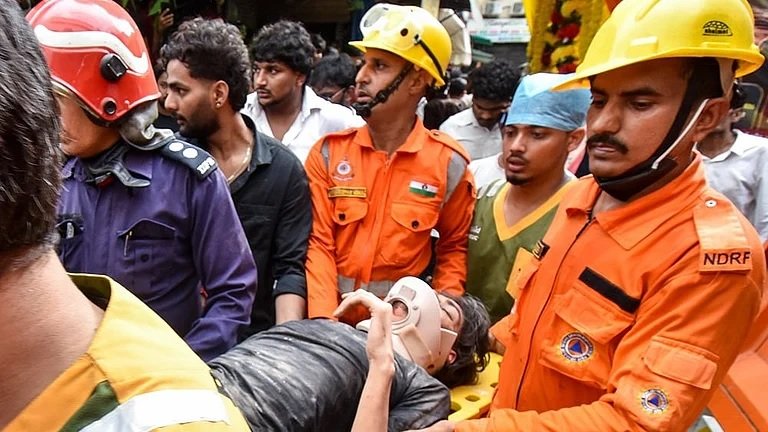
The rescue itself exposed the human scale of the Satya Niketan building collapse. At one point, rescuers were trying to free a student whose face was separated from a heavy concrete slab by only a cushion while the rest of his body remained trapped underneath. Those around him shouted, “1, 2, 3, uthaaa”, attempting to lift the concrete together.
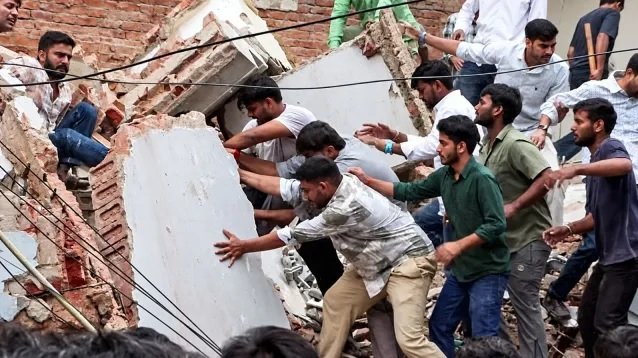
Residents and students also formed human chains to remove smaller pieces of rubble. Some reportedly obtained oxygen cylinders through quick-commerce services and tried to push oxygen through gaps in the debris while waiting for machinery to reach people who were still alive underneath. A local resident, Rajiv Kumar, recalled trapped students screaming “bachao, bachao humein”, “save us, save us.”
By Monday, 12 people had reportedly been pulled from the rubble, but seven lives had already been lost. The exact number of people inside the building during the collapse was initially uncertain; even Delhi University South Campus officials said they were trying to establish how many students lived in the area.
Also see: Delhi Assault Case Sparks Outrage After Northeast Women Allege Racist Abuse, Molestation
Also see: Sri Ganganagar Rape Case: Police Arrest 10 Accused
Also see: US Tourist Found Dead in Srinagar, Police Begin Medico-Legal Investigation
45 Students, 15 Rooms and a Building Under Pressure
Police sources have since described an accommodation operation that put a large number of students into a very small property. Around 45 students were allegedly housed in only 15 rooms on a roughly 55-square-yard property, with three students sharing a room and paying at least ₹10,000 each per month. Police sources estimated that the arrangement generated more than ₹4 lakh in monthly revenue.
The building had reportedly been functioning as a student PG for about a year. It was around four to five decades old, while renovation and construction work had allegedly been underway for roughly two weeks before the collapse, including work in the basement.
The FIR has made the alleged construction decisions central to the investigation. Delhi Police registered FIR No. 153/2026 at South Campus police station under Sections 105, 290 and 125(a) of the Bharatiya Nyaya Sanhita. The case concerns alleged culpable homicide, negligent conduct during construction or repair and acts endangering human life.
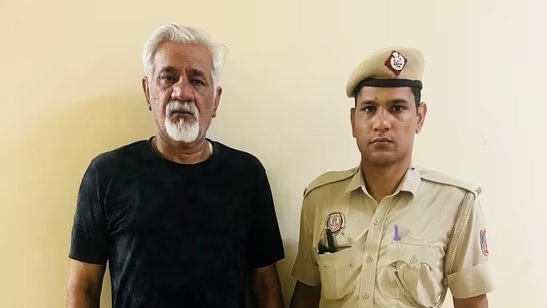
According to the FIR as reported by multiple outlets, the owners allegedly knew the old foundation could not safely support the additional load but proceeded with construction of four more floors. Police are also examining work taking place at the building when it collapsed. These remain allegations under investigation, not established findings of guilt.
Also see: BJP Aide Chandranath Rath Shot Dead Near Kolkata, Party Alleges Planned Political Killing
Also see: Malviya Nagar Fire: Delhi Hotel Owner Arrested After 21 Deaths
Also see: Attack at Khan Sir Coaching Centre Sparks Tension in Patna, Police Probe Rivalry Angle
The People Who Left Before It Fell
The danger was not necessarily invisible to everyone who lived there. An 18-year-old former resident told The Indian Express that rainwater used to seep into her room and that she had paid ₹17,000 a month for a double-sharing room on the fourth floor. She left the accommodation in June and was still trying to recover her security deposit.
The authorities are now confronting the consequences beyond the seven deaths. The Municipal Corporation of Delhi began controlled demolition of an adjoining building after declaring it dangerous, while legal proceedings have expanded beyond the collapsed structure itself. The Supreme Court has also agreed to examine a plea seeking safety audits of PGs, private hostels and student accommodation around educational institutions.
The central issue is therefore no longer simply why one building collapsed. Investigators must establish who authorized or carried out the construction, whether structural assessments or permissions existed, why students were living in the building, and whether warnings about its condition reached the authorities before seven people were buried beneath it.
Also see: Jaipur Emerges as India’s Second Deadliest City for Road Deaths
Also see: Mumbai Local Train Stabbing: Passenger Killed, Accused Held
Also see: Mumbai Watermelon Deaths Trigger Panic, Price Crash and Poisoning Theories Across City