

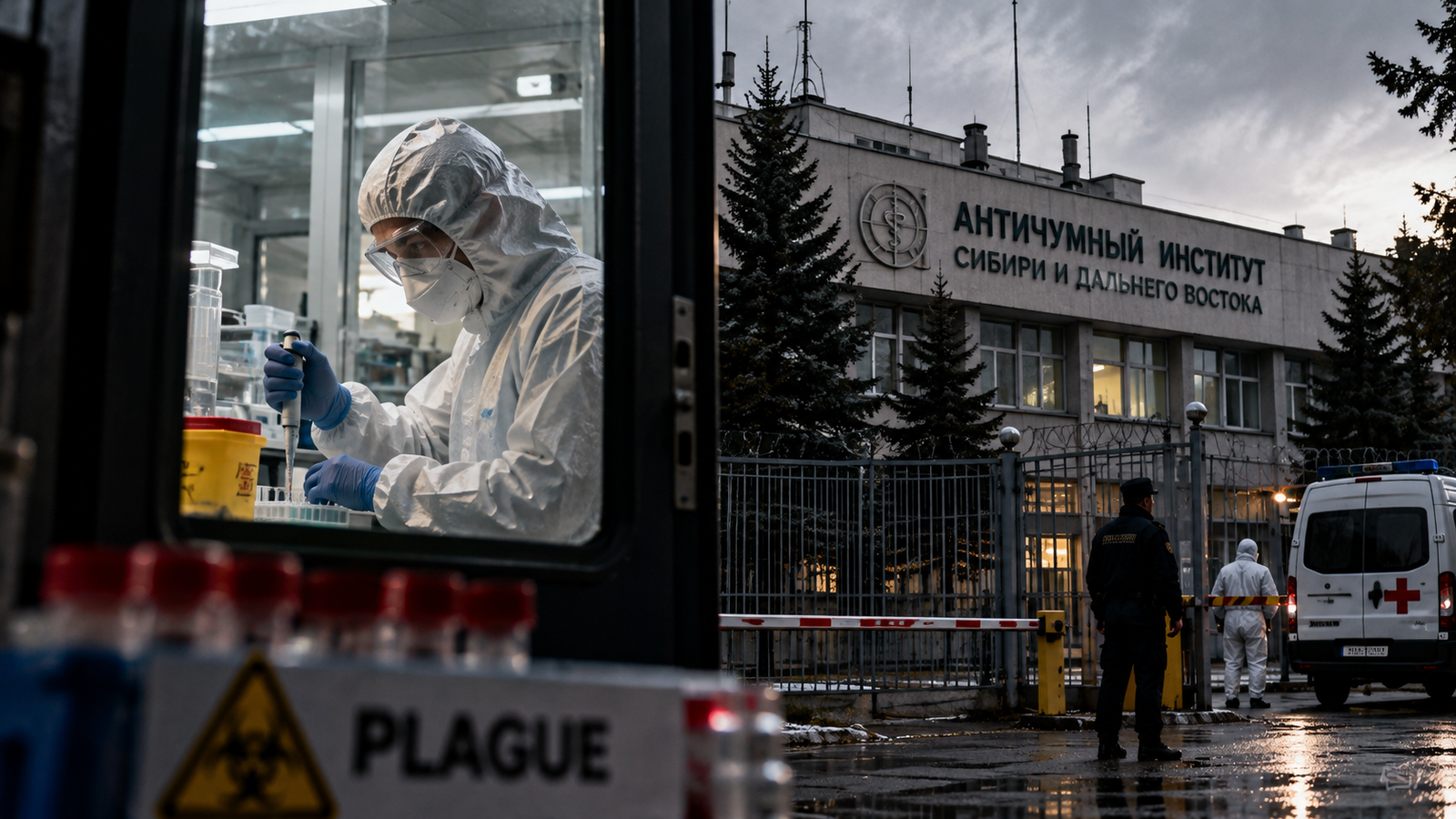
Russia plague fears have spread beyond Siberia after Darya Shipilova, a 28-year-old worker at the Irkutsk Anti-Plague Research Institute, died on October 2 following severe pneumonia. Russian officials say checks found no dangerous pathogens among nearly 5,000 laboratory tests and that contacts have remained healthy. But they have not publicly established what caused Shipilova’s death, while the World Health Organization says it still needs details about the tests and the response.
The institute studies dangerous infectious diseases, including plague, but its purpose alone does not prove an accident or an experiment caused the death. The central fact is narrower: a researcher died after unexplained pneumonia and the medical evidence needed to settle the cause has not been made public in the reporting reviewed.

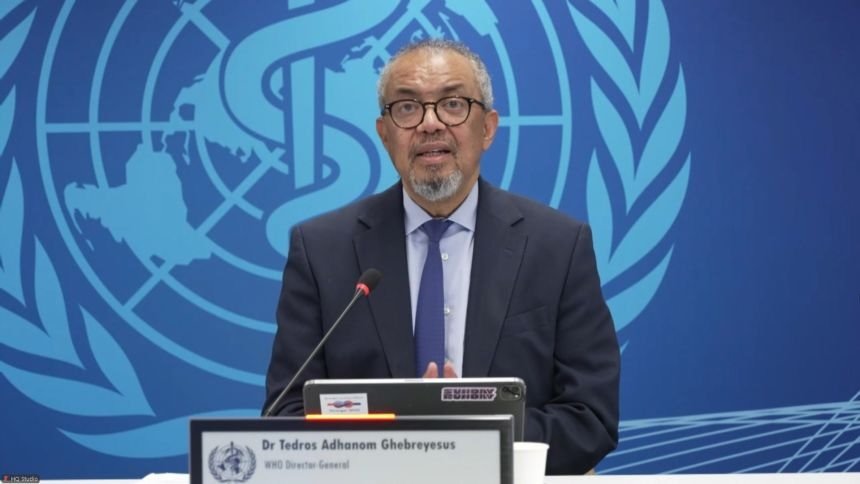
Read now: WHO Director-General’s opening remarks at the media briefing – 7 October 2026
What happened inside the Siberian institute?
Shipilova was employed at the Irkutsk Anti-Plague Research Institute in southeastern Siberia. She died after being hospitalized with severe pneumonia, according to the WHO’s October 7 account. Early media reports suggested pneumonic plague after a possible laboratory exposure, but that scenario remains unverified. Russian authorities have described the illness as pneumonia of undetermined origin and have not confirmed that she had plague.
The WHO said Russia held a government meeting on October 2 because officials suspected a resident of Irkutsk region had contracted a dangerous infection. Russia subsequently told the organization that no recent plague case had been reported in the region and that about 200 contacts had been quarantined. The WHO requested information on the deceased worker’s tests, testing of contacts, the reasons for the public-health measures and the contacts’ health status.
WHO said it did not yet have enough information to complete a full risk assessment. The organization also offered technical support on plague, laboratory biosafety and biosecurity.
Also see: 51 Indians died after joining the Russian army. New Delhi is still warning people away
Also see: Tariff: India Chose Russian Oil. Now America Can Hit Its Exports
What do the 5,000 tests actually prove?
On October 8, Russia’s health regulator, Rospotrebnadzor, said checks on all contacts were complete and nearly 5,000 laboratory tests had found no dangerous pathogenic microorganisms. Officials said contacts remained healthy and rejected claims that a second person had fallen ill after contact with Shipilova.
The number sounds conclusive, but the public statements reviewed do not provide a test-by-test breakdown. They do not specify how many people were tested, which specimens were collected, which pathogens each test targeted or whether the figure includes repeated tests on the same people. The count therefore cannot independently establish what caused Shipilova’s pneumonia.
The WHO’s plague guidance says confirmation requires laboratory testing, commonly identifying the bacterium Yersinia pestis in blood, sputum or material from an infected lymph node. The public information reviewed does not establish which tests were performed on Shipilova herself, whether post-mortem testing took place or whether a definitive diagnosis was reached.
Pneumonic plague is a severe lung infection that can spread through infectious respiratory particles. The WHO says untreated disease can be rapidly fatal, but early antibiotic treatment can be effective. Those facts explain why a suspected case would trigger urgent precautions.
The second case and the lab-accident theory
The WHO separately sought verification of media reports that another employee had pneumonia of undetermined cause. Its October 7 statement treated the report as something to verify, not as a confirmed case. Russian authorities denied the claim the following day.
The underlying evidence for a second patient has not been independently established in the sources reviewed. A possible broken test tube and accidental exposure have also circulated as theories. Russia says no accident involving dangerous microorganisms was detected. Without laboratory logs, exposure records or an independent investigation, neither a leak nor a definitive exclusion of every possible exposure can be established from public reporting.
Who is involved and what happens next?
The key institutions are Russia’s public-health watchdog, the Irkutsk regional authorities and the WHO. Governor Igor Kobzev said monitoring had been completed. The WHO, meanwhile, asked for further details and said timely, complete information-sharing under the International Health Regulations was essential to clarify conflicting accounts. The United States also sought information, according to reporting on the case.
Also see: Russian Ballistic Missile Strike on Kyiv Kills Two as Attacks Intensify Across Ukraine
The questions still unanswered are concrete:
What was the final medical cause of death?
Which pathogens were tested for in Shipilova’s samples?
Were specimens retained for independent analysis?
What did the institute’s biosafety review find?
And what original evidence, if any, supported the report of a second employee?
For now, there is no verified basis to say Russia is creating plague. The public record instead documents an unexplained death, an official claim of thousands of negative tests, a denied second-case report and a WHO request for more information. No public report yet resolves these gaps for independent review.
Let’s hope the next meaningful development would be the publication of the diagnostic findings or the incident investigation and not another repetition of speculations.
Also see: US Green Card Crackdown Targets 8 Tech Giants
Also see: France Is Arming Its Nuclear Arsenal While Europe Talks About Peace