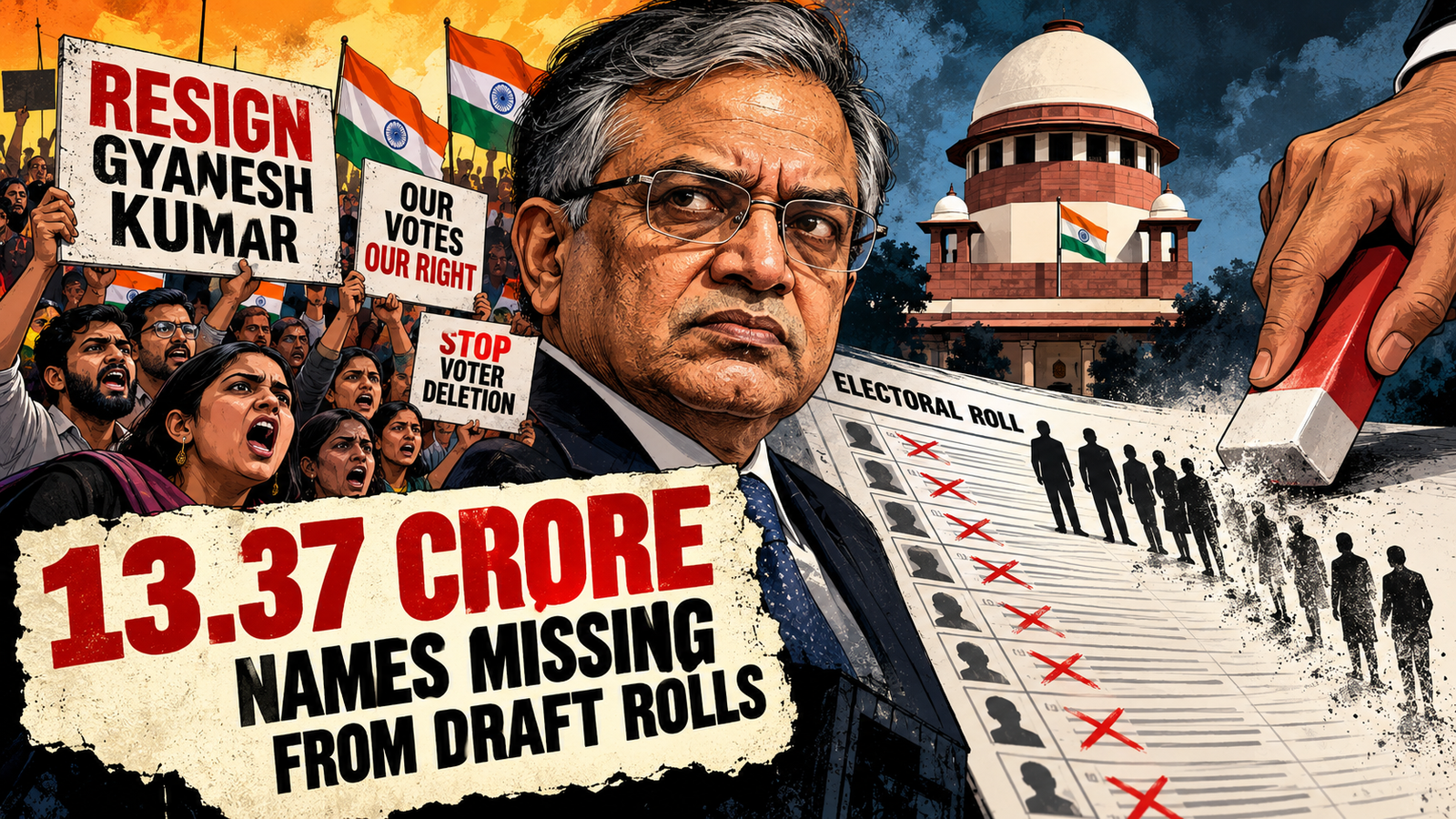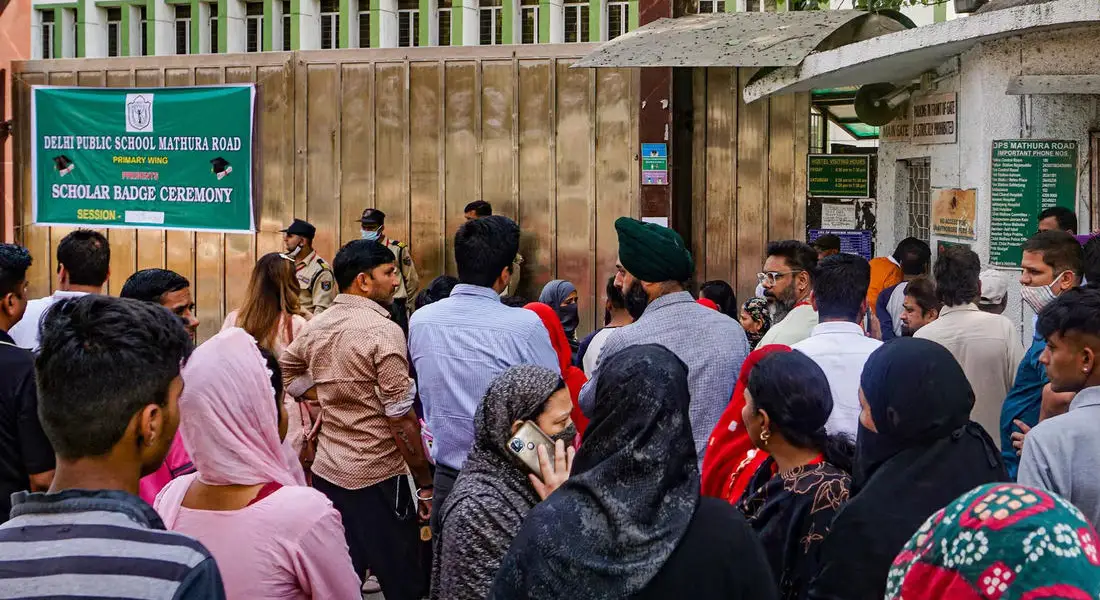

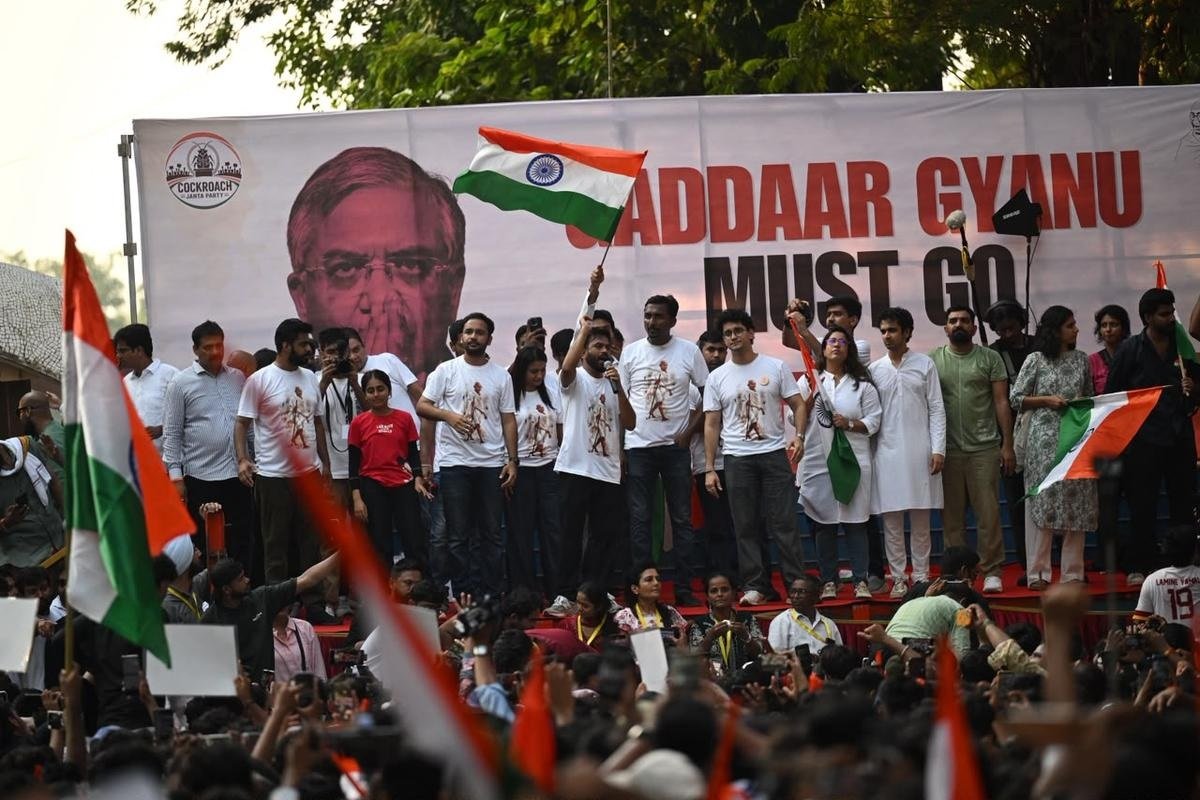
Delhi’s protests against Chief Election Commissioner Gyanesh Kumar entered a third day on Monday under heavy security, after the Supreme Court ordered authorities to protect peaceful assembly, restore normal public movement and explain why metro closures may have breached an earlier order. More than 500 people were detained during smaller demonstrations on Sunday, according to reporting from the ground, while the Court’s contempt proceedings against senior officials are due back on October 13.
The clash now extends beyond the demand for Kumar’s resignation. It concerns whether security measures imposed to contain demonstrations also obstructed commuters, lawyers, journalists and people seeking access to the courts. The Supreme Court has not found officials guilty of contempt; it has said petitioners made out a prima facie case and issued notices requiring answers.
Protests continue as Delhi eases restrictions
On October 10, the Cockroach Janta Party, a youth movement known as CJP, had called a demonstration at Jantar Mantar over alleged irregularities in the Election Commission’s Special Intensive Revision of electoral rolls. Authorities deployed thousands of personnel, closed metro stations and detained protesters before the planned gathering could take shape.
The number detained that day remains disputed. Some reports put the figure at nearly 7,000, while other coverage cited a figure above 2,000.
Also see: Votes Missing: 13.37 Crore Names Left Off Draft Rolls
Also see: Gyanesh Kumar Form 6: What the Supreme Court Said
The clampdown continued on Sunday, October 11, although metro services resumed and internet restrictions were lifted, according to contemporaneous reporting. Around 30,000 police personnel and 200 companies of paramilitary forces remained deployed across the capital. More than 500 people were detained during flash protests, with one separate report estimating roughly 700 detentions that day.
Near Palika Bazaar, 50 to 60 members of the All India Students’ Federation and Krantikari Yuva Sangathan were detained around noon. Communist Party of India (Marxist) Rajya Sabha MP John Brittas was also detained while speaking to the media. He later alleged that security personnel assaulted him.
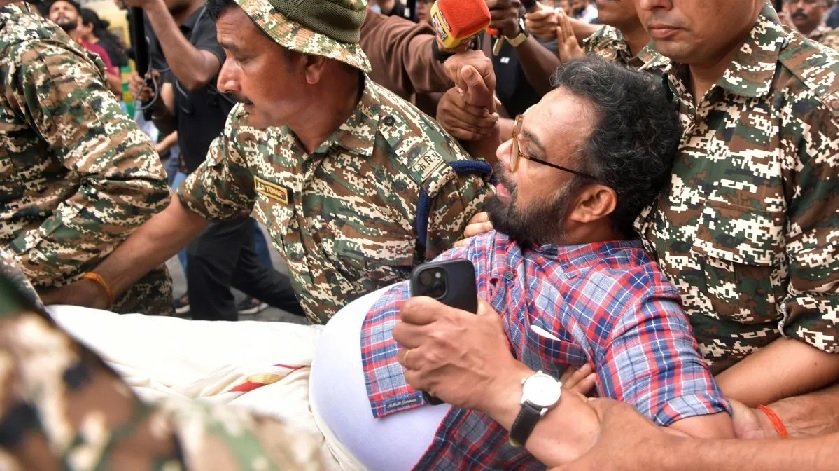
At RK Ashram Marg, students from the Students’ Federation of India marched in the afternoon. More than 50 were reportedly taken away in buses.
Supreme Court challenges the transport clampdown
The Court’s intervention followed restrictions imposed during the October 10 demonstration. A contempt petition filed by advocate Shailendra Mani Tripathi alleged that authorities had violated the Court’s October 9 directions by shutting metro and railway services rather than regulating them. Reports said 45 of Delhi Metro’s 303 stations were closed on Saturday.
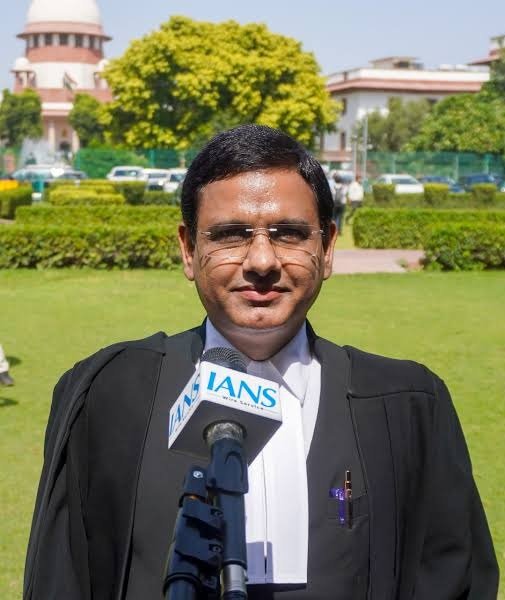
On October 11, a bench of Justices Joymalya Bagchi and V. Mohana issued notice to Union Home Secretary Govind Mohan, Delhi Police Commissioner Anurag Kumar and Delhi Metro Rail Corporation chairperson D. Thara. The Court said petitioners had made out a “prima facie case” and directed the officials to submit counter-affidavits and a compliance report by October 13.
Also see: Sonam Wangchuk to Join June 6 Protest Seeking Dharmendra Pradhan’s Resignation
Also see: Cockroach Janta Party Founder Faces Online Caste Abuse
The Court’s reported directions included normal metro and rail operations, uninterrupted internet access subject to law, restoration of free movement and protection against illegal detention. It also directed authorities to remove prohibitory notices around the Supreme Court and other court complexes to ensure access to justice.
The petition alleges non-compliance; the officials have been asked to respond. A notice is not a final finding of contempt, and the available record does not establish that every person detained was peaceful or that every detention was unlawful.
Detention figures and allegations remain contested
CJP founder Abhijeet Dipke and leaders Saurav Das and Ashutosh Ranka were detained after arriving in Delhi and later released by an Executive Magistrate, according to reports. Police said the men furnished surety bonds of ₹50,000 each and agreed to maintain peace and good behaviour for one year.
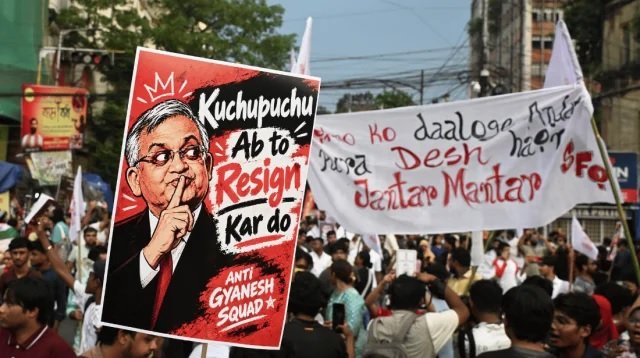
CJP leaders said they would continue the agitation and seek permission for further demonstrations. The movement’s stated demand is Kumar’s resignation, while opposition parties have linked their protests to alleged irregularities in SIR.
Those electoral allegations remain a separate question from police conduct. The Election Commission operates the SIR process, but the protest and court proceedings do not by themselves prove that voter-roll revisions were manipulated. Establishing that claim requires state-specific roll data, deletion reasons, notices to affected voters and the Commission’s documented response.
Also see: Satire Party, Real Anger: ‘Cockroach Janta Party’ Sparks Political Storm After X Block
Also see: Prahlad Joshi Takes Charge of Education Ministry After NEET
Monday’s march faces a test
For Monday, October 12, opposition parties planned a march towards the Supreme Court, with a reported assembly point near Connaught Place and Barakhamba Road at 1:30 p.m. Separately, the Delhi Metro was reported to have scheduled entry and exit closures at six central stations from 6 a.m. to 4 p.m. The original Metro advisory and any later revisions should be checked before drawing conclusions about service status.
Police have cited security concerns, but the underlying operational orders and detention records are needed to assess proportionality.
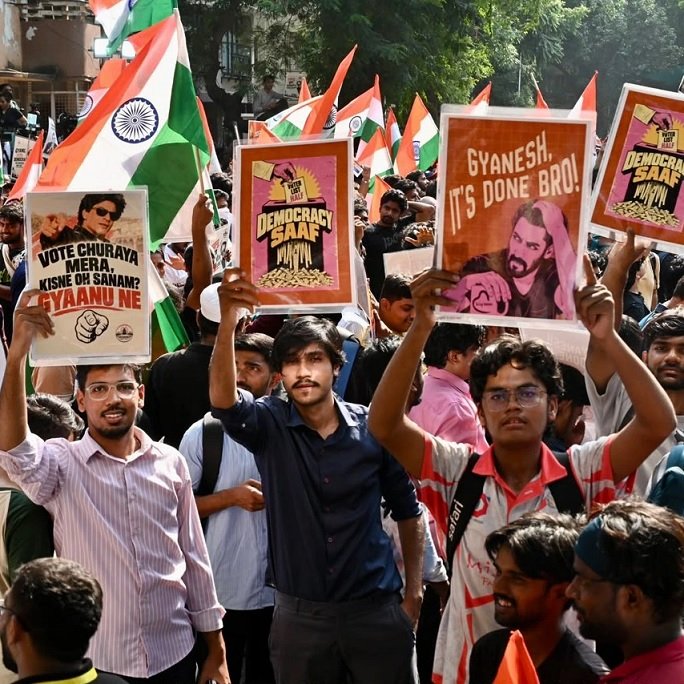
The Court asked that barricades be reviewed and that lawyers, journalists and other professionals not be obstructed while carrying out their duties. Solicitor General Tushar Mehta disputed allegations that metro operations had been shut down, saying trains were operating and internet connectivity had been restored, according to the court hearing coverage.
The next deadline is October 13, when the named officials are due to file their formal responses and compliance report in the contempt matter. Those filings should show who ordered the closures, what legal basis was relied on and how authorities interpret the October 9 directions. Until then, the evidence supports scrutiny of the clampdown, not a verdict on guilt.
Also see: NEET Paper Leak Protest: Rahul Gandhi Detained
Also see: Meta India Head Named in FIR Over Morphed PM Modi Posts During CJP Protests