
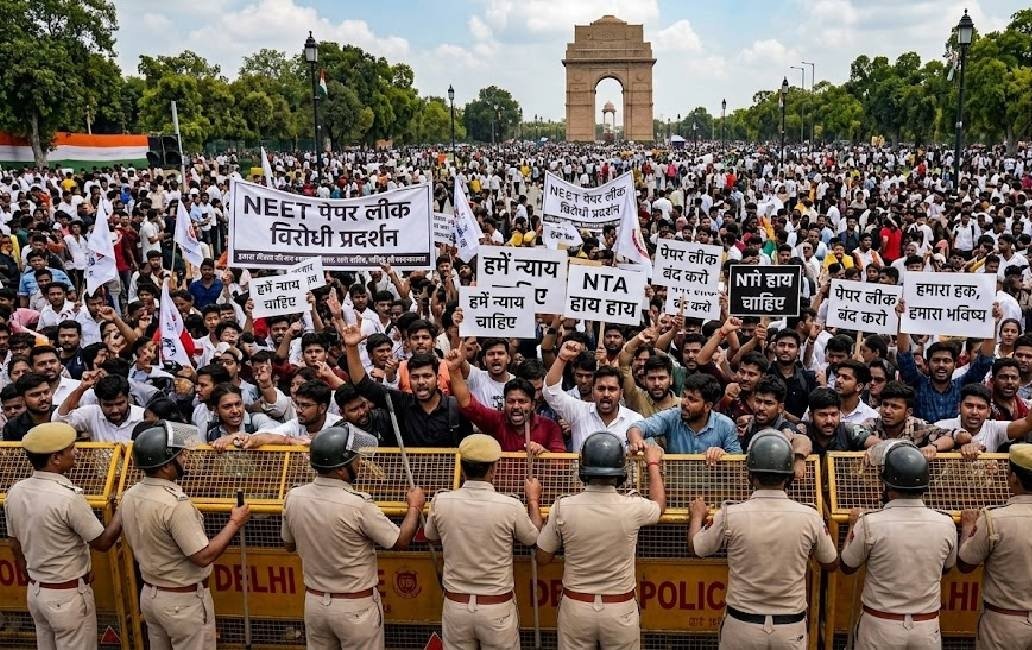
The political battle over the NEET paper leak entered a new phase on July 21 as Congress leader Rahul Gandhi, Priyanka Gandhi Vadra and several opposition leaders were detained during a protest near the Prime Minister’s residence in New Delhi. The demonstration came a day after thousands of protesters attempted a “Sansad Chalo” march demanding the resignation of Union Education Minister Dharmendra Pradhan over the handling of the examination controversy and the government’s response to student protests.
The confrontation unfolded during the Monsoon Session of Parliament, with education emerging as one of the most contentious issues before lawmakers. Student groups, opposition parties and civil society activists have accused the government of failing to restore confidence in the country’s medical entrance examination system following allegations surrounding the NEET paper leak. The Centre has rejected those allegations, saying reforms are underway and Parliament remains the appropriate forum for discussion.
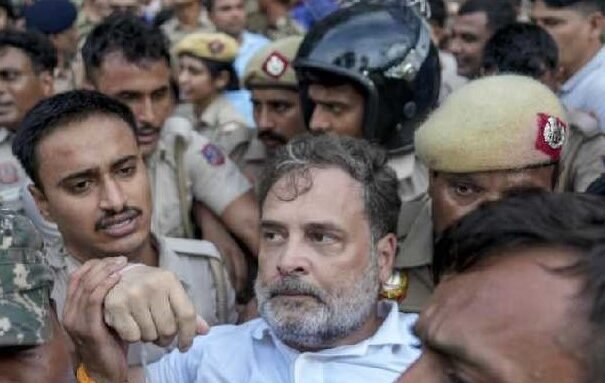
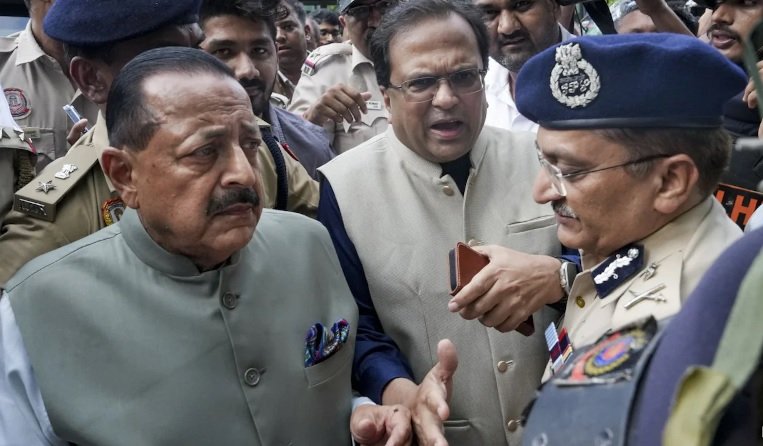
By early evening, Delhi Police had moved in to disperse protesters gathered near Lok Kalyan Marg, citing security restrictions around the Prime Minister’s residence. Visuals from the protest showed Rahul Gandhi, Priyanka Gandhi Vadra and Samajwadi Party chief Akhilesh Yadav being escorted into police buses before being taken away. According to reports, the protest was dispersed around 6:30 pm, while the detained leaders were released at approximately 9 pm.
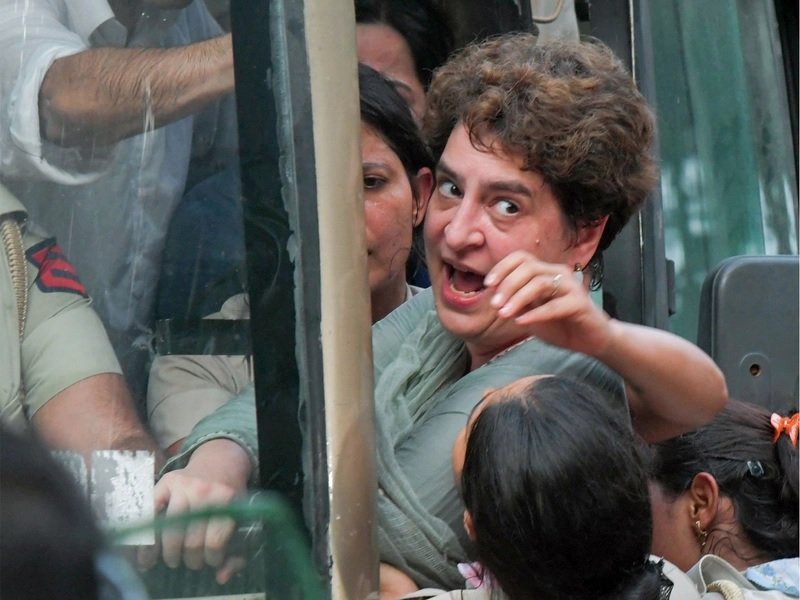
The Congress described the detentions as an attempt to silence demands for accountability. The BJP maintained that security protocols had been violated and accused the opposition of turning student concerns into a political campaign.
Check out: NEET-UG Re-Exam Gets Armed Forces Support
Check out: NEET
Government Says Parliament Was Open for Discussion
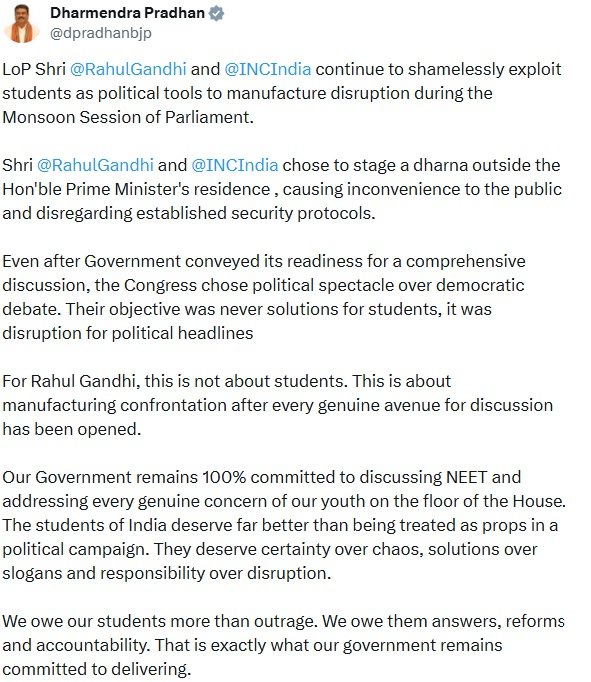
Union Education Minister Dharmendra Pradhan defended the government’s position in a series of public statements, accusing the Congress of exploiting students for political gain rather than seeking solutions.
“We owe students more than outrage” Pradhan said.
In another statement, he wrote, “Congress chose political spectacle over democratic debate. Their objective was never solutions for students; it was disruption for political headlines.”
The minister also rejected the demand for his resignation, saying the Centre remained committed to discussing examination reforms in Parliament.
“For Rahul Gandhi, this is not about students. This is about manufacturing confrontation after every genuine avenue for discussion has been opened” Pradhan said.
He added, “The students of India deserve far better than being treated as props in a political campaign. They deserve certainty over chaos, solutions over slogans and responsibility over disruption.”
The ministry has consistently maintained that reforms to examination systems should be debated institutionally rather than through street protests.
Check out: CBSE OSM Controversy: Centre Replaces Top Officials
Congress Pushes for Accountability
The Congress has argued that a parliamentary discussion alone is insufficient. Party leaders have repeatedly demanded Dharmendra Pradhan’s resignation, saying ministerial accountability is necessary after allegations linked to the NEET paper leak and growing public concern over examination integrity.
According to Union Minister Jitendra Singh, Rahul Gandhi had indicated that the protest would be withdrawn if Parliament agreed to discuss the issue but later expanded the demands to include Pradhan’s resignation. Congress leaders dispute that version of events and maintain that accountability was always central to their campaign.
The disagreement has become one of the defining political disputes surrounding the ongoing controversy.
Check out: Rahul Gandhi seeks toughest action after police rescue 12 bonded labourers from UP factory
Student Anger Expanded Beyond Delhi
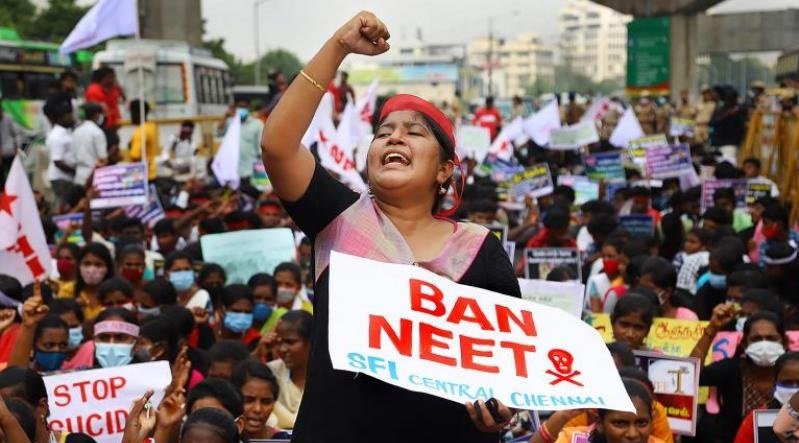
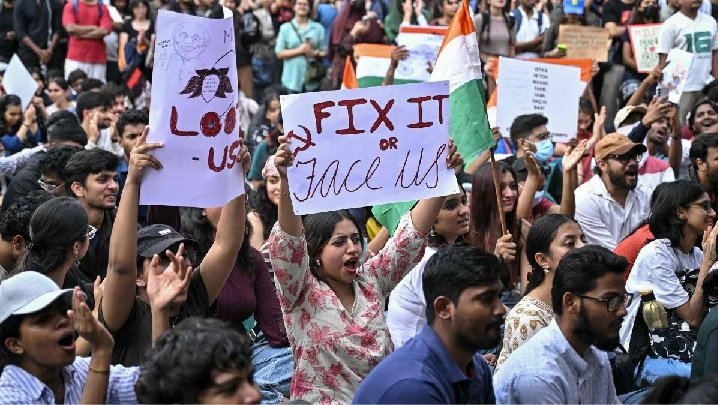
Although national attention has focused on protests in the capital, demonstrations have spread well beyond New Delhi.
Solidarity protests were reported in Hyderabad, where student organisations marched toward Lok Bhavan, and in Chennai, where activists gathered outside the state secretariat. Several student unions and civil society organisations joined demonstrations demanding examination reforms and greater transparency.
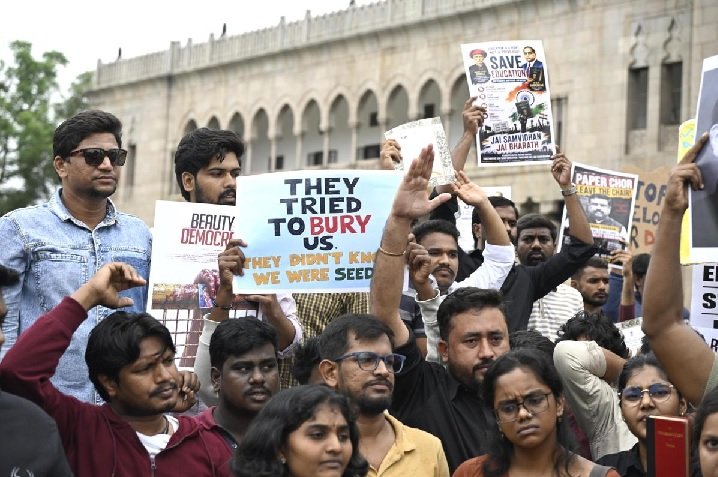
The movement has gradually expanded beyond the immediate allegations surrounding the NEET paper leak. Protesters are now raising broader concerns about examination security, transparency, youth unemployment and confidence in public institutions.
International reporting has also noted that the protests increasingly resemble a wider youth movement rather than a single-issue campaign.
Check out: Sonam Wangchuk to Join June 6 Protest Seeking Dharmendra Pradhan’s Resignation
Sonam Wangchuk’s Hunger Strike Adds Pressure
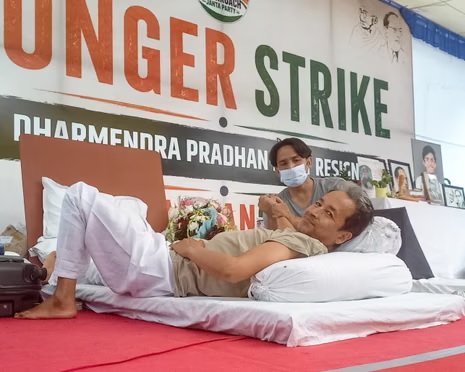
Environmental activist Sonam Wangchuk has emerged as another prominent face of the movement after beginning a hunger strike in support of protesters.
During the protests, concerns over his health intensified. Medical information released during court proceedings indicated that Wangchuk’s potassium level had fallen to 3.4 mEq/L, while doctors reported persistent pancytopenia.
The Delhi High Court later permitted his transfer from Safdarjung Hospital to Medanta Hospital in Gurugram after hearing submissions regarding his medical treatment.
The court’s intervention introduced a legal dimension to the protests, extending the controversy beyond politics and into questions concerning medical care, civil liberties and the treatment of demonstrators.
Check out: Cockroach Janta Party Founder Faces Caste Abuse as Meme Movement Turns Political
Millions of Students Affected
The NEET examination is India’s largest undergraduate medical entrance test, conducted annually by the National Testing Agency (NTA).
This year’s controversy has affected around 20 lakh candidates, making it one of the country’s biggest education-related crises in recent years.
Student groups argue that repeated allegations involving competitive examinations have weakened public confidence in national testing systems. They have demanded stronger examination security, greater transparency in investigations and structural reforms within the NTA.
Some protesters have also demanded ₹1 crore compensation for families of students who allegedly died by suicide in connection with the examination controversy, although officials have not accepted those demands.
Check out: Cockroach Janta Party X Block Sparks Political Storm
Police Reject Allegations of Excessive Force
The protests have also triggered competing narratives over police action.
Organisers alleged that excessive force was used during demonstrations, including claims that pellet guns had been fired. Delhi Police rejected those allegations, calling them false and stating that officers acted within established security protocols while protecting restricted areas around Parliament and the Prime Minister’s residence.
Police have also maintained that protesters violated security arrangements and damaged public property during the demonstrations.
Protest organisers dispute those claims, saying the march began peacefully before police intervention escalated tensions.
No independent inquiry has publicly established the competing allegations at the time of reporting.
Questions That Remain Unanswered
Despite days of demonstrations and political exchanges, several important questions remain unresolved.
Authorities have not publicly released a comprehensive account explaining how the alleged NEET paper leak occurred or whether every aspect of the investigation has concluded. Details about the full chain of responsibility inside the examination process have also not been fully disclosed.
Independent verification of the total number of injured protesters remains unavailable. Claims made by both police and protest organisers differ significantly. Questions surrounding operational decisions taken during crowd control, including the deployment of security personnel near Parliament and Lok Kalyan Marg, also remain unanswered.
Another issue receiving growing attention is the organisation behind the nationwide protests. The movement began with students but has since attracted support from opposition parties, activists and regional organisations. Its rapid expansion has prompted fresh debate over how youth-led campaigns evolve into national political movements.
For now, the NEET paper leak controversy has moved far beyond allegations surrounding a single examination. It has become a test of public confidence in India’s examination system, the government’s handling of accountability demands and the ability of institutions to respond to one of the country’s largest youth-led protest movements in recent years.
FAQs
1. What is the NEET paper leak controversy?
It involves allegations that confidential NEET exam papers were leaked before the examination.
2. Why are students protesting the NEET paper leak?
Students are demanding accountability, transparency, and reforms in the examination system.
3. Who is leading the protests?
Student groups, activists, and several opposition leaders have participated in the demonstrations.
4. Why is Dharmendra Pradhan facing criticism?
Opposition parties hold him politically accountable as Union Education Minister.
5. Was Rahul Gandhi detained during the protest?
Yes, Delhi Police detained Rahul Gandhi during the protest near the Prime Minister’s residence.
6. Why was Priyanka Gandhi detained?
She was detained while participating in the Congress protest in New Delhi.
7. What role is Sonam Wangchuk playing?
He launched a hunger strike supporting demands for accountability and education reforms.
8. What did Dharmendra Pradhan say about the protests?
He accused the Congress of politicising student concerns.
9. How many students were affected by the controversy?
Around 20 lakh candidates appeared for the NEET examination.
10. What are the protesters demanding?
They seek examination reforms, accountability, and action over the alleged NEET paper leak.