

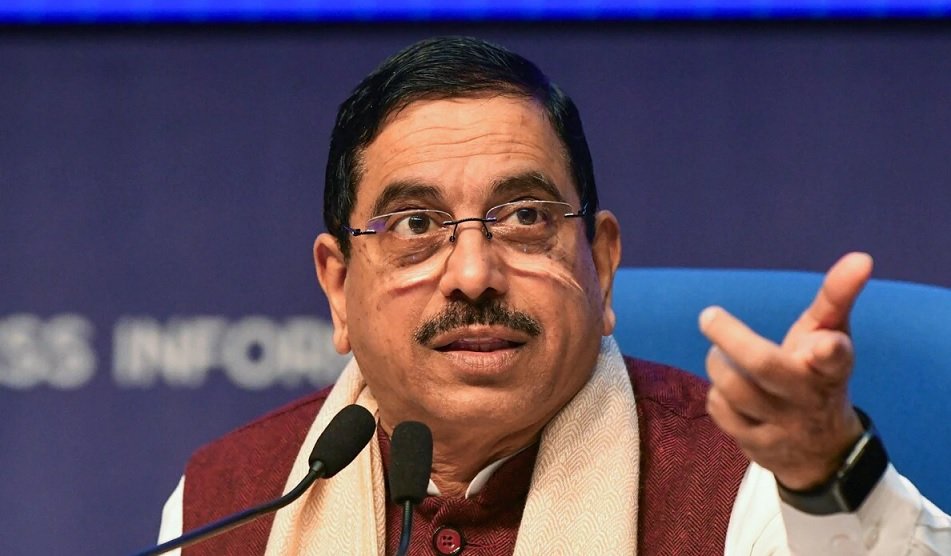
“Prahlad Joshi began his tenure as Union Education Minister on Sunday, replacing Dharmendra Pradhan at a time when the ministry faces sustained criticism over the NEET examination controversy.”
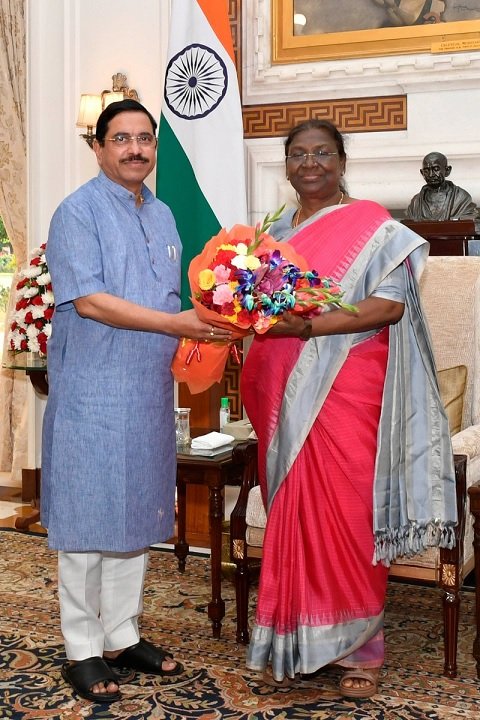
On July 25, President Droupadi Murmu, acting on the advice of Prime Minister Narendra Modi, appointed Prahlad Venkatesh Joshi as the Union Education Minister after Dharmendra Pradhan resigned following weeks of political pressure over the NEET examination controversy. Joshi, a six-term BJP MP from Karnataka, will continue to handle the Ministries of Consumer Affairs, Food and Public Distribution, and New and Renewable Energy while taking charge of education.
His first message was measured. “My priority will be to understand first and then deliver“, Joshi told reporters after assuming office. It was a cautious response at a time when millions of students, parents and educational institutions are waiting for clarity after one of the biggest examination controversies the country has witnessed.
Also read: Scholarships in India 2026: Complete List, Eligibility & How to Apply
Also read: NEET Paper Leak Protest: Rahul Gandhi Detained
A ministry under pressure
The leadership change comes after allegations of irregularities surrounding the National Eligibility cum Entrance Test (NEET), India’s single entrance examination for undergraduate medical admissions. The exam, conducted by the National Testing Agency (NTA), determines admission to MBBS, BDS and several other medical programmes across the country.
This year, the examination involved around 2.3 million candidates, while India has fewer than 130,000 MBBS seats, leaving roughly one seat for every 18 aspirants. That level of competition means even a minor breach in examination security can alter thousands of careers.
As allegations spread, student demonstrations expanded across multiple cities. Opposition parties accused the government of failing to protect the integrity of the country’s largest medical entrance examination. Calls for accountability quickly moved beyond the NTA and reached the Ministry of Education itself.
The government eventually announced that the affected examination would be cancelled and conducted again, a decision with significant logistical consequences. A nationwide re-examination requires fresh question papers, revised security arrangements, new admit cards, examination staff and delayed admission schedules for medical colleges.
Pradhan’s resignation followed weeks of mounting criticism, although the government has not publicly detailed whether the decision was voluntary or part of a broader cabinet strategy.
Also read: CBSE OSM Controversy: Centre Replaces Top Officials
Also read: NEET-UG Re-Exam Gets Armed Forces Support
Prahlad Joshi Signals Continuity Over Immediate Reform
Unlike ministers who use their first day in office to announce sweeping policy changes, Joshi adopted a different approach.
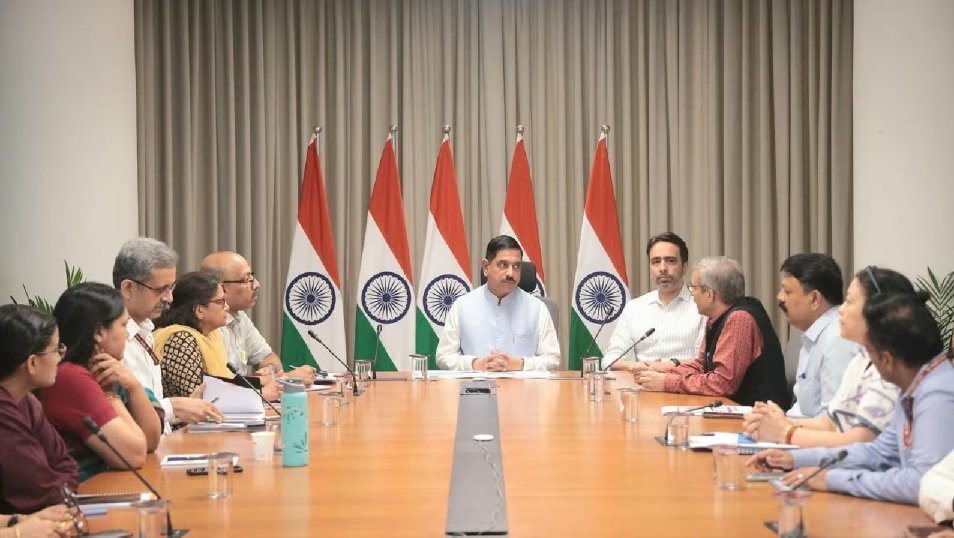
“I have taken charge and have been attending meetings to understand all the details and information about the ministry“, he said after reviewing ongoing work with senior officials.
He also acknowledged the scale of the portfolio.
“This is a new area of work for me. The department is very large, so my priority will be to understand it first and then deliver“.
The remarks suggest the government is prioritizing administrative stability before unveiling any policy response. Joshi also indicated that implementation of the National Education Policy (NEP) would continue, signaling continuity despite the change in leadership.
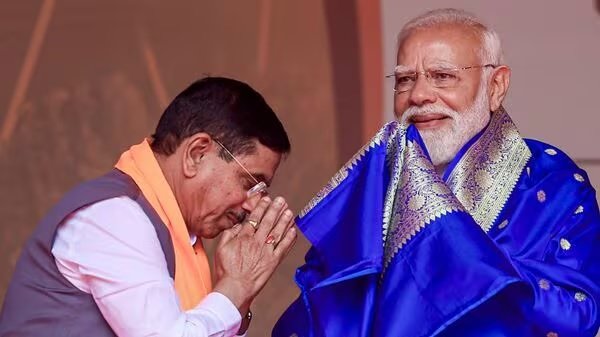
Political observers note that Joshi’s appointment is less about education policy expertise than administrative experience. Over the past two decades, he has built a reputation inside the BJP as an organizational leader rather than a high-profile public campaigner.
Born in 1962 in Vijayapura (formerly Bijapur), Karnataka, Joshi graduated from KS Arts College, Hubballi, before entering public life through the Rashtriya Swayamsevak Sangh (RSS). He later became BJP district president in Dharwad, Karnataka BJP president in 2014 and has represented Dharwad in the Lok Sabha since 2004, winning six consecutive parliamentary elections.
His cabinet experience spans Parliamentary Affairs, Coal, Mines, Consumer Affairs, Food and Public Distribution, and New and Renewable Energy, portfolios that required coordination across multiple ministries and state governments.
Also read: Cockroach Janta Party Founder Faces Caste Abuse as Meme Movement Turns Political
Also read: Cockroach Janta Party X Block Sparks Political Storm
The bigger issue extends beyond one minister
While the cabinet reshuffle has drawn national attention, education experts argue that replacing the minister addresses only part of the problem.
The National Testing Agency, established in 2017, conducts several of India’s highest-stakes examinations, including NEET, JEE Main and CUET. Millions of students depend on these examinations every year, making institutional credibility essential.
Critics have argued that lasting confidence cannot be restored through political changes alone. They have called for stronger examination security, improved oversight of testing centres, greater transparency in investigations and clearer accountability mechanisms within the NTA.
Another unanswered question is whether broader structural reforms are already being discussed inside the government. The appointment announcements did not indicate whether the NTA’s administrative framework would be reviewed or whether additional disciplinary action against officials was being considered.
Student groups have also pointed out that the voices of candidates and parents have received relatively little attention during the political fallout. Their concerns extend beyond the immediate controversy to issues such as counselling delays, uncertainty over admission schedules and the financial burden of preparing for repeated examinations.
For Joshi, those challenges begin immediately.
The Education Ministry oversees school education, higher education, scholarships, digital learning initiatives and national entrance examinations. Managing those responsibilities while simultaneously holding three other cabinet portfolios will test both his administrative capacity and the government’s promise to restore confidence in India’s examination system.
For now, Joshi is avoiding grand promises. His first public commitment remains deliberately modest: understand the ministry, review its functioning and then act. Whether that approach is enough to reassure millions of students waiting for stability will depend less on political messaging and more on what follows in the weeks ahead.
FAQ
1. Why was Prahlad Joshi appointed as the Union Education Minister?
He was appointed following the Cabinet reshuffle after Dharmendra Pradhan resigned amid the NEET controversy.
2. What did Prahlad Joshi say after taking charge?
He said his priority is to understand the ministry before announcing major decisions.
3. Will Prahlad Joshi introduce immediate education reforms?
No, he indicated he will first review ongoing work before considering policy changes.
4. What is the NEET controversy about?
The controversy involves allegations of irregularities, paper leaks, and concerns over the examination process.
5. Who did Prahlad Joshi replace as Education Minister?
He replaced Dharmendra Pradhan after the recent Union Cabinet reshuffle.
6. What other ministries does Prahlad Joshi currently oversee?
He continues to handle Consumer Affairs, Food and Public Distribution, and New and Renewable Energy.
7. What challenges will Prahlad Joshi face as Education Minister?
Restoring trust in national examinations and addressing education governance remain key challenges.
8. Why is Prahlad Joshi’s appointment significant?
He assumes office during heightened public scrutiny of India’s education system and examination reforms.
9. What are stakeholders expecting from the new Education Minister?
Students, parents, and educators expect transparent reforms and stronger examination safeguards.
10. What could be Prahlad Joshi’s immediate priorities?
Reviewing ministry operations, meeting officials, and assessing pending education issues are expected first steps.