


Amid repeated disruptions and slogan-shouting by Opposition members, the Lok Sabha on Monday passed the Supreme Court (Number of Judges) Amendment Bill, 2026, paving the way for the country’s highest court to have its largest-ever sanctioned strength. The legislation increases the number of Supreme Court judges from 33 to 37, excluding the Chief Justice of India (CJI), taking the total sanctioned strength from 34 to 38. The government says the move is aimed at easing the mounting pressure of pending litigation, with more than 92,000 cases awaiting disposal before the apex court.
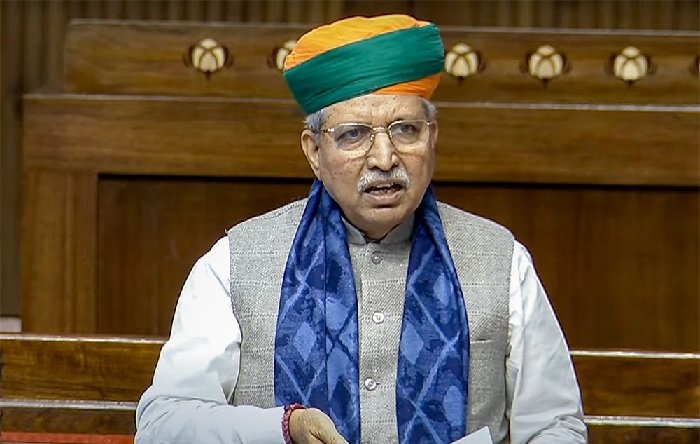
The Bill was introduced by Union Law Minister Arjun Ram Meghwal and passed by voice vote without debate during the Monsoon Session. Proceedings in the House had been repeatedly adjourned as Opposition parties demanded discussions on the police action against protesting students and allegations surrounding donations at the Ram Temple in Ayodhya. Once the House reconvened, the government moved swiftly, completing the passage of the Bill in roughly ten minutes before taking up other legislative business.
Also see: Sonam Wangchuk to Join June 6 Protest Seeking Dharmendra Pradhan’s Resignation
Also see: Ram Temple donation theft: VHP to await SIT probe on Rai
Also see: Women’s Reservation Delimitation Bill 2026 Sparks Clash
Lok Sabha Replaces May Ordinance With Permanent Law
Monday’s vote marks Parliament’s formal approval, the increase in judicial strength did not begin with this Bill. The Centre had already brought the change into effect through the Supreme Court (Number of Judges) Amendment Ordinance, 2026, promulgated on May 16 after receiving Union Cabinet approval earlier that month. The legislation passed by the Lok Sabha now replaces that temporary ordinance with a permanent statutory amendment to the Supreme Court (Number of Judges) Act, 1956.
The amendment changes a single provision in the 1956 law, replacing the existing sanctioned strength of 33 judges with 37 judges, excluding the Chief Justice of India. While technically a narrow amendment, it creates the largest sanctioned bench in the Supreme Court’s history.
The Constitution itself does not prescribe how many judges the Supreme Court should have. Under Article 124, Parliament has the authority to determine that number through ordinary legislation, meaning the increase required only a statutory amendment rather than a constitutional amendment.
Also see: PM Kisan Status Check 2026: 23rd Installment & Eligibility
Also see: Indian Army Uniform 2026 Introduces Major Dress Reforms
Lok Sabha Clears Bill as Government Cites Rising Caseload
The Centre has justified the expansion by pointing to a steady rise in the Supreme Court’s workload. According to the Statement of Objects and Reasons accompanying the Bill, the court had 92,101 pending cases as of January 1, 2026. Government data also shows that during 2025, the Supreme Court received 75,410 fresh cases but disposed of only 65,615, leaving a net increase of 9,795 cases over the year. Those figures have become the government’s central argument for expanding judicial capacity.
Meghwal told the House the proposal was intended to improve the efficiency of the Supreme Court and facilitate quicker disposal of pending matters. The government has also argued that additional judges would make it easier for the Chief Justice of India to constitute Constitution Benches, which require a minimum of five judges and often reduce the number of judges available for regular appellate work.
The financial memorandum attached to the Bill estimates an annual recurring expenditure of around ₹10.57 crore for salaries, staff and related support for the four additional judges. It also projects a one-time expenditure of approximately ₹3.47 crore for official residences and vehicles. Those figures received little attention during parliamentary proceedings but provide a clearer picture of the immediate financial impact of the expansion.
More Judges on Paper, Not Necessarily More Judges in Court
While the legislation increases the court’s sanctioned strength, it does not automatically place four additional judges on the Bench. The appointments must still go through the established collegium process, receive government clearance and culminate in presidential appointments before the new positions are fully occupied. Until then, the court’s working strength can remain below its sanctioned capacity despite the statutory increase.
That distinction is significant because vacancies have periodically limited the Supreme Court’s effective capacity even after earlier increases in sanctioned strength. Legal observers have repeatedly argued that expanding the number of judges is only one part of addressing judicial delays. Infrastructure, courtroom availability, registry capacity and the pace of appointments also influence how quickly cases move through the system.
Also see: India Slovakia Comprehensive Partnership Unveiled
Also see: Nepal PM’s ‘Encroachment’ Remark Sparks Political Storm Over India Border Dispute

Lok Sabha Approves First Supreme Court Expansion Since 2019
The amendment marks the first statutory increase in Supreme Court strength since 2019, when Parliament raised the sanctioned number of judges from 31 to 33, excluding the Chief Justice. The court has expanded gradually since its establishment in 1950, when it began functioning with the Chief Justice and seven puisne judges. Subsequent revisions came in 1956, 1960, 1977, 1986, 2009 and 2019, reflecting the growing complexity and volume of litigation reaching the country’s highest court.
The passage of the Bill also unfolded against the backdrop of continued parliamentary disruption. Opposition MPs spent much of the day pressing for discussions unrelated to the legislation, including the police action against student demonstrators and allegations concerning donations at the Ram Temple in Ayodhya. Despite the impasse, the government succeeded in clearing the judges’ Bill and introducing other legislation before the House adjourned.
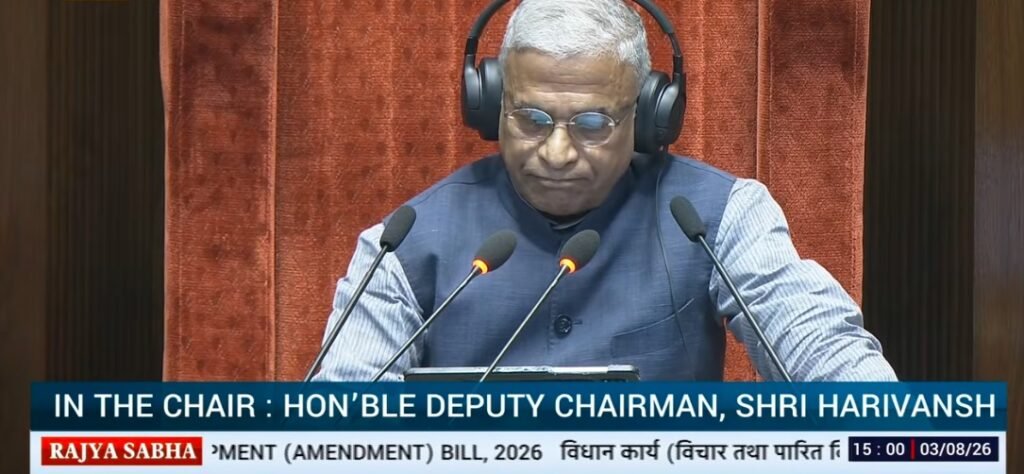
With the Lok Sabha having approved the measure, the Bill now proceeds to the Rajya Sabha. If it receives Parliament’s final approval, it will formally replace the ordinance already in force and permanently raise the Supreme Court’s sanctioned strength to 38 judges, including the Chief Justice of India. Whether that translates into faster justice will depend less on the legislation itself and more on how quickly the additional positions are filled and integrated into the court’s day-to-day functioning.
Also see: Can India Broker Peace in the US–Israel–Iran Conflict?
Also see: India’s Forex Reserves Take a hit: What this means for the Economy
Also see: LS | Voting & Passing | Supreme Court (No. of Judges) Amend. Bill, 2026 | 03 Aug 2026
FAQs
1. What Bill did the Lok Sabha pass?
The Lok Sabha passed the Supreme Court (Number of Judges) Amendment Bill, 2026.
2. What does the Supreme Court Amendment Bill do?
It increases the Supreme Court’s sanctioned strength from 34 to 38 judges, including the Chief Justice.
3. Why did the Lok Sabha pass this Bill?
The government cited rising case pendency and the need for faster disposal of cases.
4. How many cases are pending in the Supreme Court?
The Supreme Court had 92,101 pending cases as of January 1, 2026.
5. Does the Bill immediately add four new judges?
No, new judges must first be appointed through the constitutional appointment process.
6. Who introduced the Bill in the Lok Sabha?
Union Law Minister Arjun Ram Meghwal introduced the Bill.
7. Was the Bill debated in the Lok Sabha?
No, it was passed by voice vote without debate amid Opposition protests.
8. Why were Lok Sabha proceedings disrupted?
Opposition MPs protested over student demonstrations and the Ayodhya temple donation controversy.
9. What is the new strength of the Supreme Court?
The sanctioned strength is now 38 judges, including the Chief Justice of India.
10. What is a Constitution Bench?
A Constitution Bench consists of at least five Supreme Court judges hearing important constitutional matters.
11. Does the Constitution fix the number of Supreme Court judges?
No, Parliament determines the Supreme Court’s strength through legislation.
12. Which law does the amendment change?
It amends the Supreme Court (Number of Judges) Act, 1956.
13. What happened before Parliament passed the Bill?
The Centre increased the court’s strength through an ordinance issued in May 2026.
14. What happens after the Lok Sabha passes the Bill?
The Bill moves to the Rajya Sabha before becoming law.
15. Will increasing judges eliminate the court backlog?
Additional judges may help, but appointments and judicial infrastructure also affect case disposal.