

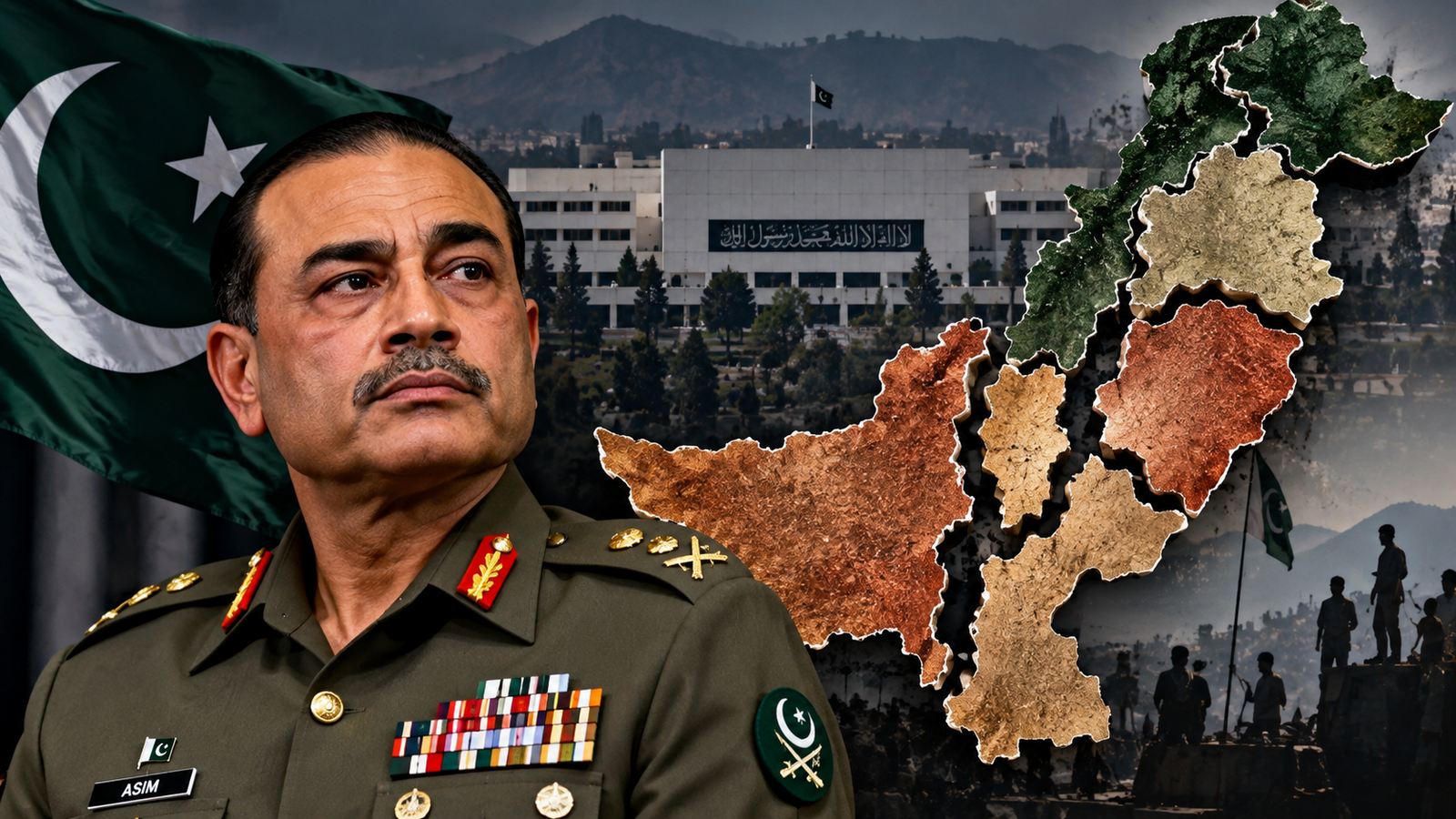
Pakistan’s Provinces Could Be Split, But Who Is Really Behind the Plan?
Pakistan’s political map could face a major overhaul, but the claim that Field Marshal Asim Munir wants to divide the country’s four provinces remains unverified. The clearest documented proposal comes from Planning Minister Ahsan Iqbal, who has offered two alternatives: create 12 to 15 provinces or empower local governments across 160 districts.
Pakistan’s provincial boundaries are not administrative lines that a military commander can simply redraw. Changing them requires constitutional approval, including a two-thirds majority in the affected provincial assembly. Meanwhile, Sindh’s legislature has formally rejected attempts to divide its territory, exposing the political resistance any restructuring would face.
Also see: Jaishankar UN Reply to Pakistan Journalist on Terrorism
Also see: Terrorism in Pakistan Hits a New Peak as Masood Azhar Case Exposes a Deeper Security Crisis
Who Proposed Dividing Pakistan?
The public debate gained momentum in late July 2026, when Interior Minister Mohsin Naqvi called for new administrative units as part of governance reforms. His remarks triggered political reactions and brought an old question back into national discussion: can Pakistan govern its growing population effectively through four provinces?
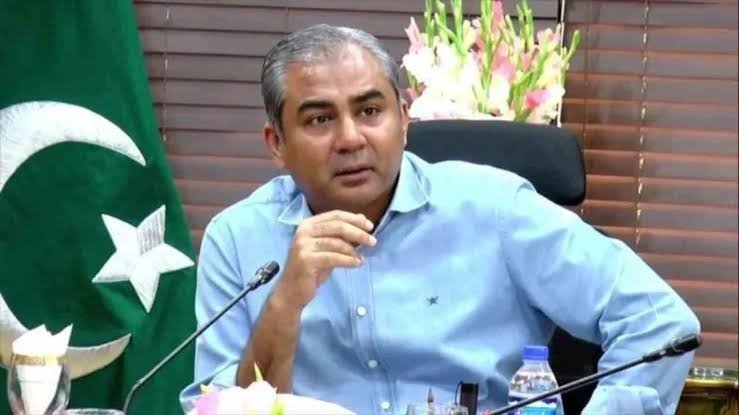
On September 2, Planning Minister Ahsan Iqbal presented a more specific proposal. He argued that the existing system had failed to deliver adequate improvements in social indicators and that administrative powers remained too concentrated.
Iqbal identified two possible routes. Pakistan could establish 12 to 15 provinces through political consensus, or it could create empowered local governments in 160 districts. The second option would direct resources through Provincial Finance Commissions, giving district administrations greater responsibility for development and public services.
These alternatives are fundamentally different. Creating provinces would redraw the federation’s political structure. Empowering district governments would decentralise administration without necessarily changing provincial boundaries.
Iqbal argued that the country’s population, estimated at 260 million in the September reporting, had placed excessive pressure on the existing structure. He also criticised the failure to transfer sufficient powers and resources to grassroots institutions following the 18th Amendment.
What Would the Proposed Changes Actually Mean?
Under the first option, Pakistan would move from four provinces to a system containing 12 to 15. The existing provinces are Punjab, Sindh, Khyber Pakhtunkhwa and Balochistan. Creating additional provinces would require decisions about their boundaries, capitals, representation, budgets and administrative institutions.
The second option would establish empowered local governments across 160 districts. Under Iqbal’s proposal, these institutions would receive resources directly through Provincial Finance Commissions, potentially improving their capacity to manage development projects and monitor implementation.
That approach targets the distance between provincial decision-makers and residents seeking public services. It would not, by itself, create 160 provinces or independent territories. Treating the two options as a single plan would misrepresent what the minister actually proposed.
Pakistan’s social and human development indicators had deteriorated over the preceding 15 years and that centralisation at the provincial level had obstructed effective service delivery.
Also see: Pakistan Launches Cross-Border Operation After Karachi Attack, Says 29 Militants Killed
Why Sindh and the Constitution Could Block a Redrawn Map
Pakistan’s provinces are powerful political units, not merely oversized administrative departments. Their boundaries shape political representation, public spending and the distribution of authority between provincial and federal governments.
Sindh has already demonstrated the strength of the opposition. Its assembly passed a resolution on September 3, issued officially on September 7, rejecting proposals to divide the province or alter its territorial boundaries. The resolution invoked Article 239(4) of the Constitution. Sindh’s resolution was passed amid opposition from lawmakers who walked out before it was tabled.
On September 12, Prime Minister Shehbaz Sharif’s political adviser Rana Sanaullah said Parliament was the appropriate forum for deciding whether new provinces should be created. He said the issue had not reached the cabinet. The following days’ reporting described the proposal as being at an early stage.
The Military Question Remains Unanswered
The allegation involving Munir is politically explosive because it suggests that restructuring could weaken provincial power centres and increase the military establishment’s influence. That is a plausible concern to investigate, but it is not proof of his motive or involvement.
Smaller provinces might bring the government closer to residents. They could also change the political influence of established parties and redistribute control over resources.
For now, Iqbal’s alternatives are documented, Sindh’s opposition is official and the constitutional hurdles are clear. Pakistan’s next concrete step would be a formal parliamentary process, supported by a published proposal and the required political approvals.
Also see: Pakistan $3 Billion Saudi Loan: Survival or Debt Trap
Also see: “Burn in Hell”: Pakistan – Israel War of Words Explodes as Lebanon Burns