
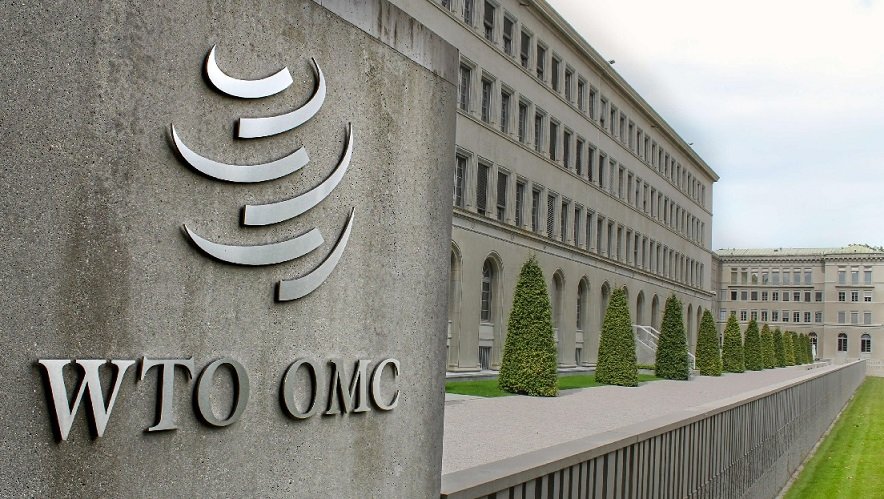
The 18th BRICS Summit in New Delhi ended with a direct demand that has exposed the depth of the World Trade Organization‘s dispute settlement crisis. Leaders called for the appointment of new Appellate Body Members “without further delay” and demanded the immediate restoration of a fully functioning two tier WTO dispute settlement system. The declaration was adopted after the WTO’s appointment process had already failed 99 times.
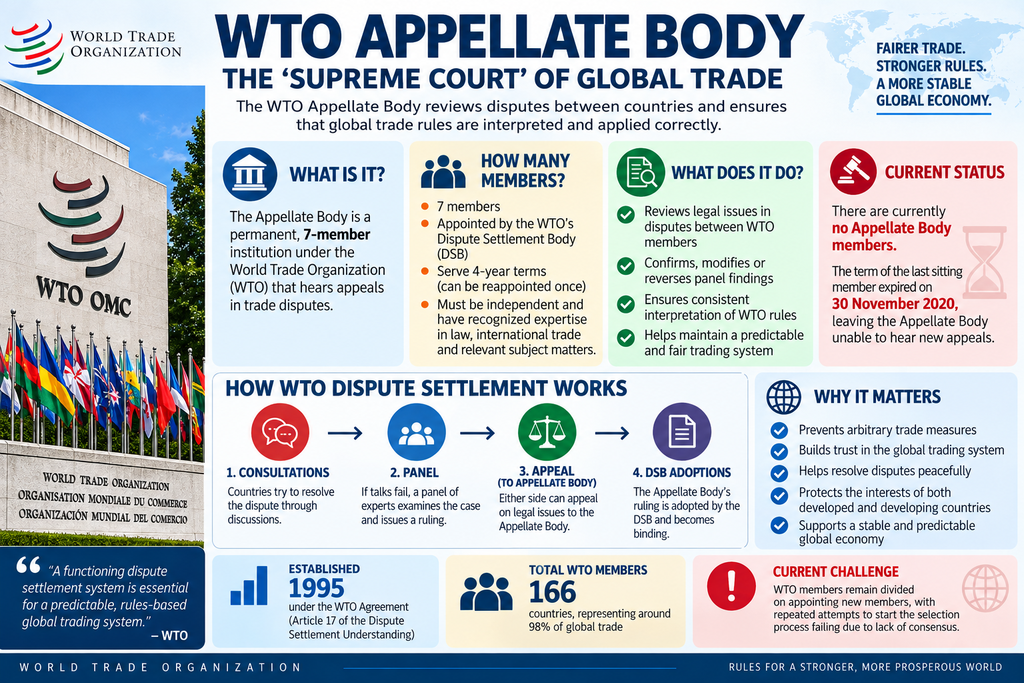
The WTO’s Appellate Body currently has zero sitting members. The body was created in 1995 with seven members appointed by the WTO Dispute Settlement Body for four year terms, with one possible reappointment. The term of the last sitting member expired on November 30, 2020. The WTO says the body is therefore unable to review appeals.
Read more about : WTO | Dispute settlement – Appellate Body
Read more about : BRICS New Delhi Declaration: Building for Resilience, Innovation, Cooperation and Sustainability
BRICS puts Appellate Body Members back at the centre
The New Delhi Declaration did not simply call for general WTO reform. It specifically linked reform to the restoration of the appellate system.
“We strongly advocate for the immediate restoration of an accessible, effective, fully functioning, two-tier binding WTO dispute settlement mechanism as a foundation for trust and predictability for all WTO members, and the appointment of new Appellate Body members without further delay,” the declaration said.
BRICS also committed to continuing negotiations in Geneva and strengthening coordination through its Informal Consultative Framework on WTO issues. The wording places the Appellate Body dispute inside a wider argument over the future structure and authority of the WTO.
India’s role is particularly important. New Delhi chaired the 2026 BRICS process and hosted the summit on September 12 and 13. The summit’s trade agenda came after months of unsuccessful WTO negotiations over the same institutional problem.
Also see: Russia Kyiv Strike 2026: 27 Killed in Deadliest Russian Attack
Also see: Quad Ministers Meeting Held in New Delhi Amid China Tensions
Also see: Trump and Xi Strike Tone in Beijing as US-China Tensions Simmer
Also see: Indian Army Uniform 2026 Introduces Major Dress Reforms
130 countries support appointments but the process remains frozen
The most striking figure comes from the WTO itself. In July, Colombia introduced a proposal on behalf of 130 WTO members to begin selecting replacements for vacant Appellate Body positions. It was the 99th time the proposal had been brought forward without the selection process being launched.
The United States opposed the proposal. Washington has repeatedly argued that simply restoring the previous Appellate Body would not resolve what it considers fundamental problems with WTO dispute settlement. At the July meeting, the WTO recorded that the United States said the proposal did not address those concerns. More than 20 other members then spoke in support of restoring a fully functioning system.
The disagreement is therefore not about whether WTO dispute settlement needs attention. There is broad support for reform. The dispute is over whether new Appellate Body Members should be selected first or whether the system should be substantially redesigned before appointments resume.
The WTO’s own 2026 World Trade Report says members have been unable to agree on new Appellate Body appointments since mid 2017, amid concerns over alleged judicial overreach and delays in issuing findings. The report says the lack of an Appellate Body has allowed panel rulings to be appealed “into the void”, preventing their adoption and reducing certainty in the system.
Also see: World Cup 2026 Roundup: Six Matches Produce Historic Milestones
Also see: Ambedkar Jayanti 2026: A Nation Marks Equality
India has a direct stake in the dispute
The issue is not theoretical for India because in May 2026, the WTO recorded a request by China for a dispute panel concerning Indian measures affecting solar cells, solar modules and certain information technology goods. The dispute is moving through the WTO system at a time when its appellate tier remains unavailable.
The institutional crisis also has a clear Indian connection from the past. Ujal Singh Bhatia, an Indian former Appellate Body Member and its 2018 chair, warned in May 2019 that the body was approaching the three-member quorum required to hear appeals. “Unless something extraordinary happens, in December 2019, the AB will fall below the three-member quorum necessary to compose Divisions and hear appeals,” Bhatia said.
His warning became reality months later. The WTO now has 166 members, yet its appellate institution remains empty. The system has not completely stopped functioning. The WTO says members filed 13 new disputes in 2025, while its 2026 World Trade Report found that roughly half of disputes since December 2019 were resolved without an appeal into the void.
That creates the unresolved issue at the heart of the BRICS declaration. Political support for restoring the Appellate Body is substantial, but the institutional deadlock has survived repeated declarations, negotiations and appointment proposals.
The next test will not be another summit statement. It will be whether BRICS members can turn the New Delhi demand into coordinated action inside the WTO and whether that pressure can produce a compromise with Washington. Until then, the Appellate Body Members demanded in New Delhi remain positions that have no occupants.
Also see: India Fast Breeder Reactor at Kalpakkam Achieves Criticality
Also see: Genetically Modified Apples: Have They Helped the World or Just Reduced Waste?
Also see: World Map Distortion: Why Country Sizes Look Wrong
Also see:South China Sea: China Warned Philippines Mid-Speech