

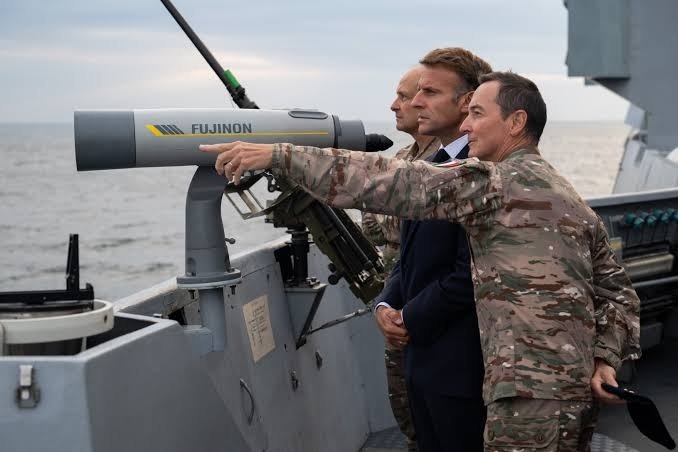
France is not testing a nuclear bomb. It is testing the missile designed to deliver one.
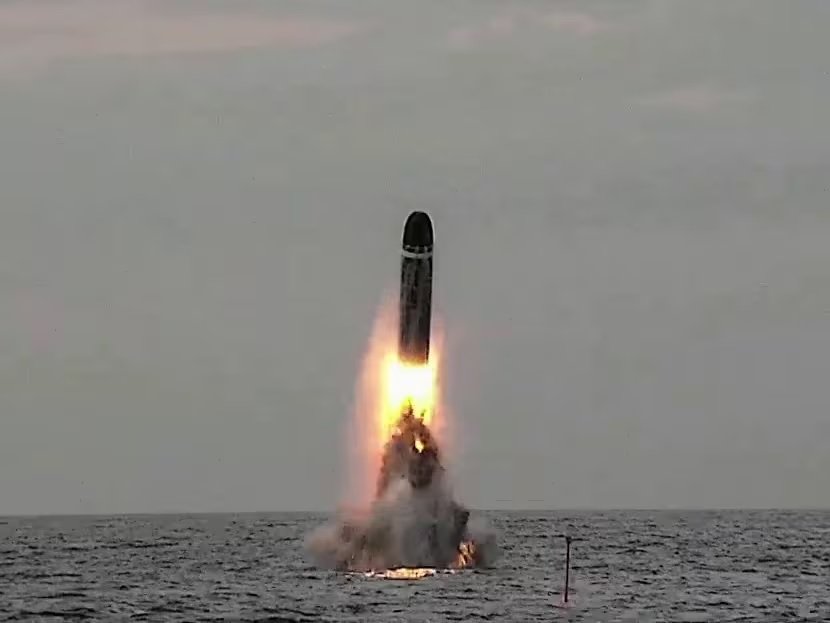
On October 6, the French Navy launched an unarmed M51.3 ballistic missile from the nuclear-powered submarine Le Vigilant off Finistère. The French defence ministry described it as an acceptance test after the submarine’s maintenance and repair overhaul. The missile carried no nuclear warhead and splashed down in the North Atlantic, several hundred kilometres from any coastline.
The test is part of a bigger change: France is rebuilding the machinery behind its nuclear arsenal while President Emmanuel Macron has ordered an increase in the number of warheads.
Why France is firing the missile
The M51.3 firing was conducted under Operation Smertrios to validate Le Vigilant’s ability to operate its missile system after its overhaul. France’s Directorate General for Armament, or DGA, tracked the missile throughout its flight using the Monge test-and-measurement ship.
But the timing carries strategic weight. Macron has argued that France must adapt its deterrence to changing threats and increasingly sophisticated missile systems.
In March, Macron announced that France would increase the number of nuclear warheads in its arsenal. He also said France would stop publishing the numerical size of its stockpile. “A strengthening of our arsenal is indispensable,” he said, arguing that France needed to preserve its ability to deter an attack.
Also see: France Cuts 1,588 Teacher Posts While Calling Education a Priority
What has actually been upgraded
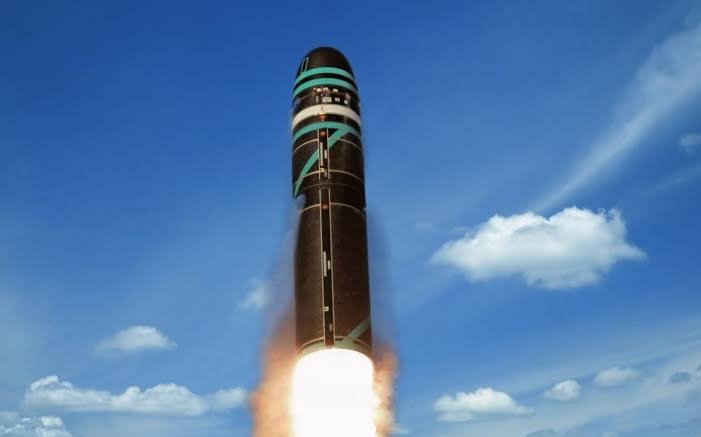
The M51.3 is the third version of France’s M51 submarine-launched ballistic missile. Development began in 2014 and the missile entered operational service on October 24, 2025, after a qualification flight from Biscarrosse in November 2023.
The French defence ministry says the M51.3 carries new TNO-2 oceanic nuclear warheads and has improved performance in three areas: range, precision and the ability to penetrate missile defences. The ministry says those improvements are intended to preserve the ocean-based deterrent against evolving adversary missile defences.
The exact range is classified. Independent analysts estimate that the M51.3 can travel more than 9,500 kilometres, compared with more than 9,000 kilometres for the previous version. Those figures are estimates, not French government specifications.
Each of France’s four ballistic-missile submarines can carry 16 M51 missiles. Independent assessments estimate that the M51.3 can carry four to six independently targetable re-entry vehicles, although France does not publicly disclose the operational configuration.
Improving accuracy and penetration capability is intended to keep the submarine-based deterrent credible as adversaries improve missile-defence systems.
Also see: France Pulls Gold From US, Locks in 13 Billion Profit
Also see: UAE Iran BRICS Meeting Opens a New Diplomatic Channel in New Delhi
The nuclear arsenal is changing too
The missile modernization accompanies a consequential policy decision.
France had long maintained an arsenal of fewer than 300 warheads. The Federation of American Scientists estimated approximately 290 warheads in 2025, plus about 80 retired warheads awaiting dismantlement. But that estimate is now a baseline rather than an official current count.
Macron’s March announcement changed the rules. France will increase its warhead inventory, but will no longer publish the number. The French government says the increase is being funded within its defence-planning framework. Parliamentary documents put total 2026 spending on nuclear deterrence at €7.4 billion, including modernization of the submarine and airborne components.
France is also moving toward what Macron calls “forward deterrence,” with European partners participating in exercises and discussions about French strategic forces. The policy could include temporary deployment of French strategic air forces on allied territory, while nuclear-use authority remains French.
What the October launch does not prove
The launch does not prove that France fired a nuclear weapon, prepared to use one or conducted the test specifically because of a Russian threat.
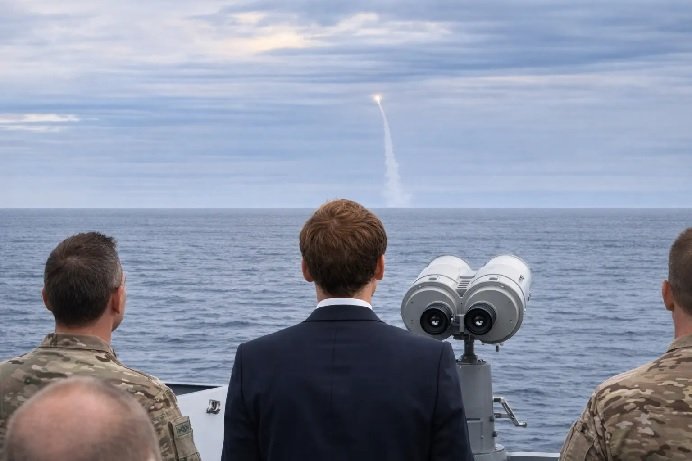
The missile was unarmed. The official explanation is an acceptance test following Le Vigilant’s overhaul. The test does, however, demonstrate that France is putting the newest version of its missile into submarine operations for the first time from a submarine after bringing it into service in 2025.
The next phase is already visible. France is developing the M51.4 and new-generation ballistic-missile submarines while expanding the architecture supporting its nuclear arsenal. In 2025, the development contract for M51.4 was awarded, extending the incremental modernization of the missile family.
The October launch was a test of a missile, but also a public demonstration of something broader: France intends to keep its nuclear deterrent technologically credible, larger than before and capable of surviving a more heavily defended future.
Also see: BRICS New Delhi Declaration 2026: Key Points & Impact