

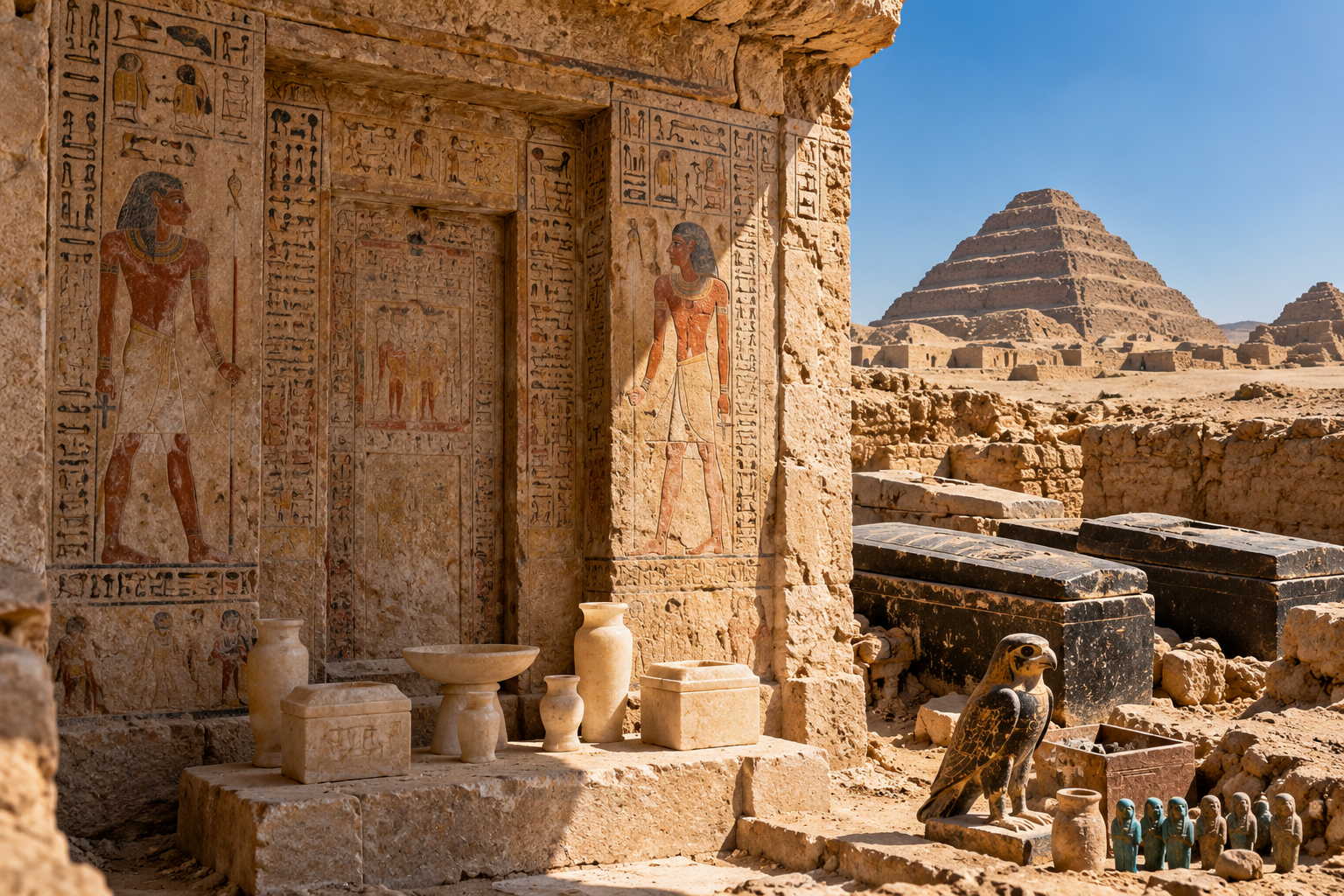
Archaeologists have uncovered an Egyptian tomb at Saqqara that belonged to an Old Kingdom official whose titles placed him close to the machinery of royal power, including one translated as “keeper of the secrets of royal decrees.”
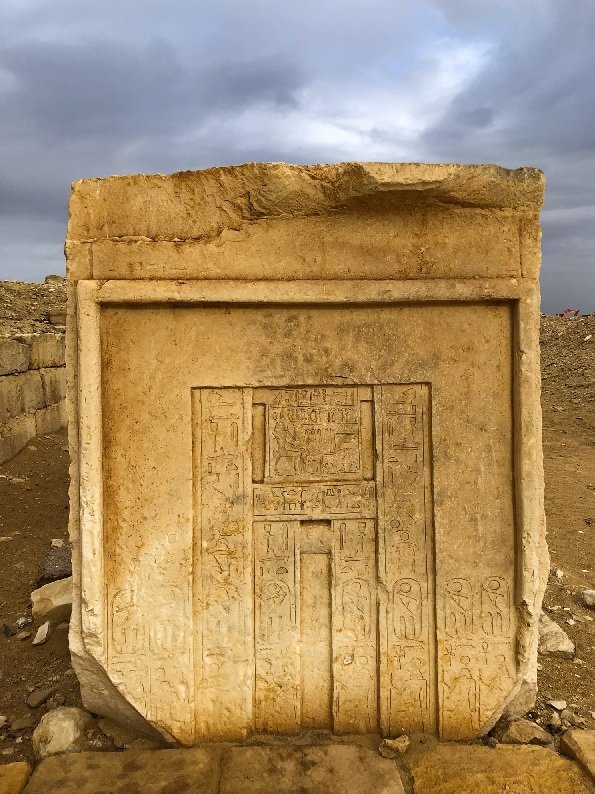
The tomb of Sekhentio-Ptah was found during the first excavation season in Sector A, west of the Bubasteion Necropolis. Egypt’s State Information Service announced the discovery on August 29, 2026, saying the burial contained a funerary chapel, a false door still in its original position and alabaster ritual objects arranged before it.
The official announcement says an Egyptian mission made the discovery during its first excavation season in the western part of Bubasteion. The alabaster assemblage included an offering table, offering slab and purification basin found directly before the false door. Their original positions preserve evidence about how the funerary space was organized, rather than merely showing that such objects existed.
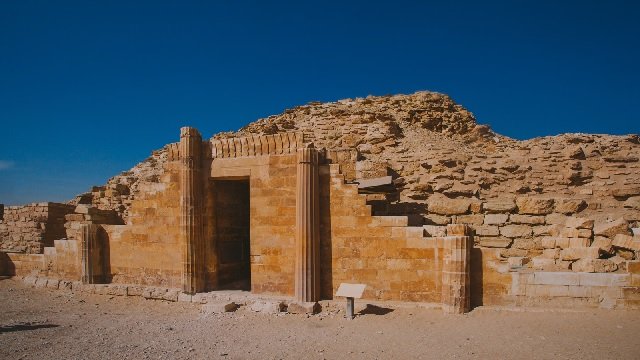
Saqqara was the necropolis of ancient Memphis and was repeatedly used for elite burials over centuries. The mixture of Old Kingdom architecture and later interments is therefore part of the archaeological significance of the discovery.
Also see: The Internet Is Not in the Cloud… It’s Sitting on the Ocean Floor
Also see: Selective Breeding in Dogs: Did We Design Them?
Also see: Genetically Modified Apples: Have They Helped the World or Just Reduced Waste?
Excavation and specialist study will continue, leaving the chronology and identities of later burials unresolved.
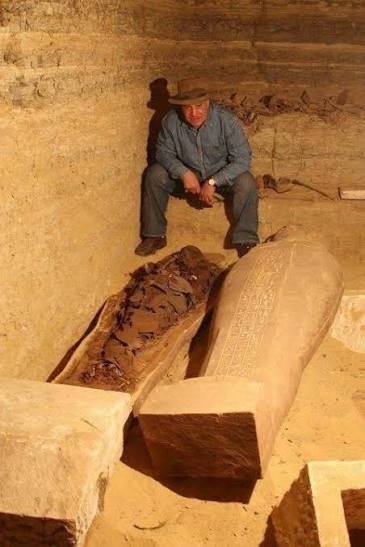
The tomb itself dates to the late Fifth or early Sixth Dynasty, while parts of the surrounding burial network were used much later. More than 100 faience ushabtis, three sealed stone sarcophagi, human remains, painted funerary cartonnage, pottery and a wooden falcon figure were recovered from interconnected shafts. Independent Egyptologist Ann Macy Roth told Live Science that some of these objects probably belonged to later burials rather than Sekhentio-Ptah’s original interment.
What the Egyptian tomb inscription reveals
The inscriptions on the funerary objects identify Sekhentio-Ptah and record several senior positions. Egyptian authorities list him as a royal chamberlain, supervisor of the king’s works, supervisor of royal documents, priest of the goddess Maat and supervisor of scribes.
The “keeper of the secrets” title has attracted the most attention, but its meaning is less mysterious than the wording suggests. Roth said it likely referred to responsibility for royal documents and the people who produced them, giving the official access to confidential information. She also estimated, from the design of the false door, that the tomb is about 4,350 years old.
There is a translation issue that requires caution. Some secondary reports describe Sekhentio-Ptah as an overseer of a royal library, while Egypt’s official English account says “supervisor of scribes.” The original inscription should be treated as the decisive evidence before the library description is presented as established fact.
The later burials change the picture
The three sealed stone sarcophagi and more than 100 ushabtis make the wider excavation unusually rich, but they should not automatically be described as possessions of Sekhentio-Ptah. The official account says the interconnected shafts contained burials from later periods, demonstrating that the necropolis continued to be reused.
Also see: Curiosity Rover: NASA Gave It 2 Years. Mars Kept It for 14
Also see: ISRO Launches EOS-05, Expanding India’s Space Reach
Some shafts also show evidence of ancient looting. Archaeologists found openings created by tomb robbers between burial chambers. That means the wider complex was neither a single untouched time capsule nor a burial site frozen in the Old Kingdom.
The distinction is important because Sekhentio-Ptah himself has not been physically identified through a recovered mummy. The evidence linking him to the tomb comes from the inscriptions and funerary architecture.
Saqqara excavation continues
The discovery was announced alongside a broader run of archaeological work at Saqqara. In July, Egyptian archaeologists reported three New Kingdom rock-cut tombs at the Bubasteion Necropolis, showing that the area continued to produce burials from different periods.
For the Sekhentio-Ptah excavation, the next stage is further excavation and scientific analysis. Egyptian authorities say the work is expected to clarify burial practices and the development of the Saqqara necropolis across successive periods.
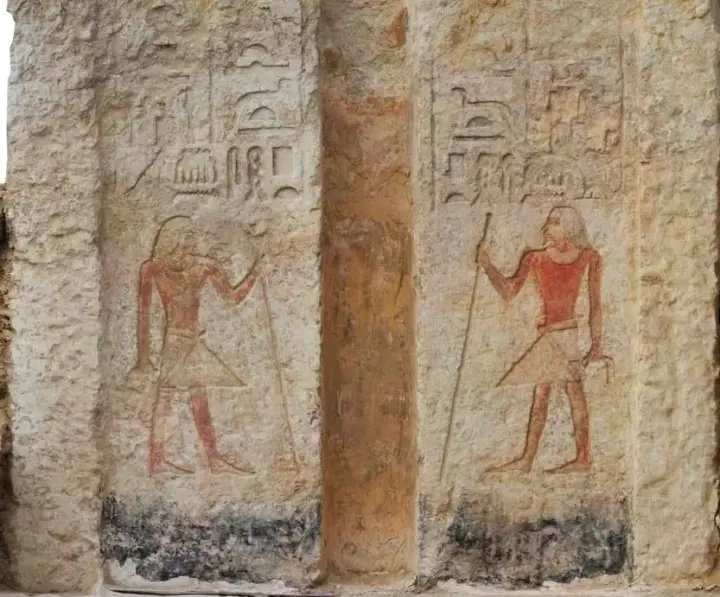
For now, the strongest evidence is not the dramatic phrase “keeper of the secrets.” It is the surviving inscription, the false door preserved in place and the ritual objects found with it. Those details provide the archaeological link to a senior official who lived roughly 4,350 years ago, while the later burials show that the site’s story continued long after his death.
Also see: India Wants to Build a ‘Power Bank’ for Satellites, But the Hardest Part Is Catching Them
Also see: Best AI Tools for Students in 2026: 10 Free AI Apps That Actually Make Studying Smarter