
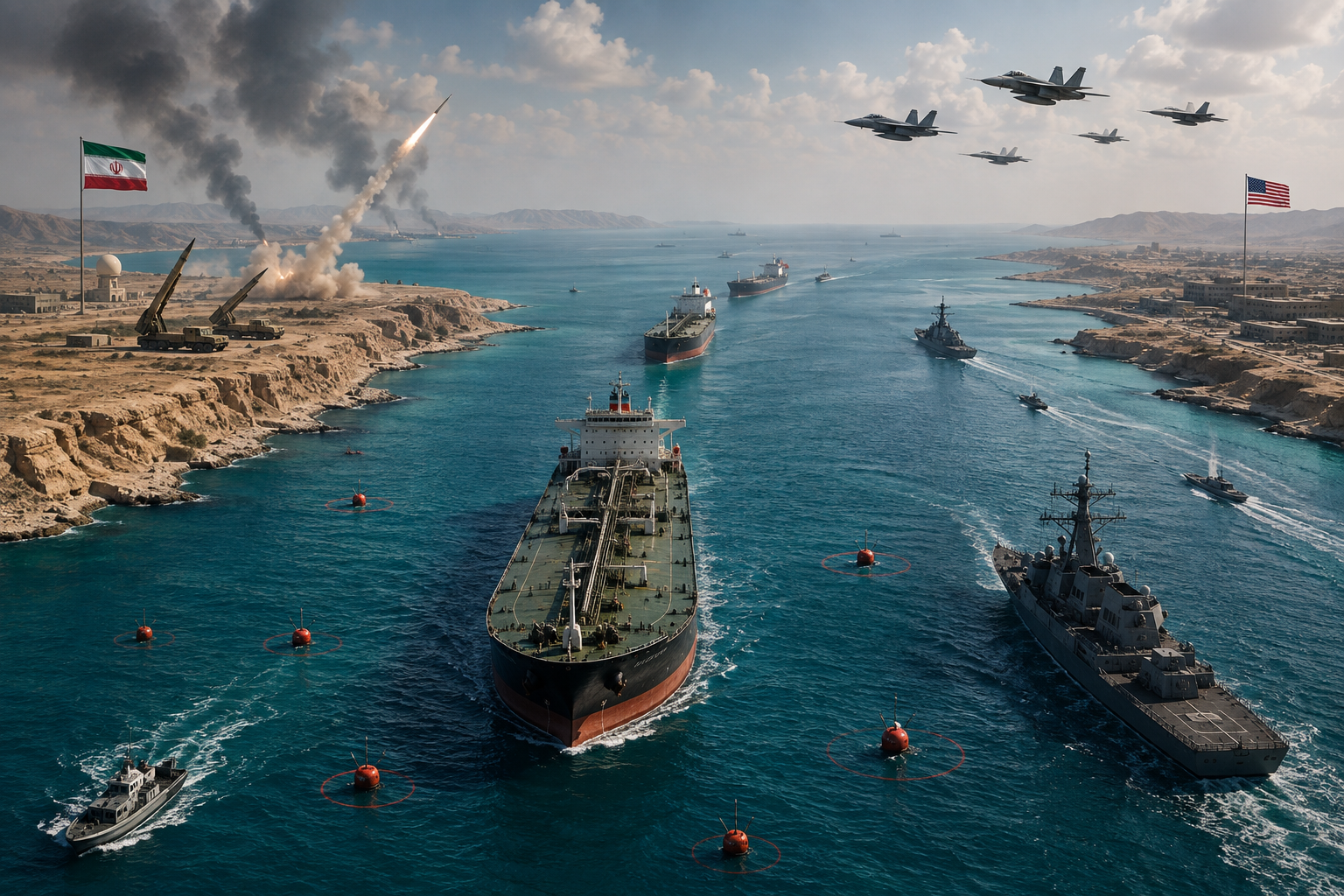
The Strait of Hormuz has become the centre of a dangerous new phase in the US-Iran war. US forces launched fresh strikes on Iranian targets near the strategic waterway on September 1, after Washington accused Iran of preparing to deploy sea mines and retaliating against American forces in the region. Iran fired back. President Donald Trump then issued a blunt warning: if Tehran retaliates again, the next US attack will be harder.
Trump said the United States was striking Iranian targets near the Strait of Hormuz and described the operation as “large and powerful”. He said the attacks were retaliation for what he called Iran’s failed attempt to add mines to the waterway and for eight missiles fired towards a US military base in Jordan.
The immediate escalation followed a US strike on August 30 against two Iranian rocket launchers on Larak Island, located inside the Strait of Hormuz. US Central Command said Iranian forces were preparing to use the launchers to deploy sea mines into the shipping route. Iran subsequently launched missiles towards US military positions in Jordan, while Jordan said its air defences intercepted eight missiles.
Also see: Strait of Hormuz Crisis: US-Iran Tensions Disrupt Global Oil Trade
Also see: Indian Rupee Falls Against US Dollar as Oil Prices, Foreign Fund Outflows Pressure the Currency
Also see: US Strike on Tanker Carrying Indian Crew Sparks Diplomatic Clash Near Strait of Hormuz
Also see: Trump-Netanyahu Rift Explodes Over Lebanon Strikes as Iran Talks Stall
The Mine Claim Is Now At The Heart Of The Fight
Washington’s justification rests heavily on the alleged Iranian mining operation. CENTCOM has described the Larak operation as “limited, precise action” designed to stop Iranian forces from laying mines in the Strait of Hormuz. The US military has also said, their forces have cleared mines from shipping routes the previous week.
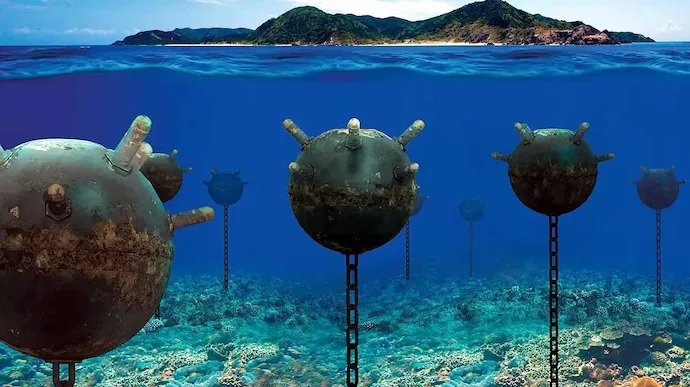
The publicly available evidence establishes a US claim that Iran was preparing to deploy mines. It does not establish that Iran successfully laid a new minefield across the Strait of Hormuz.
Iran has rejected the broader US narrative. Iranian Foreign Minister Abbas Araghchi accused Washington of trying to manipulate energy markets, saying: “Our intelligence shows major efforts to game energy markets.”
There is also a technical dispute. Some experts have questioned the feasibility of using rockets to deploy sea mines. But Iran has previously demonstrated a rocket-based mine-laying concept during military exercises, meaning the claim cannot simply be dismissed as impossible.
The bigger problem is verification. Washington has not publicly released detailed imagery showing exactly what the Iranian launchers were carrying, how the alleged mine deployment was supposed to work or how close the operation was to actually placing mines in commercial shipping lanes.
Also see: Trump Yet to Approve Proposed U.S.-Iran 60-Day Ceasefire Deal as Nuclear Talks Intensify
Also see: Trump vs Pope Clash Explodes After AI Jesus Image
Also see: Pakistan Israel War of Words: “Burn in Hell” Amid Lebanon Strikes
Also see: US Army Chief Forced Out Amid War: Pentagon Alarm
Hormuz May Be “Open” But Ships Aren’t Acting Like It
The Strait of Hormuz is only 29 nautical miles wide at its narrowest point, with designated shipping channels much narrower than the waterway itself. Around 20 million barrels of oil and oil products moved through the Strait in 2025, equal to roughly 25% of global seaborne oil trade, according to the International Energy Agency.
That makes the current shipping data more revealing than political claims.
On September 1, only four commodity vessels transited the Strait of Hormuz, compared with a 10-day average of about 13 vessels, according to Kpler data. The preliminary figures included one very large crude carrier, one Panamax tanker, one Kamsarmax carrier and one intermediate tanker.
So even if US forces have cleared specific mines and can escort vessels through selected routes, the commercial reality is different. A waterway can technically remain navigable while shipowners, insurers and commodity traders still consider it too dangerous.
Oil markets reacted immediately. Crude prices jumped more than $4 a barrel on September 1 as traders assessed the risk of further supply disruption.
And the economic pressure on Iran is already severe. Reports show that Iranian crude loadings fell from roughly 2 million barrels per day in March to around 220,000–255,000 barrels per day in August amid the US blockade and restrictions.
Trump’s Iran War Is Now An Economic And Military Siege
The latest strikes come only days after the Trump administration launched Operation Economic Outcast, a campaign announced on August 24 to sever Iran’s remaining international financial links. Treasury Secretary Scott Bessent called it an “unprecedented campaign” aimed at cutting the economic lifelines sustaining Tehran.
Read now: Operation Economic Outcast: Total Isolation of the Iranian Regime – The White House
Read now : Rapid Response 47 on X: “WATCH IN FULL: @SecScottBessent announces Operation Economic Outcast
That means the Strait of Hormuz is no longer just a military flashpoint. It is tied directly to Washington’s wider strategy of squeezing Iran’s economy.
For India, the consequences are immediate. The government said in March that around 70% of India’s crude imports had been rerouted outside the Strait of Hormuz. But LPG remains much more exposed: India imports about 60% of its LPG consumption, and around 90% of those imports normally come through the Strait.
The latest escalation also carries a civilian cost. Iranian authorities reported that a US strike hit a residence hosting a wedding in southern Iran. Iranian officials said at least four people, including a child, were killed and around 50 injured, although casualty figures have varied as reporting develops.
Iranian President Masoud Pezeshkian has said Tehran does not want war but will respond to attacks. The IRGC has separately threatened punishment for the United States.
The political pressure on Trump is growing too. In July, the Republican-controlled House voted 214–208 for a war-powers resolution directing Trump to stop military action against Iran without congressional authorization. The Senate rejected a similar measure 49–47.
Now the Strait of Hormuz sits at the intersection of all of it: military retaliation, oil supplies, shipping security, Iran’s economic survival and Trump’s authority to continue the war.
Trump says Iran will face an even bigger attack if it strikes back. Tehran has already promised retaliation.
The next move could determine whether the Strait of Hormuz remains a severely disrupted trade route or becomes the trigger for another major expansion of the war.
Also see: Hormuz Oil Crisis: Trump Says “Buy US Oil or Take It Yourself”
Also see: Iran War: Who’s Cashing In While the World Pays the Price?
Also see: Iran Israel War 2026: Oil Surges Amid Hormuz Crisis
Also see: India War Risk Insurance: ₹1,000 Crore Fund Planned Amid Hormuz Crisis Disruptions
Also see: Can India Broker Peace in the US–Israel–Iran Conflict?
Also see: The U.S.-India Trade Pivot: A Grand Deal or a Tug-of-War?
Also see: US-Iran Deal or Diplomatic Mirage? Secretive Switzerland Talks Produce Surprise Breakthrough