

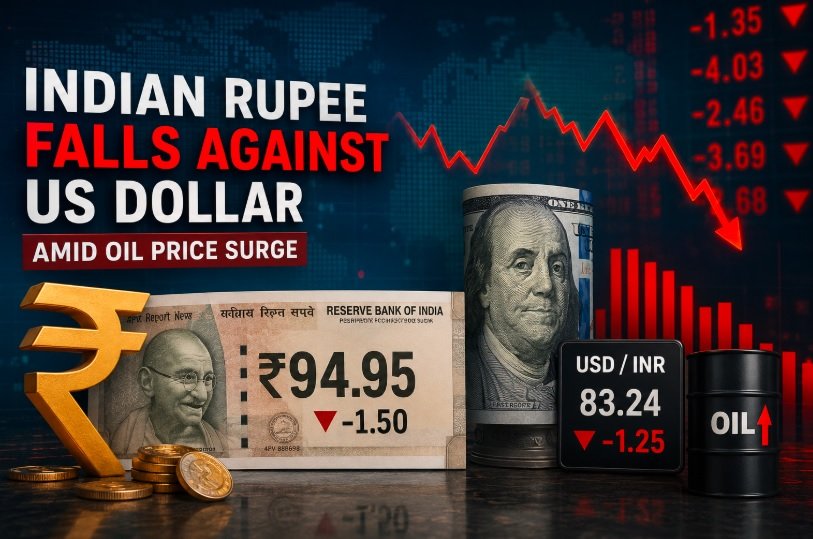
The Indian rupee remains under pressure against the US dollar as higher crude oil prices, foreign investor outflows and global geopolitical uncertainty continue to weigh on India’s currency market. Analysts say the rupee’s direction in the coming months will largely depend on oil prices, global capital flows and monetary policy decisions by both the Reserve Bank of India (RBI) and the US Federal Reserve.
India imports around 85% of its crude oil requirements, making the economy particularly sensitive to rising energy prices. When oil becomes more expensive, Indian importers need more US dollars to pay overseas suppliers. That increases demand for the dollar and puts downward pressure on the rupee.
The stronger US dollar has added to those challenges. During periods of global uncertainty, investors often move money into dollar-denominated assets, reducing demand for emerging-market currencies such as the rupee.
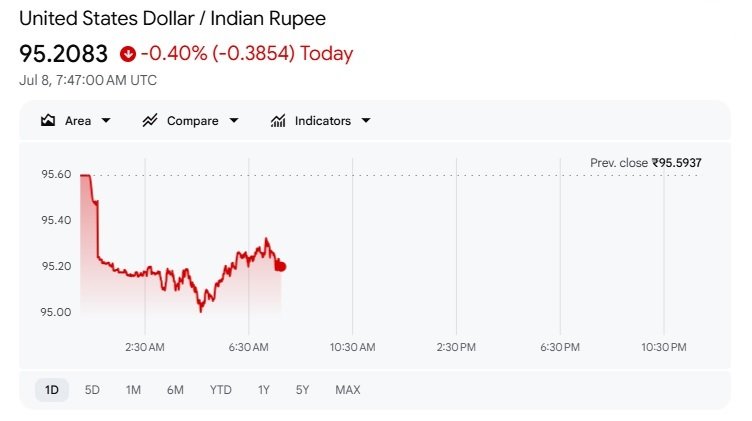
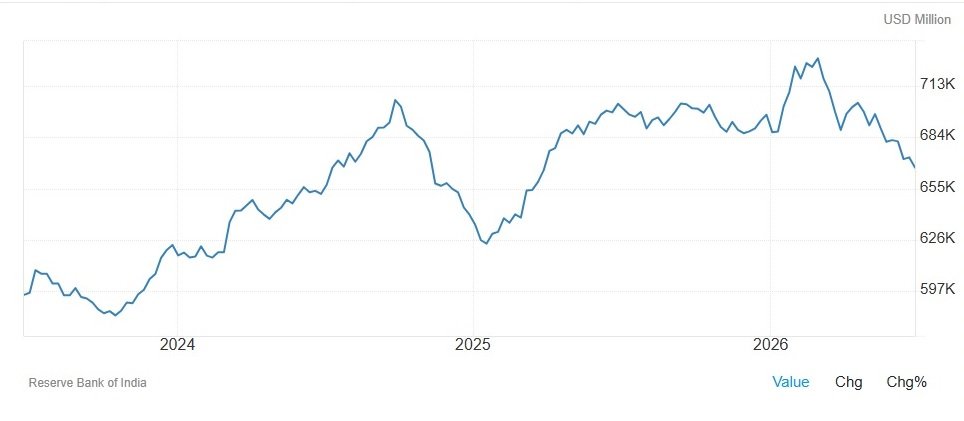
Source: Google Finance.
Indian Rupee vs US Dollar: Latest Exchange Rate Update
The rupee has been trading near record lows against the US dollar, with market sentiment driven by global developments rather than domestic factors alone.
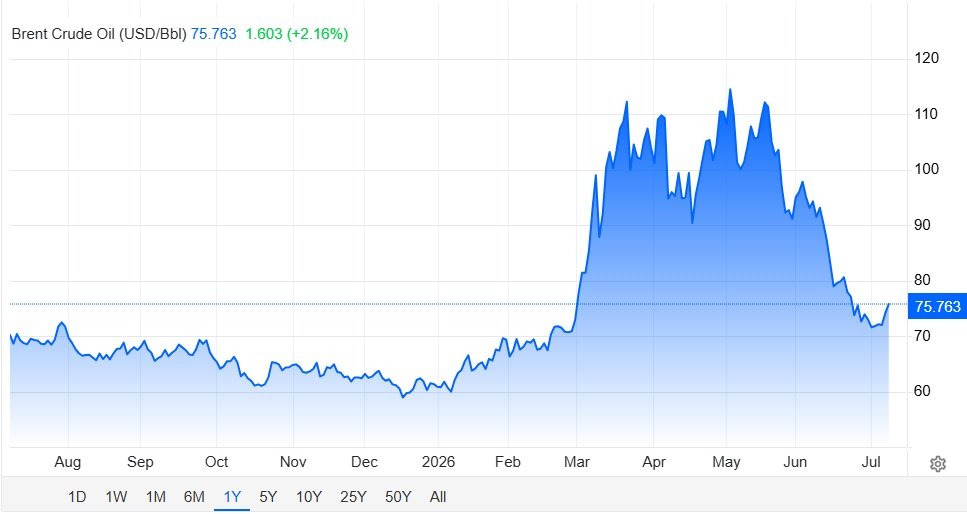
Pressure on the currency intensified after renewed geopolitical tensions involving Iran, Israel and the United States raised concerns about disruptions to global oil supplies. Brent crude prices climbed sharply, increasing worries about India’s import bill.
Foreign portfolio investors have also continued reducing exposure to Indian equities, increasing demand for US dollars in the domestic market. Combined with a stronger dollar globally, these factors have kept the rupee under sustained pressure.
Market analysts expect volatility to remain elevated until there is greater clarity on crude oil prices, foreign investment flows and global interest rate expectations.
What’s happening in India: Vijay’s TVK Inches Toward Power as Tamil Nadu Government Formation Turns Chaotic
Why Is the Indian Rupee Falling?
Several factors are contributing to the rupee’s depreciation, and they are reinforcing one another.
Rising Crude Oil Prices
Oil remains India’s largest import, making energy prices one of the biggest drivers of the rupee.
As crude prices rise:
- Indian companies need more US dollars to pay for imports.
- Import costs increase across the economy.
- The trade deficit widens if imports grow faster than exports.
- Inflationary pressure builds as fuel becomes more expensive.
Higher demand for dollars reduces demand for the rupee, causing the currency to weaken.
Foreign Investor Outflows
Foreign Portfolio Investors (FPIs) play an important role in India’s financial markets.
When overseas investors sell Indian shares or bonds, they convert rupees into US dollars before moving their money abroad. That increases demand for dollars and places additional pressure on the exchange rate.
Recent market data shows foreign investment outflows have remained an important factor behind the rupee’s weakness, particularly during periods of global uncertainty.
A Stronger US Dollar
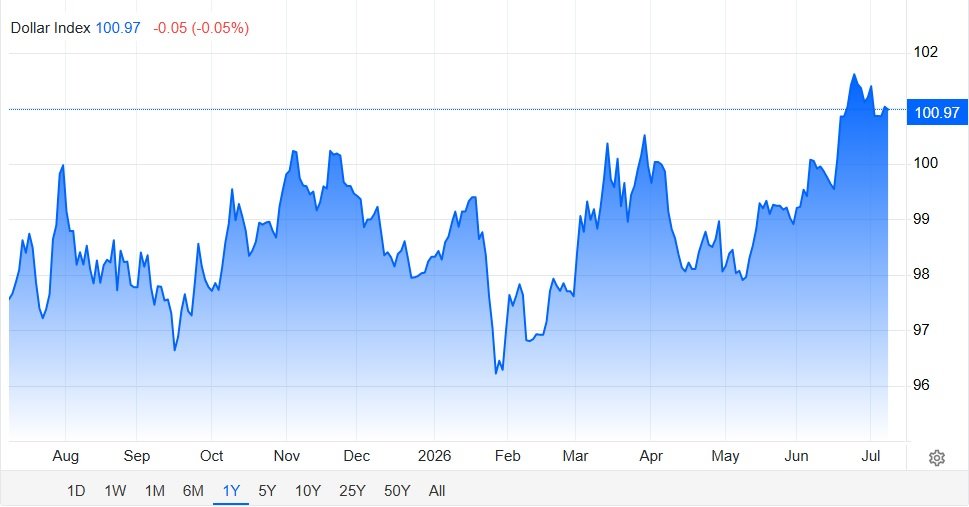
The rupee is also being affected by the broad strength of the US dollar.
Higher US interest rates and investor demand for safer assets have supported the dollar against many global currencies, not just the rupee. Currency traders often monitor the US Dollar Index (DXY), which measures the dollar’s strength against a basket of major currencies, as an indicator of global dollar demand.
Geopolitical Risks
Conflicts in the Middle East continue to influence currency markets because they affect global oil supplies and investor confidence.
Uncertainty surrounding shipping routes and energy exports has increased volatility in commodity and foreign exchange markets, adding another source of pressure on oil-importing economies such as India.
Why Oil Prices Matter So Much to India
India imports most of the crude oil it consumes. Every increase in global oil prices raises the country’s import bill, requiring businesses to purchase more US dollars to settle international payments.
Oil prices also influence:
- Fuel costs
- Transportation expenses
- Manufacturing costs
- Inflation
- Consumer spending
This is why movements in crude oil prices often have a direct impact on the rupee.
The RBI’s Role in Supporting the Rupee
The Reserve Bank of India does not target a fixed exchange rate. Instead, it follows a managed float system, allowing market forces to determine the rupee’s value while intervening to reduce excessive volatility.
To stabilise the currency, the RBI may:
- Sell US dollars from its foreign exchange reserves.
- Conduct foreign exchange market operations.
- Manage liquidity in the banking system.
- Introduce measures to discourage excessive currency speculation.
RBI Governor Sanjay Malhotra has said the central bank does not defend any specific exchange rate level but focuses on maintaining orderly market conditions.
India’s foreign exchange reserves remain among the largest in the world, giving the RBI flexibility to respond to periods of heightened volatility. However, reserves are not unlimited and sustained intervention cannot permanently offset global market pressures.
How a Weaker Rupee Affects India’s Economy
A weaker rupee does not affect every sector in the same way. While it raises costs for import-dependent industries and consumers, it can also improve the competitiveness of Indian exporters by making their goods and services cheaper in international markets.
Challenges
A depreciating rupee can have several economic consequences:
- Higher fuel prices: Since India imports most of its crude oil, a weaker rupee makes oil imports more expensive, which can push up petrol and diesel prices.
- Costlier imports: Electronics, machinery, chemicals and other imported goods become more expensive for businesses and consumers.
- Inflation: Higher import costs often filter through to transportation, manufacturing and household expenses.
- More expensive overseas education and travel: Students paying tuition fees abroad and travellers spending in foreign currencies may face higher costs.
Potential Benefits
Not every consequence is negative. A weaker rupee can also benefit sectors that earn revenue in foreign currencies.
These include:
- Information technology (IT) companies
- Pharmaceutical exporters
- Textile manufacturers
- Engineering goods exporters
- Business process outsourcing (BPO) firms
When export earnings are received in US dollars and converted into rupees, businesses may earn higher revenues, provided global demand remains strong.
Beyond Oil: Other Factors Supporting the Rupee
Although rising oil prices receive most of the attention, they are only one part of the picture.
India also earns billions of dollars every year through services exports, including software, consulting and business services. In addition, remittances sent home by Indians working overseas provide another important source of foreign currency.
These inflows help offset some of the pressure created by expensive imports and play an important role in supporting India’s external finances.
Economists often assess this balance through the Current Account, which measures the flow of goods, services, investment income and remittances between India and the rest of the world. A widening current account deficit can increase pressure on the rupee, while strong export earnings and remittances can help reduce that pressure.
Will the Indian Rupee Recover in 2026?
The rupee’s performance over the rest of the year will depend on several domestic and global developments.
Market participants are closely watching:
- Global crude oil prices
- US Federal Reserve interest-rate decisions
- RBI monetary and foreign exchange policy
- Foreign portfolio investment flows
- Geopolitical developments affecting energy markets
- Strength of the US dollar
If oil prices ease and foreign investment returns to Indian markets, pressure on the rupee could moderate. However, persistent geopolitical tensions or a stronger US dollar may keep the currency under strain.
Exchange-rate forecasts remain uncertain because currency markets react quickly to changes in global economic conditions. Rather than focusing on a specific target level, analysts generally monitor the underlying drivers influencing demand for the rupee and the US dollar.
Conclusion
The Indian rupee’s recent weakness reflects a combination of global and domestic pressures rather than a single event. Rising crude oil prices, foreign investor outflows, geopolitical tensions and a stronger US dollar have all contributed to increased demand for dollars and greater volatility in the currency market.
The RBI continues to intervene to smooth excessive fluctuations, but the rupee’s longer-term direction will depend largely on global energy prices, capital flows and broader economic conditions. For businesses, investors and consumers, these factors will remain the key indicators to watch throughout 2026.
For more information follow: First Report News
FAQs
Why is the Indian rupee falling against the US dollar?
The rupee is under pressure due to a combination of higher crude oil prices, foreign portfolio investor outflows, a stronger US dollar and geopolitical uncertainty. These factors increase demand for US dollars while reducing demand for the rupee.
Why do rising oil prices weaken the rupee?
India imports around 85% of its crude oil requirements. When global oil prices rise, Indian importers need more US dollars to pay overseas suppliers. Higher demand for dollars puts downward pressure on the rupee.
Can the RBI stop the rupee from falling?
The RBI can reduce excessive volatility by selling US dollars from its foreign exchange reserves and taking other market measures. However, it does not target a fixed exchange rate and cannot completely shield the rupee from global economic forces.
Is a weaker rupee always bad for India’s economy?
No. While it increases the cost of imports and contributes to inflation, it can also benefit exporters by making Indian goods and services more competitive in international markets.
Why is the US dollar strengthening globally?
The US dollar often strengthens when investors seek safer assets during periods of global uncertainty or when higher US interest rates attract international capital into dollar-denominated investments.
What could help the rupee recover?
A decline in global oil prices, stronger foreign investment inflows, easing geopolitical tensions and a weaker US dollar could all help improve sentiment toward the rupee.