

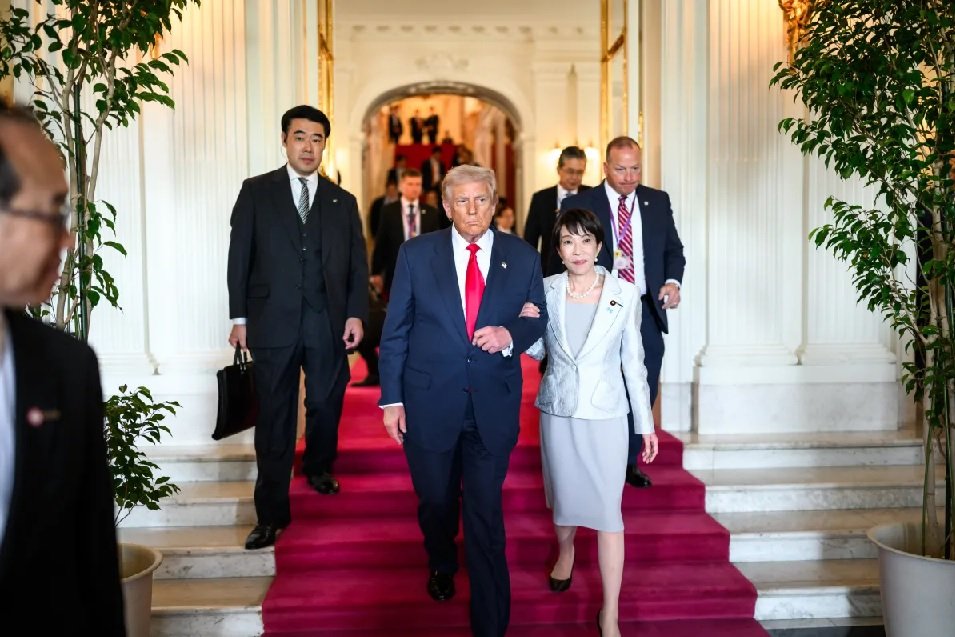
“The United States and Japan launched a rare coordinated effort to support the Japanese yen after the currency slid to its weakest levels in decades, fueling concerns across global financial markets.“
The United States and Japan stepped into currency markets together for the first time in nearly three decades after the yen slid to its weakest level in about 40 years, a move officials said was needed to restore order but one that also exposed broader concerns about global financial stability.
The coordinated intervention, carried out on July 31 and confirmed days later by both governments, came after the Japanese currency briefly fell to around ¥163.73 against the U.S. dollar. Within hours, the yen staged one of its strongest rallies in years, climbing back toward the ¥157 level and briefly touching around ¥155 during volatile trading.
The operation marked the first joint U.S.-Japan purchase of yen since 1998, reviving a policy tool rarely used by Washington. Officials in Tokyo and Washington described the move as a response to “excessive volatility“, but economists said the decision was likely driven by a wider set of financial risks extending beyond the foreign exchange market.
President Donald Trump confirmed that Washington had joined the effort after Japan requested support.
“They have a weakening yen, and they wanted a little bit of help”, Trump said, adding that the intervention was “a sign of friendship” and that “we’re always there for Japan“.
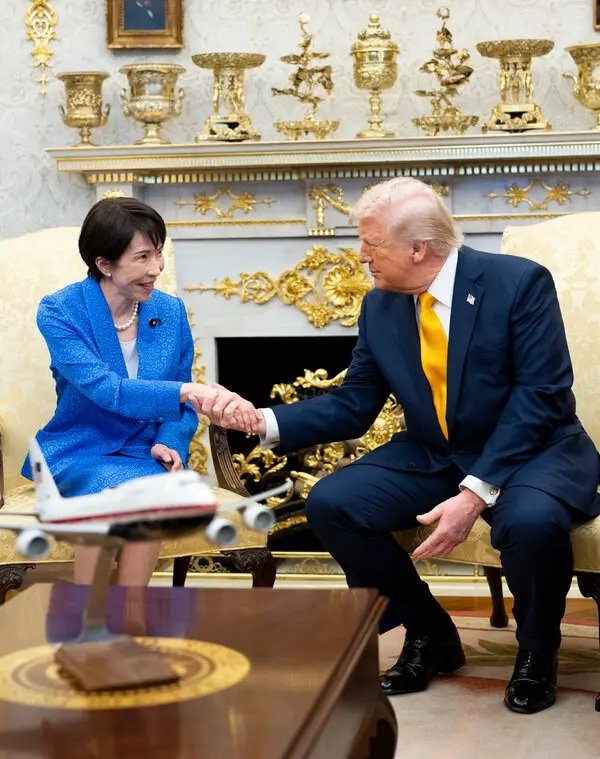
Japan’s Finance Minister Satsuki Katayama also confirmed the coordinated operation, saying authorities acted to counter “excessive volatility and disorderly movements in the Japanese yen” and warning that Tokyo “will not hesitate to conduct further joint intervention” if market conditions deteriorate again.
Also see: Indian Rupee Falls Against US Dollar as Oil Prices, Foreign Fund Outflows Pressure the Currency
Also see: Why PM Modi Called Japan’s PM Sanae Takaichi ‘My Younger Sister’ During Summit in New Delhi
Also see: Trump and Xi Strike Tone in Beijing as US-China Tensions Simmer
Sharp Japanese Yen Decline Forced Policymakers to Act
Pressure on Japan’s currency had been building for months.
The Bank of Japan raised its benchmark interest rate to 1% in June, its highest level since September 1995, ending years of ultra-loose monetary policy. Even that proved insufficient to reverse the yen’s decline because U.S. interest rates remained substantially higher, leaving investors with a strong incentive to borrow cheaply in yen and invest in higher-yielding dollar assets.
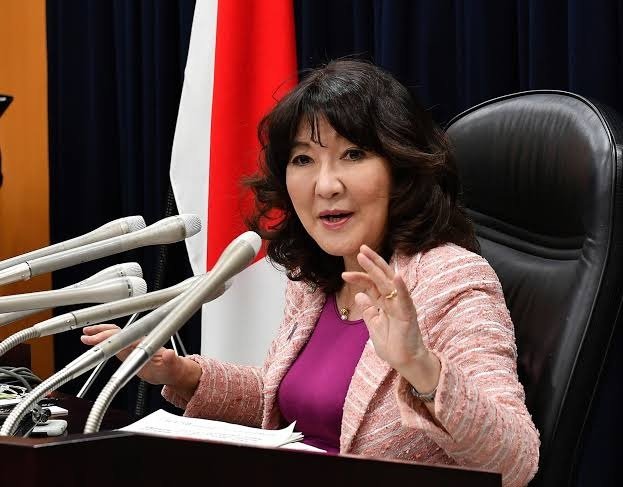
That strategy, known as the carry trade, has become one of the biggest structural forces weighing on the Japanese currency.
Japan had already entered currency markets on its own during April and May 2026, spending billions of dollars to support the yen. Those interventions produced only temporary relief before the currency resumed its slide.
By late July, the weakening exchange rate had become a political and economic problem.
Japan imports much of its energy, food and industrial raw materials, all of which are largely priced in U.S. dollars. As the yen weakened, import costs climbed, pushing up household electricity bills, fuel prices and grocery costs at a time when wage growth continued to lag inflation.
Prime Minister Sanae Takaichi’s government has faced growing pressure from consumers and businesses dealing with those higher costs, adding urgency to efforts to stabilize the currency.
Also see: US-Iran Deal or Diplomatic Mirage? Secretive Switzerland Talks Produce Surprise Breakthrough
Also see: Michael Dell Pentagon Contract Follows $6.25 Billion Donation
Also see: I Couldn’t Stay Silent’: UN Diplomat Quits Over Iran Nuclear Claims
Washington’s Decision Went Beyond Supporting an Ally
Publicly, U.S. officials framed the intervention as support for Japan and global financial stability.
Treasury Secretary Scott Bessent said Washington “strongly support[s] Japan’s decisive market and monetary steps to correct the substantial undervaluation of the yen” and indicated the United States would participate again if market conditions warranted.
Behind that public message lies another issue that several economists believe was equally important: the U.S. Treasury market.
Japan remains the largest foreign holder of U.S. Treasury securities, making it a crucial investor in Washington’s debt market. Large-scale unilateral intervention by Tokyo could eventually require selling some of those Treasury holdings to raise dollars, potentially putting additional upward pressure on U.S. borrowing costs.
Louise Loo, Head of Asia Economics at Oxford Economics, argued that Washington’s participation reflected more than alliance politics.
“There is a self-preservation element here”, she said, pointing to the potential impact of Treasury sales on U.S. financial markets.
Analysts at State Street also highlighted another development that attracted less attention than the intervention itself: discussion surrounding the Federal Reserve’s Foreign and International Monetary Authorities (FIMA) Repo Facility.
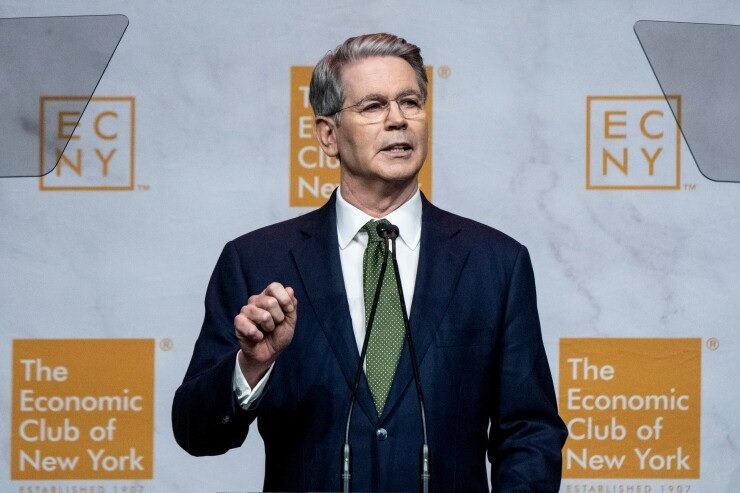
The facility allows foreign central banks to temporarily obtain U.S. dollars by pledging Treasury securities rather than selling them outright. Economists said that mechanism reduces pressure on the Treasury market while still giving governments access to the liquidity needed for currency operations.
Also see: China’s Trade Balancing Act: Slow Exports, Slumping Imports, and a $170 Billion Question.
Also see: The Economy of the United Kingdom Shrinks in January, Raising Alarms Before the Spring Statement
Also see: The Global Economy Faces a 2025 Slowdown, But India’s Growth Remains Strong
Japanese Yen Intervention Sends a Strong Signal to Markets
Currency intervention by the United States has become increasingly uncommon over the past two decades, making Washington’s participation one of the most notable aspects of the operation.
The last coordinated U.S.-Japan effort to buy yen occurred in 1998 during the Asian Financial Crisis. The most recent coordinated intervention involving Japan before this year’s operation came in 2011, when G7 countries acted after the Great East Japan Earthquake. That intervention had the opposite objective, it sought to weaken an unusually strong yen that threatened Japan’s exporters.
Economists said credibility, rather than the amount of money spent, may ultimately determine whether the latest intervention succeeds.
Analysts reported that a photograph of Treasury Secretary Bessent’s briefing notes appeared to include the instruction “To Do: Buy Japanese Yen $5–10 bil“. The Treasury has not officially confirmed that figure. Japan, meanwhile, estimated that it spent roughly $58.97 billion during the intervention.
Shigeto Nagai of Oxford Economics argued that coordinated action significantly increases the deterrent effect because investors know both governments are prepared to intervene again.
Vishnu Varathan, Head of Macro Research for Asia excluding Japan at Mizuho Securities, said coordinated intervention changes market psychology by making speculative positions against the yen considerably riskier.
Jesper Koll of Monex Group described the operation as evidence that U.S.-Japan financial cooperation has entered “a new phase“, suggesting the move would also be closely watched by China and other governments across Asia.
Even after the intervention, analysts cautioned that the underlying challenge has not disappeared.
The gap between Japanese and U.S. interest rates remains substantial, meaning the carry trade continues to offer attractive returns. Previous interventions in 2022, 2024 and earlier in 2026 slowed the yen’s decline but failed to reverse the broader trend.
For now, policymakers have bought time rather than solved the problem. Their unusually direct warning that further intervention could follow appears aimed as much at discouraging speculative traders as at defending any specific exchange-rate level, signaling that Tokyo and Washington are prepared to return to the market if volatility accelerates again.
Also see: The Morale of the German Investor Surges as the Change in Fiscal Policy Sparks Optimism
Also see: Ireland Faces Economic Uncertainty as Growth Forecast Declines
Also see: UK TECH TAX: A Critical Crossroad for the UK and Global Tech Giants