
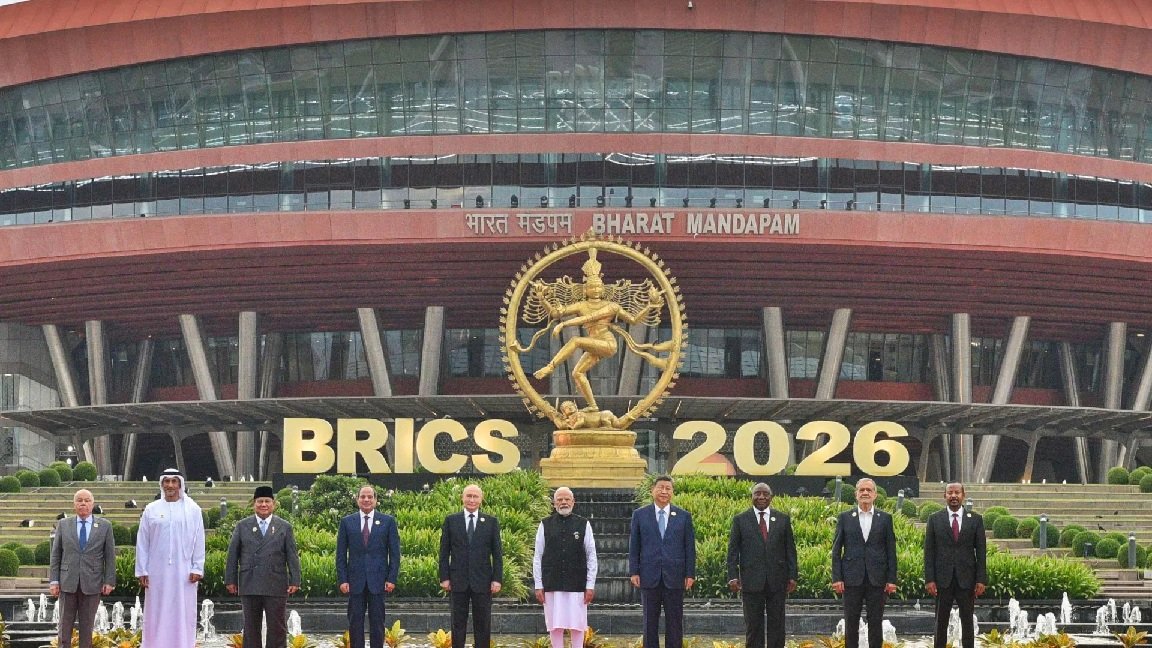
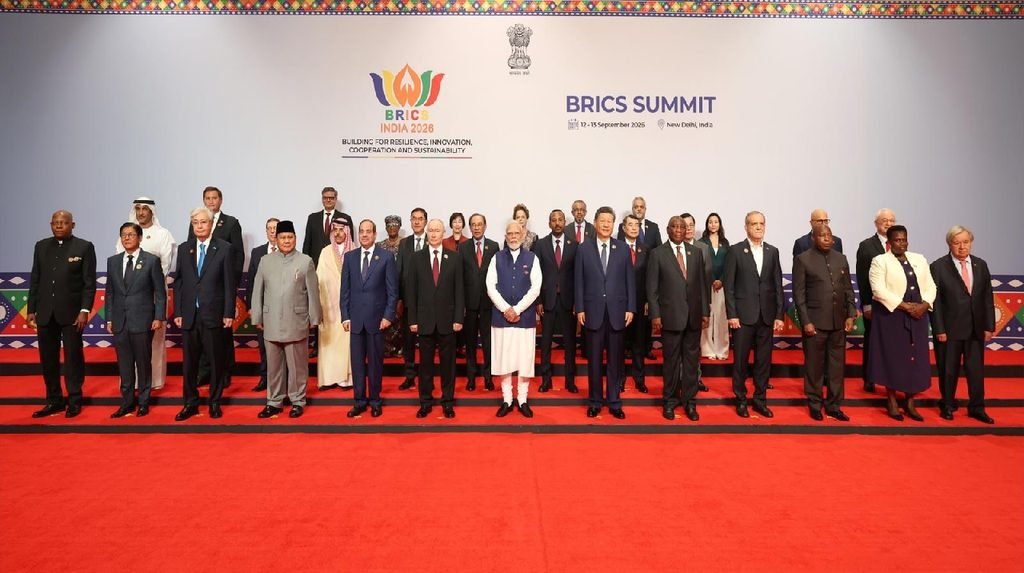
NEW DELHI: The BRICS New Delhi Declaration is far bigger than a statement on trade or diplomacy. Adopted on September 12, 2026, the 140-point document lays out the bloc’s position on the United Nations, global finance, trade, sanctions, wars, terrorism, artificial intelligence, climate change, payments and development. It is also a careful exercise in compromise: members agreed on broad principles while avoiding language that could split the expanded grouping.
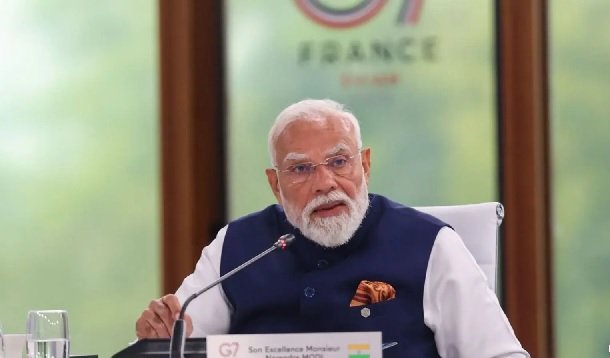
The declaration comes as BRICS marks two decades of existence. Prime Minister Narendra Modi said BRICS countries now represent 50% of the world’s population, 40% of global GDP and more than 25% of global trade. He also said the combined GDP of BRICS economies had grown about 4.5 times, compared with roughly 2.5 times for the global economy.
India’s year-long chairship produced more than 400 meetings and engagements across 30 Indian cities, according to the declaration. Indian officials said there were more than 50 concrete outcomes from the chairship.
Read the Declaration: BRICS New Delhi Declaration: Building for Resilience, Innovation, Cooperation and Sustainability (September 12, 2026)
Also see: Xi Jinping India Visit Six Years After Galwan Clash
Also see: South China Sea: China Warned Philippines Mid-Speech
Also see: PM Modi Uzbekistan Visit: $5 Billion Trade, Uranium Deal
UN reform is at the centre of the document
The first major demand is political: BRICS wants developing countries to have a larger role in institutions that were largely designed after World War II.
The declaration calls for reform of the UN system and specifically the Security Council. It says developing countries from Africa, Asia and Latin America should receive greater representation. China and Russia also reiterate support for the aspirations of Brazil and India to play a greater role in the UN, including the Security Council.
But there is still not an agreement on how Security Council expansion should happen, how many new permanent seats there should be or whether new members should receive veto powers.
The declaration also takes aim at the IMF and World Bank. BRICS wants voting power and quota arrangements to better reflect the size of emerging economies. It specifically calls for the IMF’s 16th General Review of Quotas to take effect and demands further quota realignment under the 17th review.
The WTO gets similar treatment. BRICS calls for the immediate restoration of a two-tier binding dispute settlement system and the appointment of new Appellate Body members. It also criticises unilateral tariffs and trade restrictions.
That puts the bloc directly against a major problem in the existing trading system: the WTO’s Appellate Body has remained unable to function normally because appointments have not been completed.
Also see: Saudi Arabia, Pakistan, Türkiye Defence Alliance Explained
Also see: Sheikh Hasina News: Delhi Press Conference Fuels Row
Also see: Russian Ballistic Missile Strike on Kyiv Kills Two as Attacks Intensify Across Ukraine
No BRICS currency yet but a serious push on payments
One of the biggest misconceptions surrounding BRICS is that the New Delhi summit created a common currency.
It did not. Instead, the declaration focuses on something considerably more practical: making cross-border payments easier.
The BRICS Payment Task Force has been studying the interoperability of payment and messaging channels and the use of BRICS national currencies for trade and investment. The leaders specifically say there is “no one-size-fits-all approach”.
That is important because it leaves individual governments free to decide how far they want to participate.
The declaration also supports the New Development Bank, urging it to expand resource mobilisation, local-currency financing and development lending. It calls the bank a “crucial BRICS institution” and supports further expansion of its membership.
The economic ambition is substantial. Modi said BRICS economies have grown almost twice as fast as the global economy over the past two decades. But the bloc still has a major practical problem: its members do not have identical economic interests.
China dominates much of intra-BRICS trade. India, meanwhile, continues to run large trade deficits with several members. A payment system can reduce transaction costs. It cannot automatically make trade more balanced.
The declaration therefore represents a shift from political rhetoric about “de-dollarisation” toward technical financial infrastructure. That may prove more consequential in the long run.
Also see: US-Iran Deal or Diplomatic Mirage? Secretive Switzerland Talks Produce Surprise Breakthrough
Also see: G7 Summit 2026: Modi Calls for Trust and Cooperation as Global Leaders Meet in France
Also see: Sanctions Against India Would ‘Boomerang’, Says Putin
Wars reveal how far BRICS can actually agree
The most revealing section of the document concerns conflicts.
The declaration calls for disputes to be resolved through “dialogue, consultation and diplomacy”. For the Middle East, it expresses “deep concern” and calls for “maximum restraint”.
But it does not name the United States, Israel or Iran in the Middle East section.
That was not accidental. Iran and the UAE are both inside BRICS, but they have been on opposing sides of the regional crisis. Reports showed that reaching language acceptable to both countries was a major challenge for the summit. Iran’s President Masoud Pezeshkian subsequently met UAE Crown Prince Sheikh Khaled bin Mohamed bin Zayed Al Nahyan in New Delhi, their highest-level meeting since the conflict began.
The result was diplomatic consensus, but deliberately restrained wording.
The same pattern appears elsewhere.
On Gaza, the declaration is much more specific. It supports Palestinian self-determination, Palestinian membership in the UN and a two-state solution based on the 1967 borders, with East Jerusalem as the capital of Palestine. It also rejects forced displacement of Palestinians.
On terrorism, the declaration explicitly condemns the April 22, 2025 attack in Jammu and Kashmir, saying 26 people were killed. It calls for those responsible and their supporters to be held accountable but does not name Pakistan.
And for Ukraine, the declaration avoids directly naming Russia’s war.
Also see: Indian Army? No: 51 Indians Dead in Russia, 37 Unaccounted
Also see: India Russian Oil Sanctions: Delhi Pushes Back at BRICS
That is the larger story behind the 140 paragraphs. BRICS can agree on institutional reform, development and broad principles. It becomes considerably harder when individual members are directly involved in the conflict being discussed.
India’s achievement was getting the document through anyway.
The declaration repeatedly uses phrases such as “encourage”, “welcome”, “explore” and “voluntary”. That makes it politically easier for very different countries to sign the same document, but it also limits what can be enforced.
The next test belongs to China.
Paragraph 140 gives Beijing full support for the 2027 BRICS chairship and the next summit in China.
Xi Jinping has already pushed a “Greater BRICS” agenda centred on AI, trade, supply chains and an integrated market, including a proposed BRICS AI Open Source Zone and a Special Economic Zone partnership.
So the New Delhi Declaration is not the creation of a new world order.
It is something more measurable: a blueprint for how BRICS wants to increase its leverage inside the existing one, while leaving enough room for countries that disagree with each other to remain at the same table.
Also see: Xi Jinping Arrives in North Korea as China Moves to Reassert Influence Over Kim Jong Un