
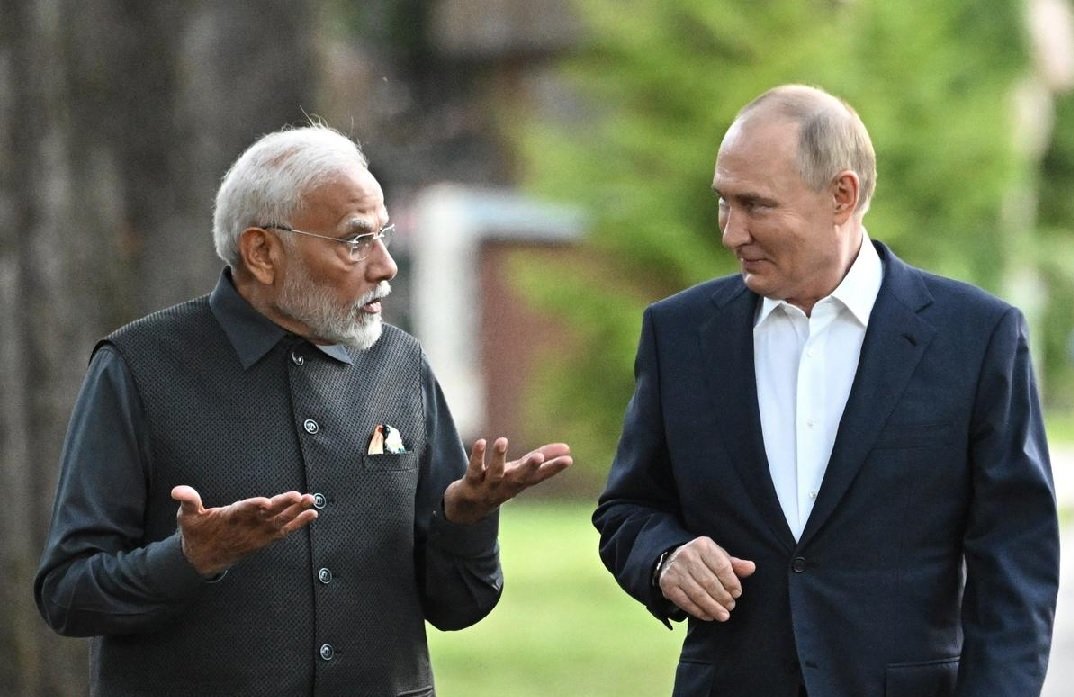
Prime Minister Narendra Modi told Russian President Vladimir Putin on August 31 that the Russia-Ukraine conflict must move from “endless war” to an “end of war”, while reaffirming India’s support for peaceful efforts to resolve the fighting.
Speaking after talks with Putin in Bishkek, Kyrgyzstan, on the sidelines of the Shanghai Cooperation Organisation summit, Modi said India supported peaceful methods and wanted the war to end as soon as possible. “We have to move from a situation of ‘endless war’ to ‘end of war’,” he said. “It is humanity’s wish that the end of this war happens as soon as possible.”
Modi’s remarks were delivered in a joint statement following the meeting, rather than as a separate formal speech. They were followed by another public reaffirmation of India’s position during Modi’s September 11 meeting with Putin in New Delhi.
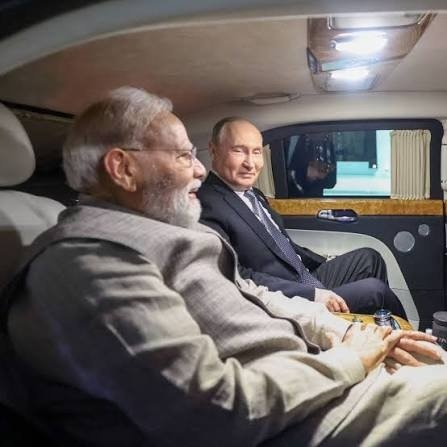
Modi’s message to Putin
On August 31, Modi said India and Russia had discussed Ukraine and that Putin had explained the situation to him in detail. “As you know, India supports all peaceful methods (to resolve the impasse),” Modi said. He added: “India advocates for resolving all problems peacefully, which is necessary for all of humanity.”
Also see: Sanctions Against India Would ‘Boomerang’, Says Putin
Also see: What Is Reliance Intelligence? Ambani’s AI Plan Explained
The wording continued a position Modi has used since the early stages of the war. In 2022, during an earlier meeting with Putin, Modi said, “this is not an era of war” and argued for diplomacy and dialogue.
India’s position has also been stated in more formal terms. In an official interview, Modi said, “Some people say that we are neutral. But we are not neutral. We are on the side of peace.” He added that countries should respect international law and sovereignty and that disputes should be addressed through “diplomacy and dialogue.”
The August statement did not announce a ceasefire agreement, a negotiated settlement or a specific Indian peace plan. Modi did not publicly disclose any territorial formula, security arrangement or other detailed proposal during the remarks.
What changed in September
Modi met Putin again on September 11, on the margins of the 18th BRICS Summit in New Delhi. The Indian government’s official readout said the two leaders discussed bilateral cooperation as well as regional and global issues, including conflicts in West Asia and the Black Sea region.
Modi “once again reiterated that dialogue and diplomacy was the way forward in resolving conflicts” and said India stood ready to assist in peace efforts.
The September meeting therefore reinforced, rather than replaced, the message delivered in Bishkek. It also connected the Ukraine discussion with a practical Indian concern: the safety of Indian seafarers and maritime trade affected by conflict in the Black Sea.
The talks covered a much broader India-Russia agenda, including political, economic, defence, energy, space, skill mobility and people-to-people cooperation. Putin also invited Modi to Russia for the 24th India-Russia Annual Summit and Modi accepted. The dates are to be fixed through diplomatic channels.
India’s position and its limits
The diplomatic language is significant because it describes India’s preferred method of resolving the conflict without claiming that New Delhi has produced a settlement accepted by Moscow or Kyiv.
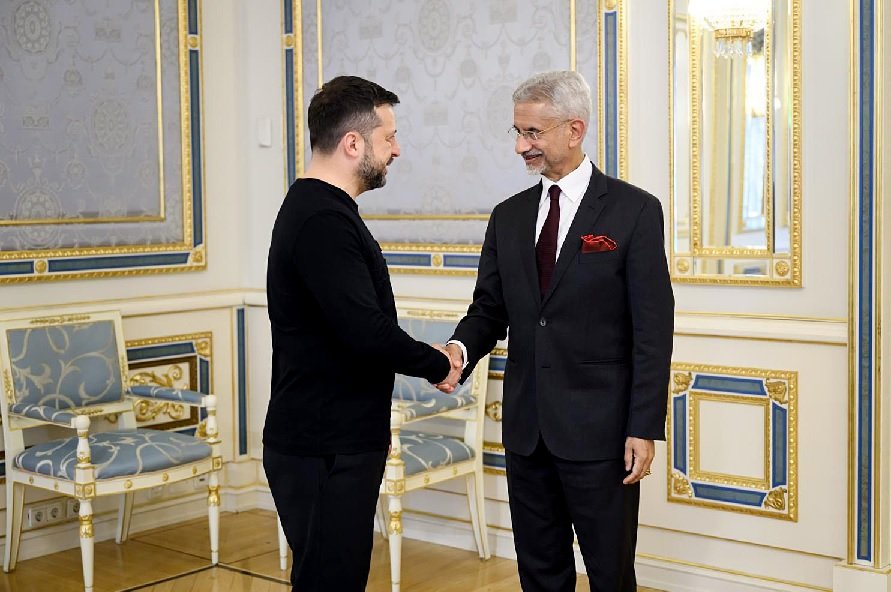
Ukraine has also publicly acknowledged India’s stated commitment to ending the war. On September 3, Ukrainian President Volodymyr Zelenskyy met External Affairs Minister S. Jaishankar in Kyiv and said India’s position was that peace was needed and the war should end.
Also see: UAE Iran BRICS Meeting Opens a New Diplomatic Channel
Also see: Indian Army? No: 51 Indians Dead in Russia, 37 Unaccounted
That engagement matters alongside Modi’s meetings with Putin. It shows that India has maintained channels with both sides while continuing to describe dialogue and diplomacy as the route toward peace.
The distinction is important when assessing Putin’s later comments at the Valdai Discussion Club on October 1. Putin praised Modi for repeatedly raising the question of ending the conflict and said Modi had “very good ideas” aimed at finding mutually acceptable solutions. But the public record reviewed does not identify those ideas as a detailed Indian peace proposal.
Modi’s August 31 remarks are therefore clearest on the principle rather than the mechanics of settlement. He called for an end to the “endless war”, backed peaceful methods and said India was prepared to support peace efforts. The subsequent September meeting showed that position remained active, while leaving the substance of any possible Indian mediation proposal undisclosed.
The timing was notable. Modi’s Bishkek remarks came less than two weeks before Putin travelled to New Delhi for the BRICS summit, while India was maintaining diplomatic contact with Kyiv. On September 3, Jaishankar’s visit to Ukraine provided a channel for New Delhi’s peace messaging.
There is no public evidence in official statements reviewed that Russia accepted a Modi proposal, that Ukraine endorsed one, or that the two governments agreed on a negotiating framework. What is documented is narrower: Modi called for dialogue, diplomacy and an end to hostilities, while India offered to assist peace efforts.