
BRATISLAVA, June 15 — India and Slovakia on Monday agreed to elevate their relationship to a Comprehensive Partnership, a move announced during Prime Minister Narendra Modi’s visit to Bratislava, the first by an Indian prime minister since Slovakia became independent in 1993.
The announcement came after talks between Modi and Slovak Prime Minister Robert Fico at Bratislava Castle, where the two leaders also oversaw the exchange of agreements and discussed cooperation in defence, trade, technology, artificial intelligence and manufacturing.
The diplomatic upgrade follows a series of high-level exchanges between the two countries. President Droupadi Murmu visited Slovakia in April 2025, while Slovak President Peter Pellegrini travelled to India for the AI Impact Summit in February 2026. Monday’s meeting marked the latest step in what both governments describe as a rapidly expanding relationship.
What’s happening around the world: Macron Gives Modi Visit a Bollywood Soundtrack as India-France Talks Focus on AI, Defense and Innovation
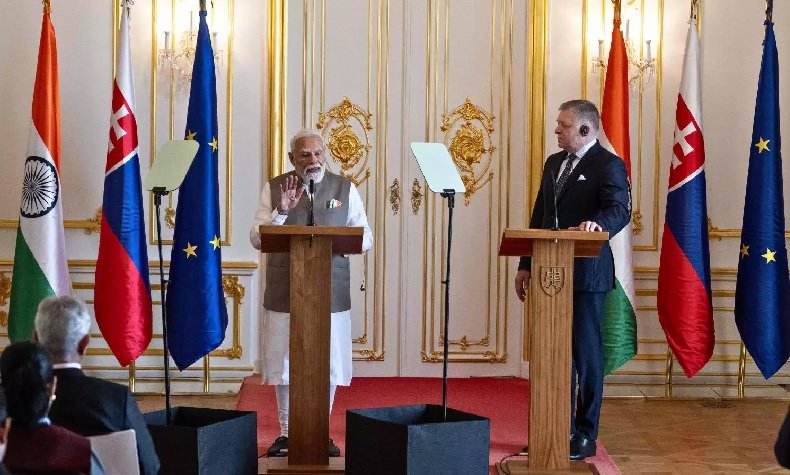
One of the most closely watched outcomes of the visit was a Letter of Intent on defence cooperation. Modi described defence ties as “a testament to our deep mutual trust and strategic convergence” and said cooperation between defence industries in both countries would receive new momentum. Neither government disclosed financial details or identified specific defence projects linked to the agreement.
Fico used the occasion to praise India’s economic growth and technological progress. “Slovakia and India are linked by several common interests“, he said. He went further, telling reporters that India had achieved results in digitalisation and artificial intelligence that many advanced economies were still pursuing.
advanced economies were still pursuing.
“I congratulate for the results you have achieved in different areas. You dominate in the field of digitalisation and the use of AI“, Fico said. “You have come so far that you are faster than many advanced countries in different parts of the world“.
The Slovak leader also drew a comparison with Europe’s economic performance. “We are struggling in the EU. What could the EU do if we could achieve 6-7% growth?” he remarked, a comment that reflected wider debates inside Europe over competitiveness and industrial growth.
Trade and investment formed a major part of the discussions. While officials did not release updated bilateral trade figures during the visit, both sides identified automobile manufacturing, railways, innovation and industrial cooperation as priority sectors. Slovakia, a country of about 5.4 million people, is one of Europe’s largest automobile producers on a per-capita basis and hosts manufacturing facilities linked to major global vehicle brands.
The India-EU trade negotiations also hovered over the talks. Negotiations between India and the European Union have stretched over several years, with disagreements over tariffs, market access, environmental standards and intellectual property rules slowing progress. Slovakia’s support carries weight because trade agreements ultimately require backing across the European bloc.
Technology cooperation featured prominently as well. Modi announced plans to establish an India Chair on Artificial Intelligence at a Slovak university, a proposal aimed at strengthening research collaboration and academic exchanges between the two countries. Additional details about the institution and funding structure were not immediately released.
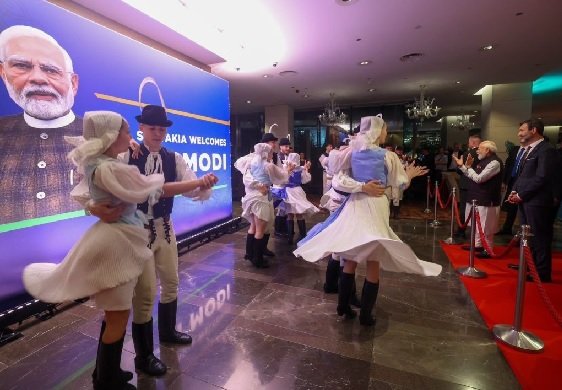
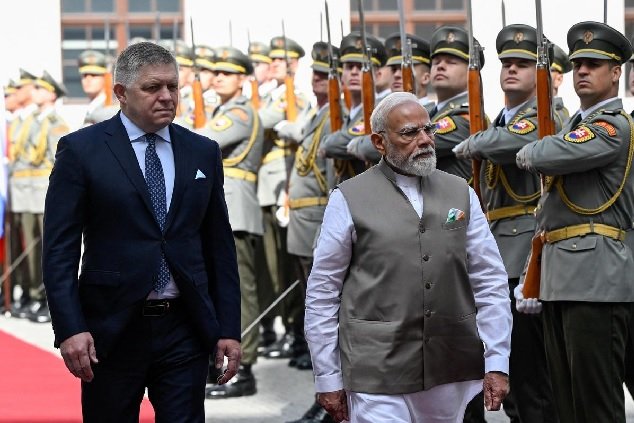
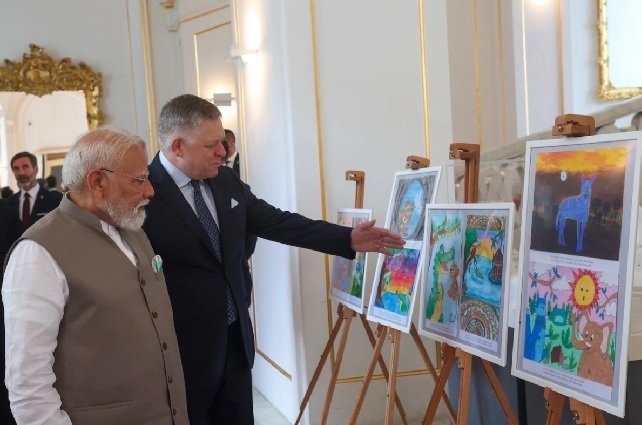
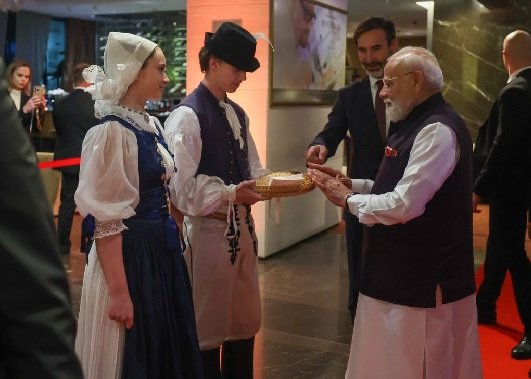
The visit carried symbolic significance beyond the agreements signed. Modi received a ceremonial welcome in Bratislava and inspected a guard of honour alongside Fico. He was also welcomed with traditional Slovak customs, including the ceremonial offering of bread and salt. Cultural performances by a children’s folk ensemble from Slovakia’s Myjava region were included in the reception.
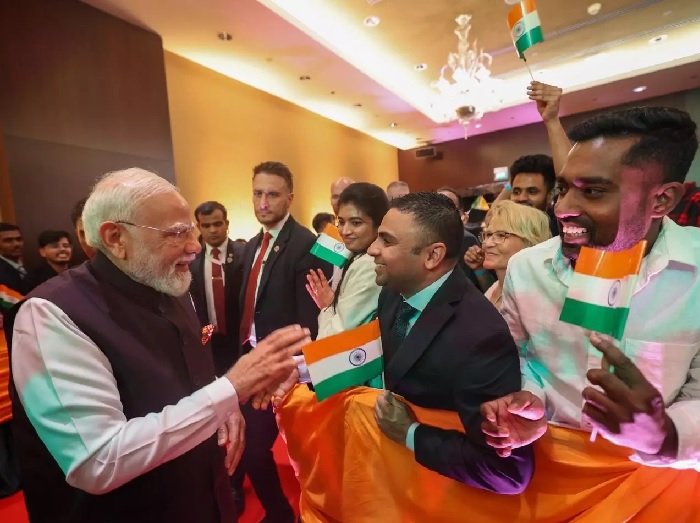
In a social media post, Modi described the welcome as a reflection of Slovakia’s cultural heritage and thanked members of the Indian community for their support during the visit.
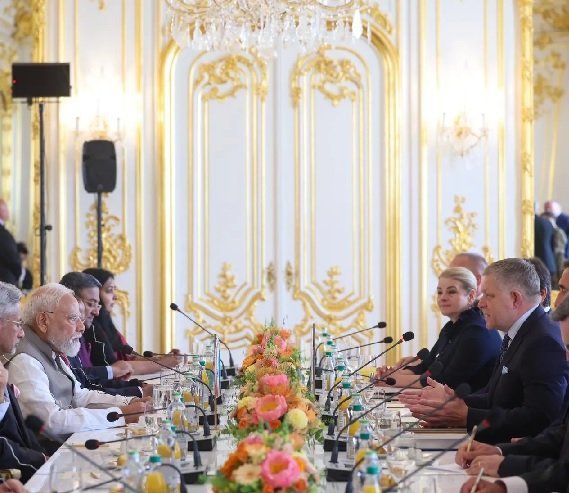
Senior Indian officials accompanying the prime minister included External Affairs Minister S. Jaishankar, National Security Adviser Ajit Doval, Foreign Secretary Vikram Misri, MEA Secretary (West) Sibi George and Additional Secretary Puja Kapur.
Despite the upbeat tone surrounding the Comprehensive Partnership announcement, important details remain undisclosed. Neither side released implementation timelines, trade targets, investment commitments or projected defence spending linked to the new framework. Officials also stopped short of explaining how the partnership differs from previous bilateral arrangements.
For now, the significance lies in the signal sent from Bratislava. India is expanding engagement beyond Europe’s largest capitals, while Slovakia is positioning itself as a willing partner in areas ranging from advanced manufacturing to artificial intelligence. Monday’s agreements suggest both governments see room for deeper cooperation at a time when Europe is seeking growth and India is looking for new strategic partners across the continent.
For more updates follow: First Report News