

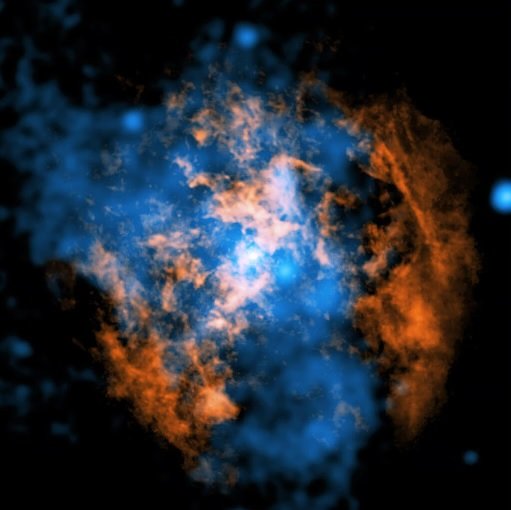
“Scientists have reported the first clear evidence of a wind from Sagittarius A, solving a mystery that has persisted for more than 50 years“
After more than half a century of searching, astronomers say they have finally found direct evidence that the Milky Way’s supermassive black hole is blowing material back into space.
The discovery centers on Sagittarius A* (Sgr A*), the black hole located about 26,000 light-years from Earth at the heart of the galaxy. Researchers from Northwestern University report that a giant cone-shaped cavity carved into surrounding gas appears to be the signature of a long-sought black-hole wind, a phenomenon theorists have predicted for decades but struggled to observe in our own galaxy. Their findings were published in The Astrophysical Journal Letters.
What’s happening around the world: AI Companion Apps Surge as Bumble Warns of Virtual Romance
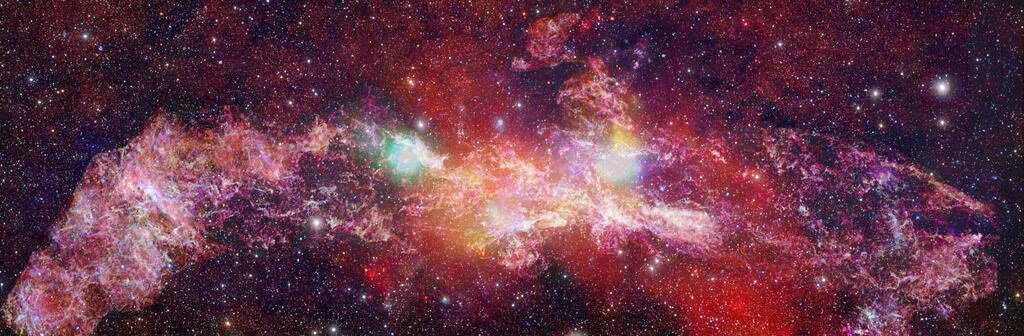
Photo: NASA/CXC/Northwestern Univ./M. Gorski/ESO/NAOJ/NRAO/ALMA/SAO/K. Arcand and P. Edmonds
Deep observations reveal a missing region of gas
The breakthrough came after five years of observations using the Atacama Large Millimeter/submillimeter Array (ALMA) in Chile, a network of 66 radio telescopes that allowed researchers to map cold molecular gas around Sagittarius A* in unprecedented detail.
The resulting image was about 100 times deeper and 80 times sharper than previous surveys of the region. As scientists examined the data, they noticed something unusual: a vast cone-shaped cavity roughly one parsec, or about 3.26 light-years, long and approximately 45 degrees wide. The region contained no detectable cold molecular gas.
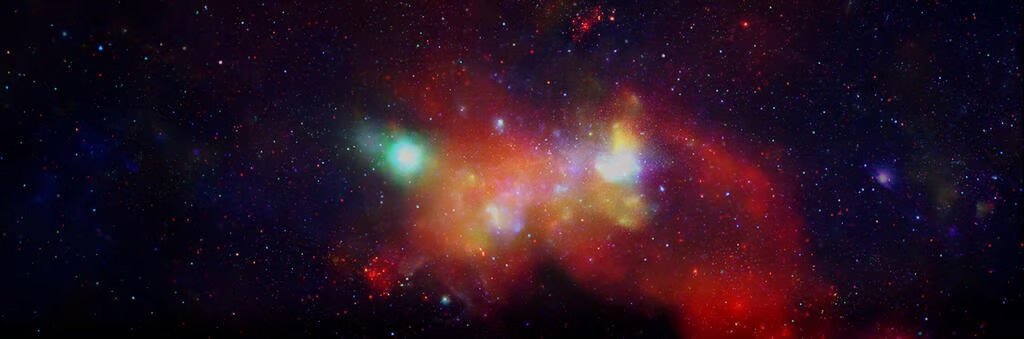
Photo: NASA/CXC/Northwestern Univ./M. Gorski/ESO/NAOJ/NRAO/ALMA/SAO/K. Arcand and P. Edmonds
According to the research team, the most likely explanation is a hot wind originating from the black hole. The outflow either pushed the gas away or heated it enough that it could no longer be observed in its previous state.
“A black hole has to produce a wind unless it exists in a perfect vacuum, which does not exist in the universe“, said Dr. Mark Gorski of Northwestern University. “This is the first time we have had a clear enough picture to identify the wind that everyone has been looking for for half a century“.
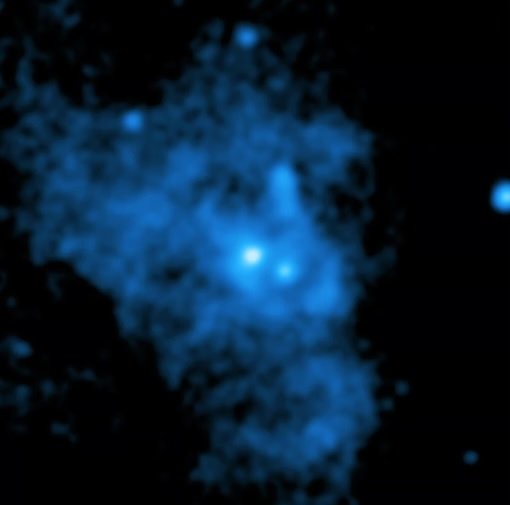
Photo: NASA/CXC/Northwestern Univ./M. Gorski/ESO/NAOJ/NRAO/ALMA/SAO/K. Arcand and P. Edmonds
Independent evidence strengthened the case
Before announcing the result, the researchers compared their findings with observations from NASA’s Chandra X-ray Observatory. The team found that bright X-ray emissions previously detected near the galactic center lined up with the same cone-shaped cavity identified in the ALMA data. That overlap provided an independent clue that energetic activity was taking place in the region.
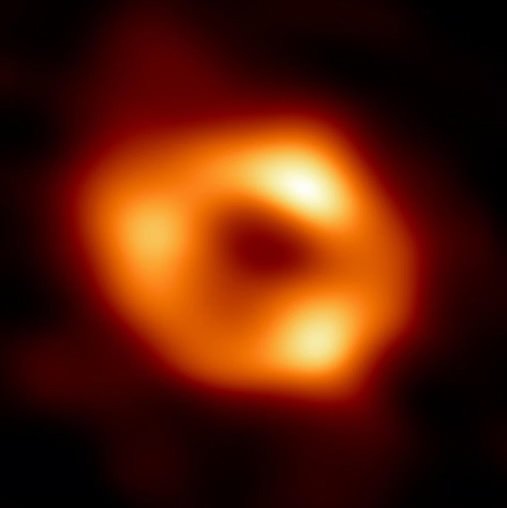
Photo: EHT Collaboration/Cover Images/Reuters
Scientists also tested alternative explanations. Nearby stars can sometimes generate powerful winds and cavities in interstellar gas, but calculations suggested local stellar activity could not produce enough energy to create a structure of this size.
Based on the cavity’s dimensions and its effects on surrounding material, the researchers estimate the wind has been active for at least 20,000 years.
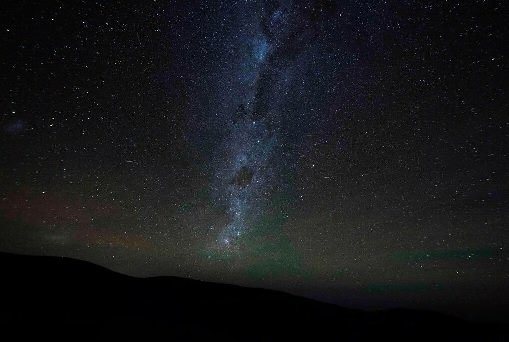
Photo: Esteban Felix/AP
A quieter black hole still leaves its mark
Sagittarius A* contains roughly four million times the mass of the Sun, yet it is considered relatively quiet compared with the intensely active black holes found in some distant galaxies. That may explain why evidence of a wind remained elusive for so long.
“We were the first to show that molecular gas extremely close to the black hole is feeding it“, said Dr. Lena Murchikova, a black-hole astrophysics specialist at Northwestern University. She added that “the wind is not very strong, and its direction probably changes over time“.
The findings help resolve a longstanding puzzle in astrophysics. For decades, black-hole winds have been observed in other galaxies, where they are thought to regulate star formation and redistribute gas across vast distances. The absence of a confirmed wind from the Milky Way’s own central black hole had made it an outlier.
Researchers now say that discrepancy may have been caused by observational limitations rather than unusual physics. With the new evidence in hand, Sagittarius A* appears to behave much like other supermassive black holes, only on a quieter scale.
For astronomers studying how galaxies evolve, that distinction matters. The Milky Way’s hidden heart may have been whispering all along.
For more updates follow: First Report News