
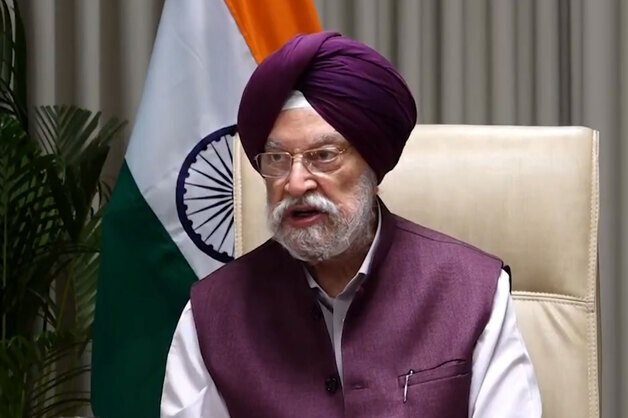
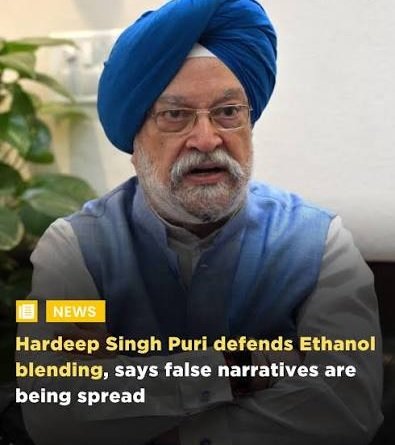
India’s ethanol blending programme has returned to the centre of public debate after Petroleum and Natural Gas Minister Hardeep Singh Puri defended the government’s biofuel policy, arguing that ethanol is already used in high-performance racing cars and dismissing widespread claims that it significantly damages vehicle performance.
His remarks come as the government balances two difficult challenges at once: defending its flagship E20 ethanol programme while managing the financial fallout from volatile global crude oil prices linked to the Middle East conflict.
Minister Pushes Back Against Mileage and Insurance Claims
Speaking in New Delhi, Hardeep Singh Puri said criticism surrounding ethanol-blended fuel often ignored established technical evidence. Referring to concerns that higher ethanol blends reduce fuel efficiency, he acknowledged there could be a slight impact but rejected claims that the fuel harms engines.
“Somebody is saying that fuel mileage is going to drop. It is now well established that ethanol is even used in racing cars. Acceleration improves. What is that called? Knocking? Knocking also improves. Mileage? Yes, it may drop a little. But it may drop slightly due to various factors“, the minister said.
Puri also addressed another issue that has circulated widely on social media in recent months, the claims that insurance companies would deny coverage for vehicles running on ethanol-blended fuel.
“Secondly, after consulting all stakeholders, including SIAM and ARAI, we have reached this stage. Then someone says, ‘Your insurance will no longer cover this’. Insurance companies have already clarified that there is no such issue. But who benefits from spreading this false narrative? I am not going to make any accusations“, he said.
The minister added that India’s transition would continue cautiously and that the government would not move beyond the current 20 per cent ethanol blending level until all necessary testing had been completed.
“There is enough space in India’s growing consumer market for all technologies to coexist. There is room for electric vehicles, biofuel-blended vehicles, hybrid vehicles and CNG vehicles“, he said.
What’s happening around the world: Why PM Modi Called Japan’s PM Sanae Takaichi ‘My Younger Sister’ During Summit in New Delhi
Oil Companies Face Massive Losses After Crude Price Spike
Puri’s defence of the ethanol programme came against the backdrop of mounting financial pressure on state-run oil marketing companies after crude prices surged during the recent Middle East crisis.
According to figures shared by the minister, oil companies recorded losses of ₹74,781 crore on the sale of petrol, diesel and LPG up to June 30 because retail fuel prices did not fully reflect the increase in global crude costs.
The total under-recoveries for petrol, diesel and LPG reached ₹1,88,871 crore during the April-June 2026 quarter.
Puri explained that the losses continued even after international crude prices moderated because refiners were still processing crude oil purchased when prices were significantly higher.
“We are using the crude petroleum stock today that we had bought two months ago at a price that existed two months ago“, he said.
Asked whether consumers could expect lower retail fuel prices, the minister stopped short of making any commitment.
“If this decline continues for 2-3 months, we will see. But it is a hypothetical situation“, he said.
The remarks suggest the government remains cautious about any immediate reduction in petrol and diesel prices despite easing international markets.
India’s Biofuel Strategy Goes Beyond E20
While Puri’s comments focused on defending the existing E20 programme, they also reflected the government’s broader effort to reduce dependence on imported crude oil through domestic biofuel production.
India officially achieved 20 per cent ethanol blending in December 2025, reaching the target ahead of its original schedule. The programme began with pilot projects in the early 2000s, when blending levels were only around five per cent, before expanding rapidly over the past decade.
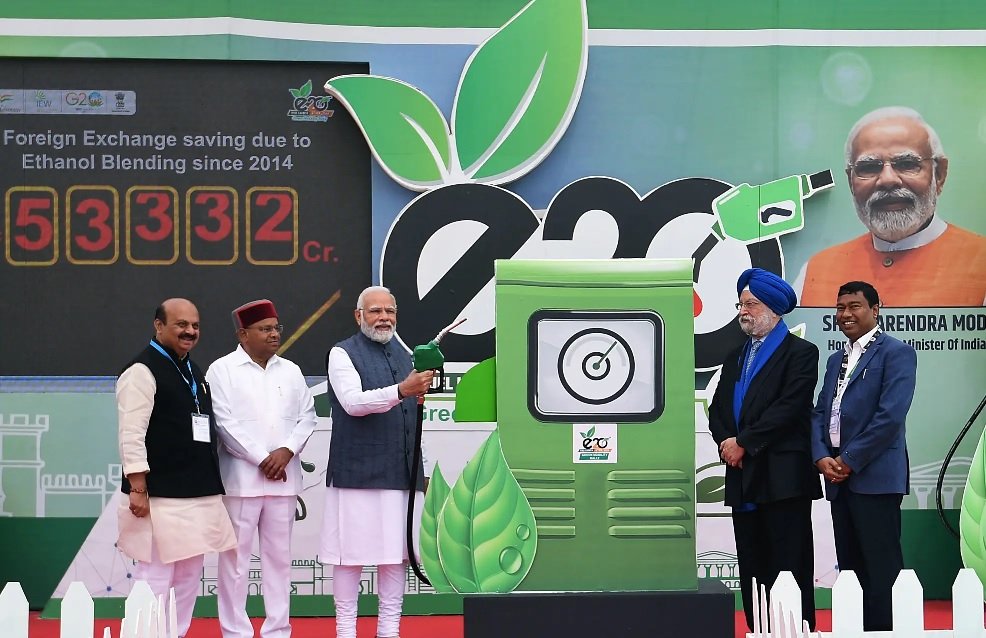
According to data from the Ministry of Petroleum and Natural Gas, ethanol production capacity has increased from about 38 crore litres in 2013-14 to nearly 2,000 crore litres annually.
Government estimates also attribute several economic benefits to the programme, including foreign exchange savings exceeding ₹1.90 lakh crore, payments of more than ₹1.60 lakh crore to farmers, crude oil substitution of over 310 lakh metric tonnes, and a reduction of approximately 930 lakh metric tonnes of carbon dioxide emissions since 2014-15.
Officials argue that ethanol blending strengthens India’s energy security by reducing reliance on imported oil while creating an additional market for sugarcane and grain producers.
Debate Over Ethanol Continues
The minister’s remarks come amid continuing debate over the real-world impact of higher ethanol blends on vehicle performance.
Automotive experts generally agree that ethanol contains less energy per litre than conventional petrol, meaning some reduction in mileage is expected. However, manufacturers say newer vehicles certified for E20 fuel are specifically engineered to operate safely with higher ethanol blends.
SIAM and the Automotive Research Association of India have worked with the government on compatibility testing before the nationwide rollout of E20 fuel.
Internationally, India’s policy is not unusual. The United States widely uses E10 fuel and has expanded the use of E15 in several states, while millions of flex-fuel vehicles there can operate on blends as high as E85. Brazil, often cited as the global benchmark for ethanol adoption, mandates approximately 27 per cent ethanol blending and also operates a large fleet of vehicles capable of running on 100 per cent ethanol.
One point not addressed during the minister’s remarks is that racing vehicles using ethanol typically operate with engines specifically designed and tuned for high-performance fuels. That differs significantly from conventional passenger vehicles, although modern E20-compatible engines are engineered to handle higher ethanol blends without major modifications.
The government has consistently maintained that the country’s ethanol policy is intended to complement, rather than replace, other transport technologies.
“There is enough space for E-vehicles, Bio-Fuel Mixed Vehicles etc“, Puri said, reiterating that any future move beyond the current E20 blend would only happen after further technical evaluation.
For now, the government’s message is clear: ethanol will remain a central part of India’s long-term energy strategy, even as questions over mileage, consumer acceptance and fuel pricing continue to shape the public debate.
For more updates follow: First Report News