
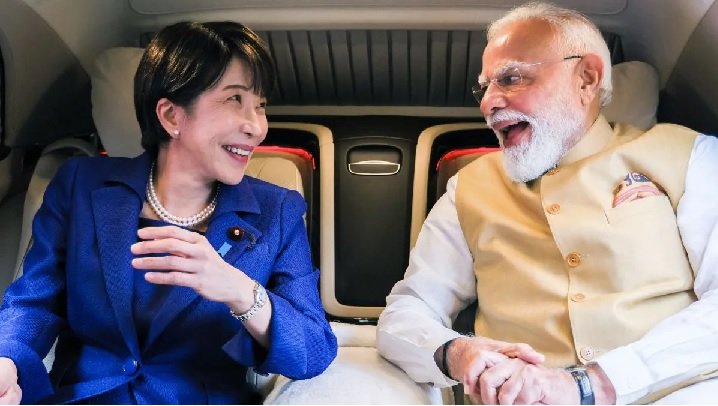
Prime Minister Narendra Modi opened his joint press statement with an unexpected greeting on Thursday, referring to Japanese Prime Minister Sanae Takaichi as his “meri chhoti behen” or “my younger sister“. The remark, made during the 16th India-Japan Annual Summit at Hyderabad House in New Delhi, quickly became one of the day’s biggest talking points, but officials later indicated it reflected a private understanding between the two leaders rather than an off-the-cuff comment.
According to people familiar with the discussions, Takaichi told Modi during a restricted meeting that she had always regarded the late Shinzo Abe as an elder brother. Abe, who was assassinated in Nara on July 8, 2022, shared a close relationship with Modi and played a major role in transforming India-Japan ties. Officials said Modi responded by embracing a similar sibling bond, a sentiment both leaders later acknowledged publicly.
What’s happening around the world: Russia Kyiv Strike 2026: 27 Killed in Deadliest Russian Attack
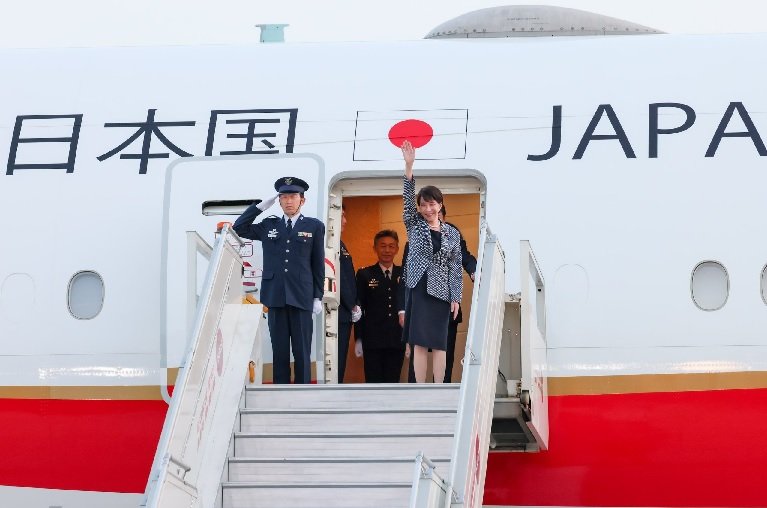
Takaichi confirmed the understanding during the joint press interaction. “We confirmed that we are on the same page to develop this relationship as brother and sister“, she said through an interpreter. Modi, meanwhile, described her as Japan’s first woman prime minister and praised her leadership while welcoming her on her first official visit to India.
The symbolism unfolded alongside substantial policy announcements. India and Japan signed agreements covering artificial intelligence, critical minerals, energy security and defence cooperation while launching work on a joint economic security roadmap. The summit also reinforced efforts to strengthen supply-chain resilience and technological collaboration between the two countries.
Economic cooperation featured prominently. Japan reaffirmed plans to invest more than ¥10 trillion, or over $61 billion, in India during the coming decade, while fresh commitments exceeding $10 billion were announced during the summit. Bilateral trade reached $27.5 billion in FY2025-26, and roughly 1,400 Japanese companies currently operate in India, underlining the scale of the economic partnership.
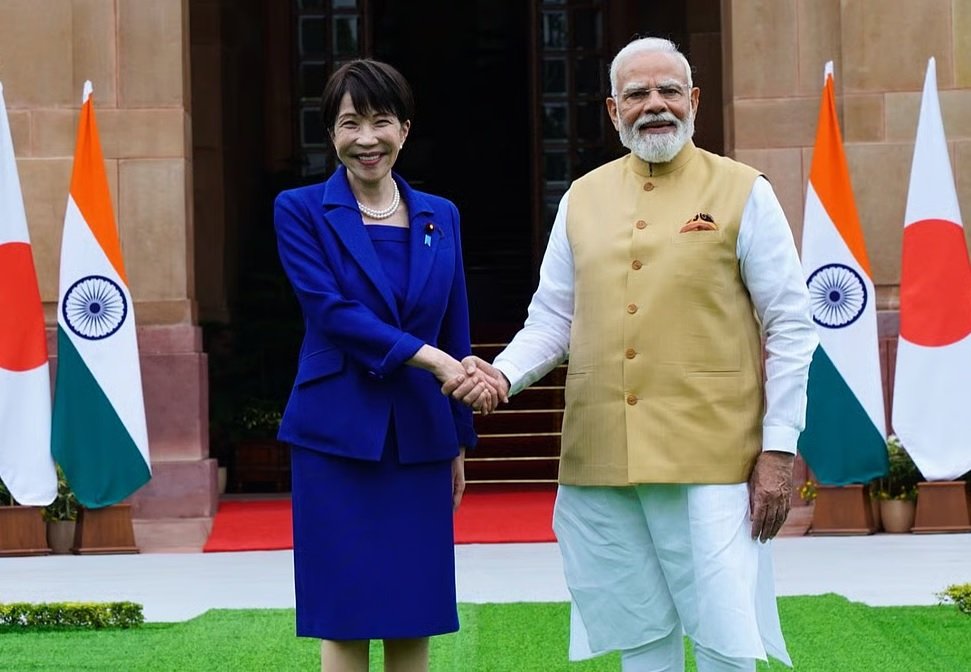
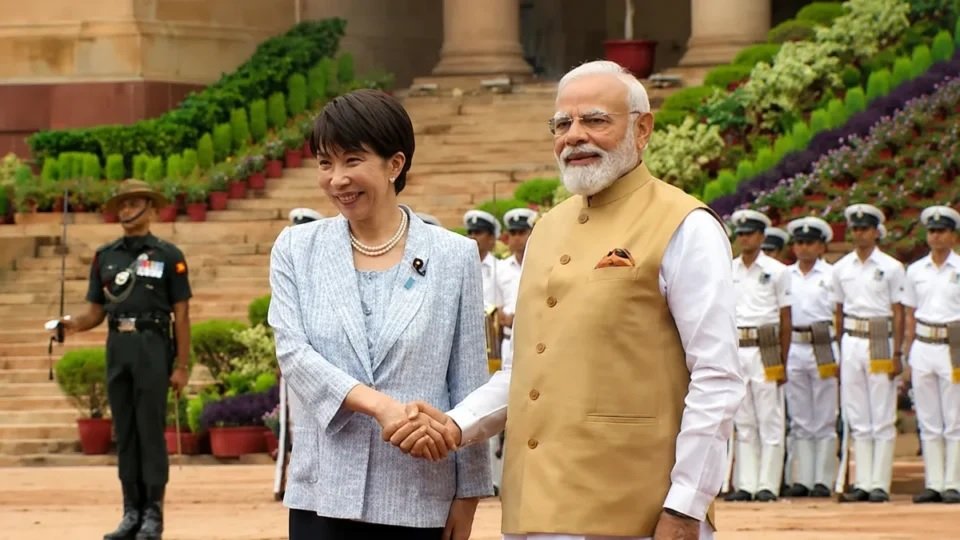
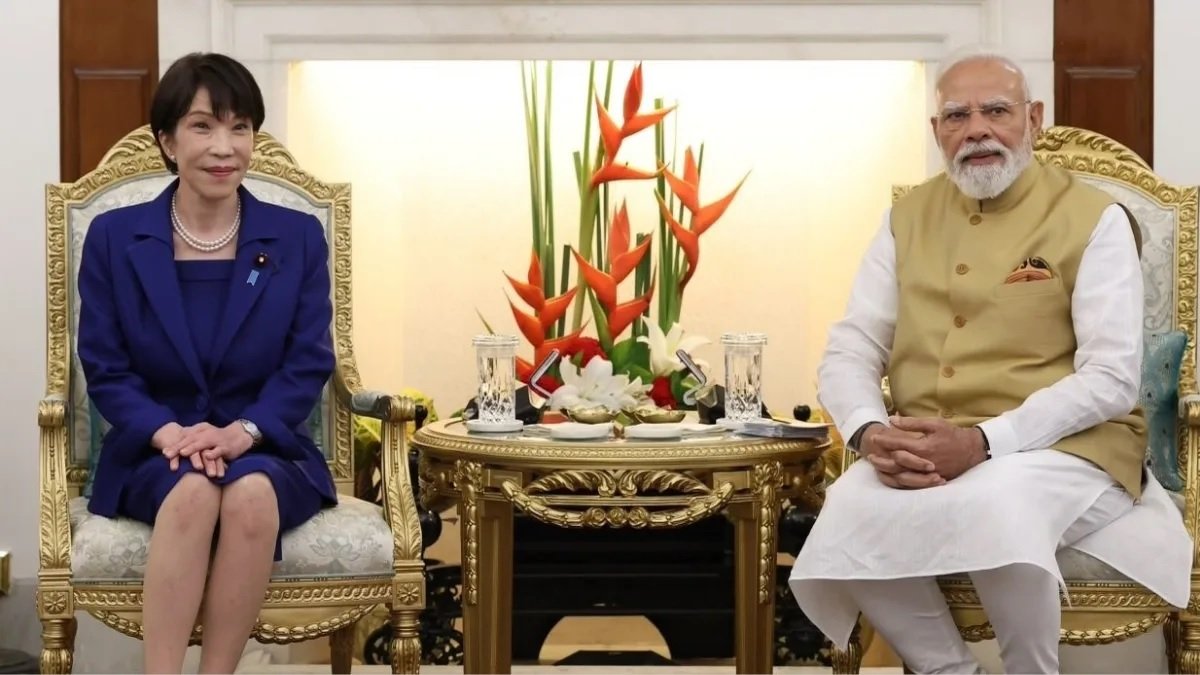
The relationship has been shaped for years by Shinzo Abe, who expanded cooperation on infrastructure, defense and the Indo-Pacific with Modi after India and Japan elevated ties to a Special Strategic and Global Partnership in 2014. Modi travelled to Tokyo for Abe’s state funeral in September 2022, describing him as a trusted friend and one of India’s strongest international partners.
The Ministry of External Affairs said before the summit that the relationship is built on trust, shared values and strategic convergence. While the personal exchange between Modi and Takaichi dominated headlines, much of the summit focused on long-term strategic cooperation, investment, technology and regional security. The account of the private conversation, however, has not been supported by an official transcript, leaving its finer details dependent on officials familiar with the closed-door meeting rather than a publicly released record.
For more updates follow: First Report News