
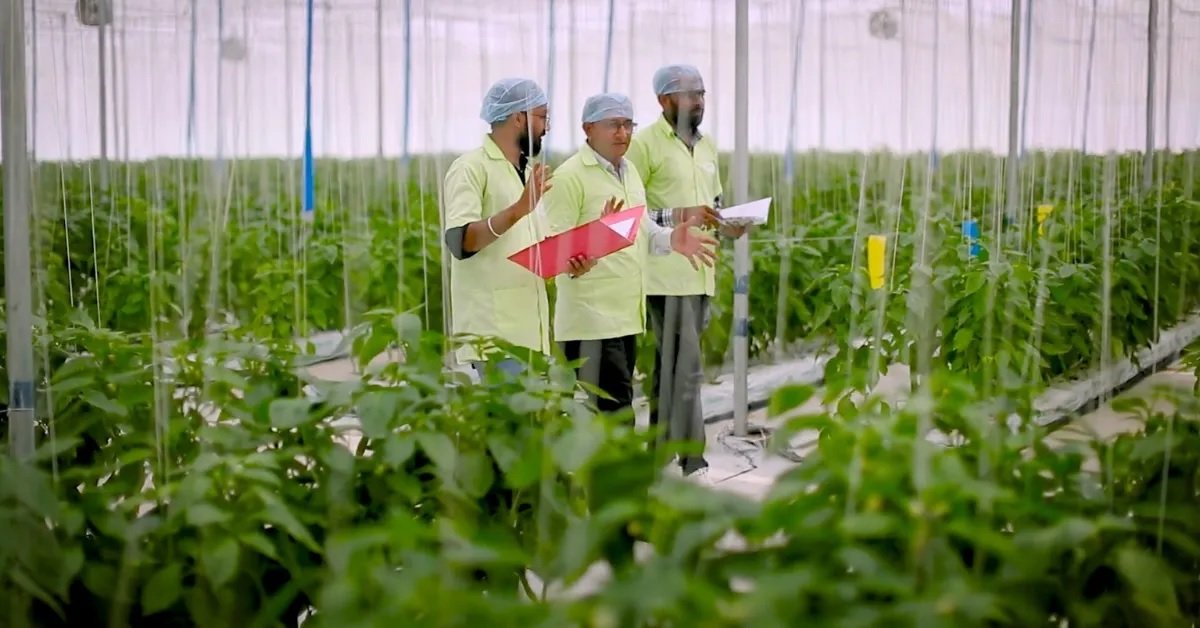
“Brio Hydroponics, a Gujarat-based agritech startup, says its hydroponic farming systems can reduce water consumption by up to 90% while increasing crop yields compared to conventional agriculture.”
Rows of cucumber vines stretch beneath a climate-controlled structure in Gujarat, their growth monitored by sensors instead of the uncertainties that usually dictate a farming season. Water drips through a tightly controlled system. Nutrients are delivered with precision. Outside, farmers across parts of India continue to grapple with erratic rainfall, rising temperatures and shrinking water resources.
At the centre of this experiment is Brio Hydroponics, a Gujarat-based agritech company founded by Pravin Patel in 2014. The company claims its hydroponic systems can produce five to ten times more yield per acre while using up to 90% less water than conventional farming methods.
Those numbers are ambitious. They are also driving a larger push that goes beyond greenhouse vegetables and into a broader attempt to make agriculture more predictable.
For 37-year-old farmer Yash Vora, predictability is the selling point.
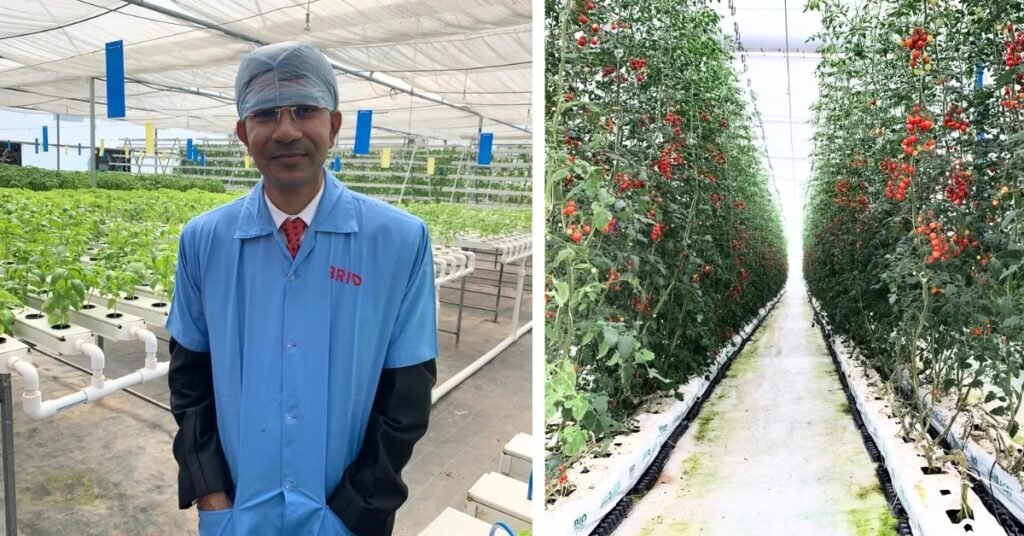
“In Gujarat, water is always a major concern, so hydroponics felt like the right solution for the future”, Vora said.
He now grows vine crops including cucumbers, tomatoes and coloured capsicums inside a controlled environment. Unlike traditional farming, where rainfall patterns and weather shifts can dramatically alter yields, hydroponic systems allow farmers to regulate growing conditions throughout the production cycle.
“With my hydroponic farm, I can grow vine crops like tomatoes, mainly cucumbers, and red and yellow capsicums in a way that is efficient, consistent, and commercially viable”, Vora said.
What’s happening around the world: Lucknow Fire: 15 Dead in Illegal Building
A Farmer’s Son Builds a Business Around Predictability
Long before Brio Hydroponics was established, Patel had already spent years studying the challenges faced by farmers.
A commerce graduate and the son of a farmer, Patel says the idea emerged after repeatedly witnessing how weather disruptions and resource shortages affected farm incomes.
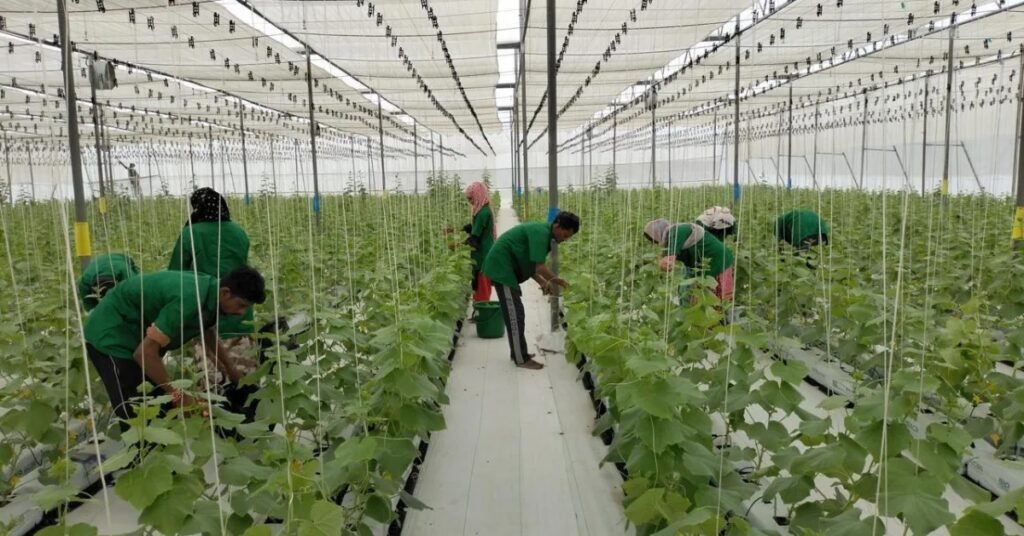
“After seeing multiple challenges in agriculture, I realised that soil-less farming could be a great opportunity for India”, Patel said. “We could address some of the biggest problems farmers face and make a meaningful contribution to agriculture”. The lack of predictability became a central theme in his approach.
“In traditional agriculture, there is no forecast for production”, Patel said. “Here, we can forecast and plan. We can produce according to demand and supply in a much better way”.
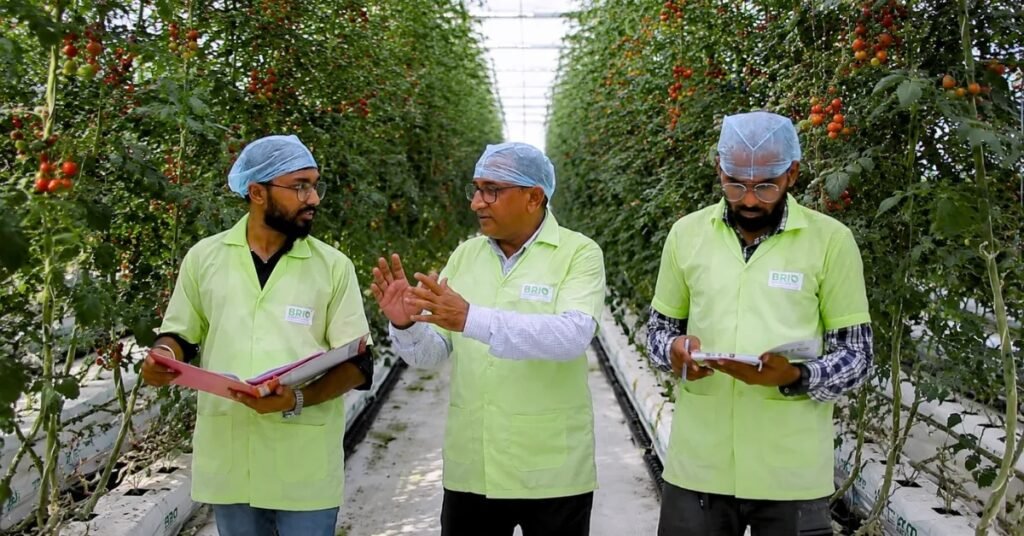
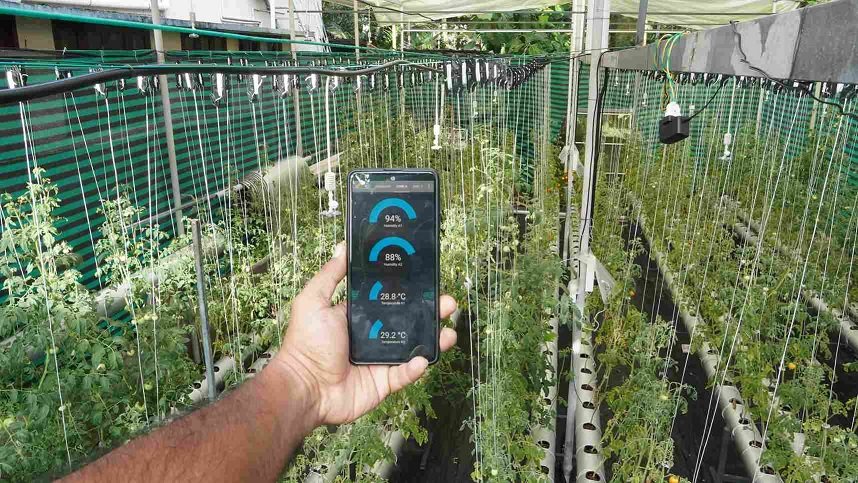
That philosophy eventually became the foundation of Brio Hydroponics, which develops climate-controlled farming systems designed for Indian conditions. The company combines hydroponics with Controlled Environment Agriculture, or CEA, using sensors and IoT-enabled technologies to regulate irrigation, nutrient delivery, humidity, temperature and crop health.
According to Patel, the first objective is protecting crops from external disruptions. “We create a controlled structure for agriculture”, he said.
“There are multiple layers that protect crops from insects, excessive rainfall, and temperature fluctuations. Through fogging systems, we control humidity and temperature, while rainwater harvesting helps conserve resources”.
The farms also use automated fertigation systems.
“We irrigate crops multiple times a day based on their exact requirements”, Patel said. “The system controls pH, nutrient levels, and water delivery. This reduces human error and allows us to farm scientifically”.
The Economics Behind the Technology
The company’s most widely promoted claim is water efficiency. According to Brio Hydroponics, farmers using its systems can save up to 90% more water compared with conventional farming while producing five to ten times more output per acre.
The company says it has trained more than 16,000 participants through online, offline, practical and internship-based programmes. It also claims to have supported more than 150 hydroponic projects across India and overseas, including deployments in Gujarat, Maharashtra, Assam, Rajasthan, Tamil Nadu, Singapore and the Maldives.
Scaling that model, however, requires substantial investment. Patel estimates that setting up a pilot hydroponic farm costs between ₹50 lakh and ₹90 lakh per acre, depending on infrastructure and automation levels.
As operations expand, he says those costs can fall to approximately ₹25 lakh to ₹40 lakh per acre.
The potential returns, according to company estimates, can reach ₹60 lakh to ₹80 lakh annually per acre under optimal conditions. Brio says the infrastructure is designed to last between 15 and 20 years with regular maintenance.
Those figures help explain why hydroponics is attracting attention as India searches for ways to improve agricultural productivity while conserving water. They also underline one of the industry’s biggest challenges: the technology remains capital intensive, placing it beyond the immediate reach of many small farmers without financing support.
Patel argues that the goal extends beyond introducing new equipment.
“It was about creating a system-driven way of farming”, he said. “When farmers can plan production and reduce uncertainty, they can improve their economic viability and build a sustainable future”.
From Assam to Gujarat, Farmers Bet on Controlled Agriculture
The company points to experiences from multiple states as evidence that hydroponics can work outside traditional agricultural hubs. For 36-year-old Mehul Shah from Assam, the attraction was certainty.
“Before hydroponics, farming in Assam meant living with uncertainty, too much rain, too little control, and very little consistency”, Shah said.
He now grows cherry tomatoes, coloured capsicums and cucumbers using hydroponic systems.
“Today, with my hydroponic farm, I can grow cherry tomatoes, coloured capsicums, and cucumbers with far better quality and predictable harvests”, he said.
The change, he says, is visible long before harvest.
Today he knows what he expects to produce, when crops will be ready, and how market demand may affect prices. That level of planning is rare in conventional farming, where a delayed monsoon, pest attack or extreme weather event can disrupt an entire season.
Brio is now attempting to scale that concept further.
In Talod, Gujarat, the company is developing a 100-acre hydroponic project that Patel describes as one of the largest initiatives of its kind in the country. The project is intended to create cluster-based agricultural ecosystems focused on employment generation and increased food production.
Patel believes the future of agriculture will increasingly depend on precision systems capable of operating under climate stress.
“Healthy, hygienic and chemical-free food will become increasingly important”, he said. “Agriculture must become tech-driven. We have to move towards becoming system operators rather than relying entirely on uncertainty”.
For farmers like Vora and Shah, that transition is already underway. Their crops continue to grow inside controlled structures where weather is no longer the primary decision-maker. The larger test now is whether hydroponics can move beyond specialised projects and become financially accessible at a scale capable of reshaping Indian agriculture itself.
For more updates follow: First Report News