
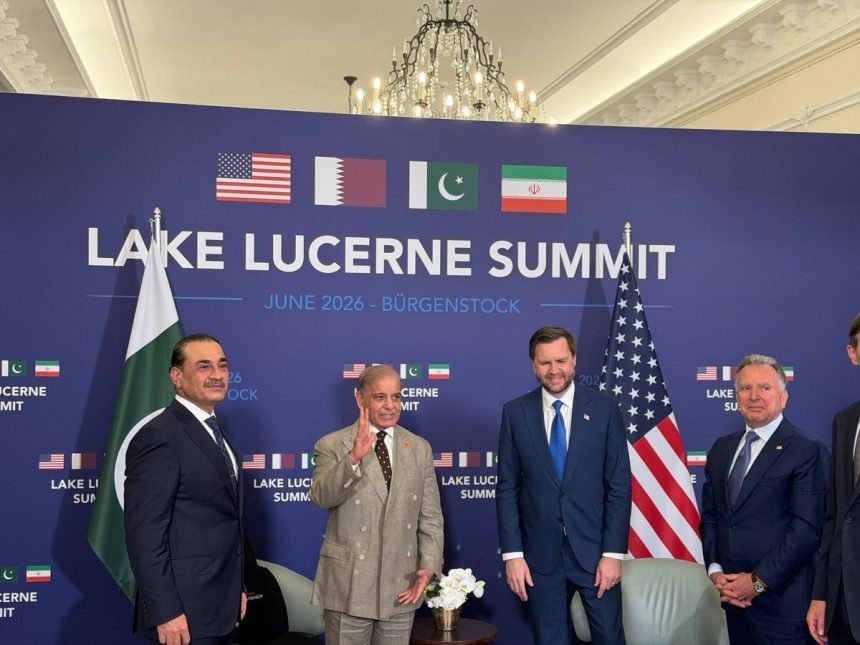
BÜRGENSTOCK, Switzerland — After a tense walkout, public threats, and hours of overnight negotiations, the United States and Iran emerged from their first high-level talks with a framework that could reshape diplomacy in the Middle East over the next two months.
A joint statement released following the Lake Lucerne Summit announced the creation of a High-Level Committee, a 60-day roadmap toward a final agreement, and new communication mechanisms aimed at preventing incidents in the Strait of Hormuz, one of the world’s most important energy chokepoints.
The negotiations nearly collapsed before they began.
What’s happening around the world: International Yoga Day 2026 Draws Thousands Across India as Modi Leads Kolkata Event
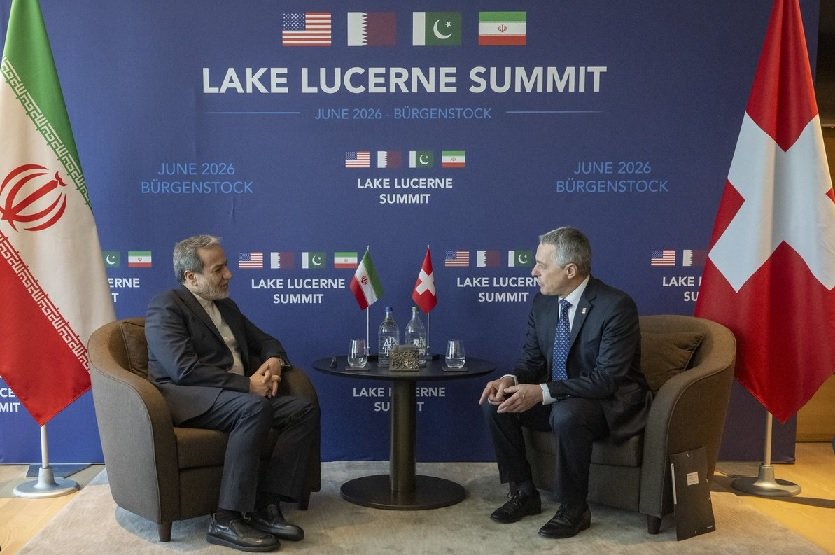
Iranian representatives temporarily walked out of face-to-face discussions in Bürgenstock after US President Donald Trump issued a series of public warnings directed at Tehran. According to reporting cited in the talks, Trump wrote on Truth Social: “Iran must immediately stop their highly paid PROXIES in Lebanon from causing trouble. If they don’t, we’ll hit Iran very hard again, just like we did last week, only harder!!!“
The dispute escalated further during a Fox News interview in which Trump said, “We may take over the strait, if we have to. If they don’t make a deal, we’ll collect tolls“.
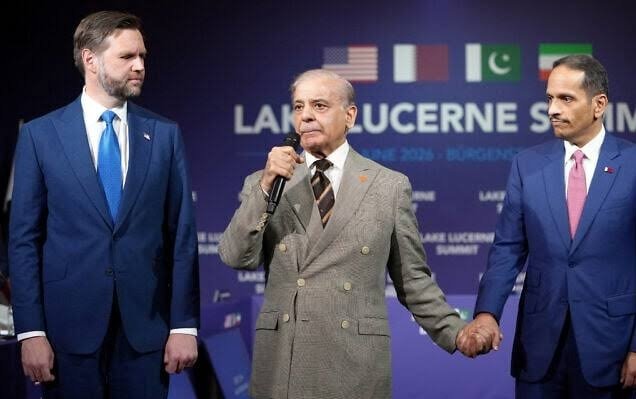
Iranian state media later described the negotiations as entering a “difficult phase” following what it called an insulting message from the US president. Despite the breakdown, mediators from Qatar and Pakistan intervened and persuaded both sides to continue discussions.
A 60-Day Clock Starts
The most significant outcome from the Switzerland summit was not a peace agreement but the construction of a negotiating architecture designed to keep talks alive.
According to the joint statement issued by Qatar and Pakistan, Washington and Tehran agreed to establish a High-Level Committee that will oversee mediation efforts and supervise working groups focused on sanctions, nuclear issues, dispute resolution, and implementation mechanisms.
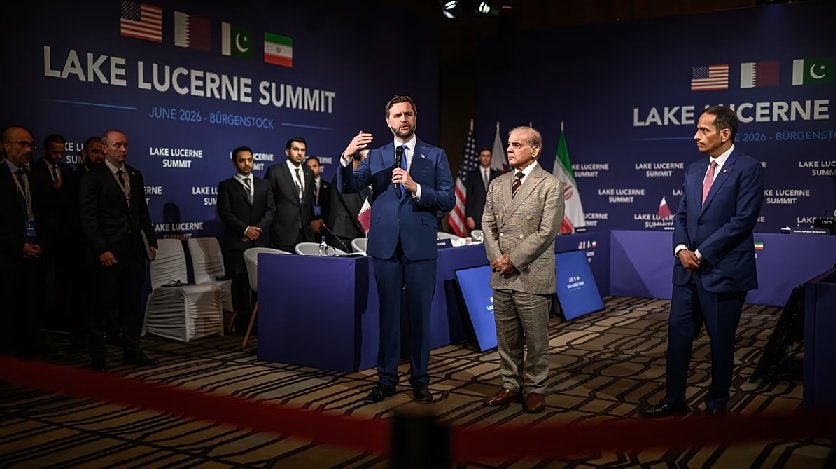
The parties also accepted a roadmap aimed at reaching a final agreement within 60 days.
Technical-level negotiations are expected to continue throughout the week, with chief negotiators reporting regularly to the newly created committee.
Another notable development involved the Strait of Hormuz. The United States and Iran reportedly agreed to establish a direct communication line intended to prevent misunderstandings and ensure safe passage for commercial vessels moving through the strategic waterway.
The Strait of Hormuz carries roughly one-fifth of global oil shipments and around 20 percent of worldwide liquefied natural gas trade. Any disruption in the narrow corridor can trigger immediate volatility in international energy markets.
Lebanon Becomes the First Test
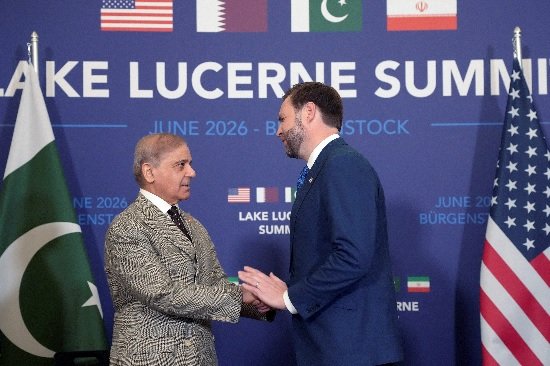
Iranian Foreign Minister Seyed Abbas Araghchi portrayed the talks as a diplomatic success and publicly praised both Pakistani and Qatari mediators.
“Tireless Pakistani and Qatari mediation has delivered major progress to end Lebanon War”, Araghchi wrote on X.
He claimed the process had already resulted in waived restrictions on oil and petrochemical exports, the lifting of a blockade, the release of some frozen assets, and the launch of a reconstruction and development plan.
Independent confirmation of those claims was not immediately available from US authorities.
The summit also produced an agreement to establish a de-confliction cell involving United States, Iran, and Lebanon. Facilitated by Qatar and Pakistan, the mechanism is intended to oversee adherence to arrangements related to military operations and prevent renewed escalation.
Araghchi described the Lebanon de-confliction cell as the “first real test” of the broader diplomatic effort.
Lebanon has remained a major flashpoint since the conflict intensified earlier this year. Iran-backed Hezbollah launched rocket attacks against Israel following strikes that Tehran said killed Iran’s supreme leader, drawing multiple regional actors closer to direct confrontation.
Big Questions Still Unanswered
While officials described the atmosphere as “positive and constructive“, many critical details remain undisclosed.
The full text of the memorandum referenced during the negotiations has not been released publicly. The agreement does not specify what sanctions could be eased, how much frozen Iranian money may be released, or what verification mechanisms would govern compliance.
There has also been no public explanation of how the proposed Strait of Hormuz communication channel would operate or whether regional powers such as Saudi Arabia, the United Arab Emirates, Bahrain, or Israel were consulted during the process.
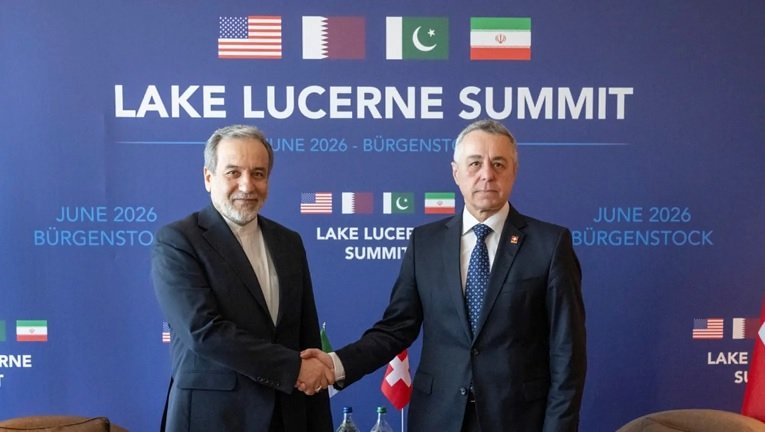
The US delegation was led by Vice President JD Vance and included Jared Kushner and Steve Witkoff. Iran’s negotiating team was headed by Parliament Speaker Mohammad Bagher Qalibaf and Foreign Minister Abbas Araghchi.
For now, the summit has produced structures, deadlines, and promises rather than a final settlement. The next 60 days will determine whether the Switzerland talks become the foundation of a wider regional agreement or simply another chapter in the long history of failed US-Iran diplomacy.
For more updates follow: First Report News