

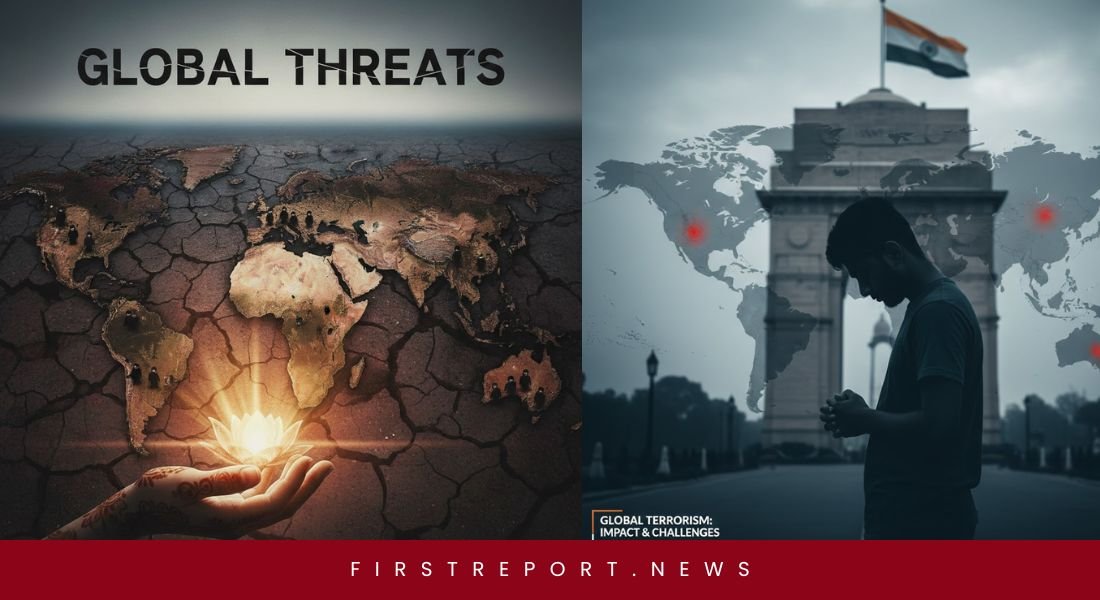
The word “Terrorist” as soon as heard instantly makes one feel angry. It brings back painful memories of past attacks and bomb blasts. This word reminds us of the innocent lives that were lost because of them only. Such thoughts naturally fill the mind with sadness and fear. Terrorism still remains a grave challenge for the world. While some regions show progress, others face rising violence. International agencies monitor these shifts to protect civilians and maintain peace. More than 60 designated terrorist groups operate in or affect over 40 countries, impacting the lives of millions of people every year. Civilians account for a disproportionately large number of deaths in terrorist incidents worldwide.
Global Statistics
- In 2024, terrorism resulted in approximately 7,555 deaths globally.
- The number of countries that experienced at least one attack increased from 58 to 66.
- The Sahel region of Africa is now responsible for more than 50% of all terrorist deaths worldwide.
- In Western countries, 93% of deadly attacks in the last five years were carried out by individuals acting alone.
- 87% of all terrorism-related deaths occur in just ten countries.
What Are Terrorist Groups?
Terrorist groups are organized teams of people whose purpose is to use violence to spread fear to push political, religious, or ideological goals. They do not follow the rules of normal war. Instead, they target innocent people and public places to force governments or societies to change.
These groups have a clear plan. They want to achieve political, religious, or social goals. Since they are often smaller than a country’s army, they use “hit-and-run” tactics. Their main weapon is not just a bomb or a gun, but the psychological fear those weapons create.
Types of Terrorism
- Domestic Terrorism
- International Terrorism
Major Terrorist Groups in the World
| Terrorist Group | Region of Origin | Ideology | Areas of Activity |
| ISIS | Middle East | Extremist Islamist | Iraq, Syria, Africa |
| Al-Qaeda | Afghanistan | Extremist Islamist | Global networks |
| Taliban | Afghanistan | Religious fundamentalism | Afghanistan |
| Boko Haram | Nigeria | Extremist Islamist | Nigeria, Chad Basin |
| Lashkar-e-Taiba | Pakistan | Extremist Islamist | India, South Asia |
| Jaish-e-Mohammed | Pakistan | Extremist Islamist | India, Kashmir |
| Al-Shabaab | Somalia | Extremist Islamist | Somalia, East Africa |
| Abu Sayyaf | Philippines | Extremist Islamist | Southeast Asia |

Source: Global Terrorism Database (GTD) | START.umd.edu
Main Characteristics of Terrorist Groups
| Feature | What it Means |
| Political Goals | They act to change laws, borders, or religious rules, not just for money. |
| Targeting Civilians | They attack ordinary people in markets or schools to cause maximum panic. |
| Secret Structure | Members work in small, hidden teams so the police cannot catch everyone at once. |
| Spreading Fear | Their main goal is to make people feel unsafe everywhere they go. |
| Asymmetric Tactics | They use “hit-and-run” attacks or hidden bombs because they are smaller than the army. |
| Online Influence | They use social media and the internet to find and recruit new members. |
| Illegal Money | They get funds through smuggling, kidnapping, or “taxes” in areas they control. |

Source: Terrorist Groups | National Counterterrorism Center
Terrorism does not just cause immediate physical damage. It leaves a long-lasting mark on the world’s economy, society, and mental health. In 2025, the world is facing a challenging security situation. While deaths in some countries, such as Iraq, have decreased by 99% from their peak, new hotspots in Africa and South Asia are a cause for concern. Global cooperation and conflict resolution are the only ways to reduce these figures.