
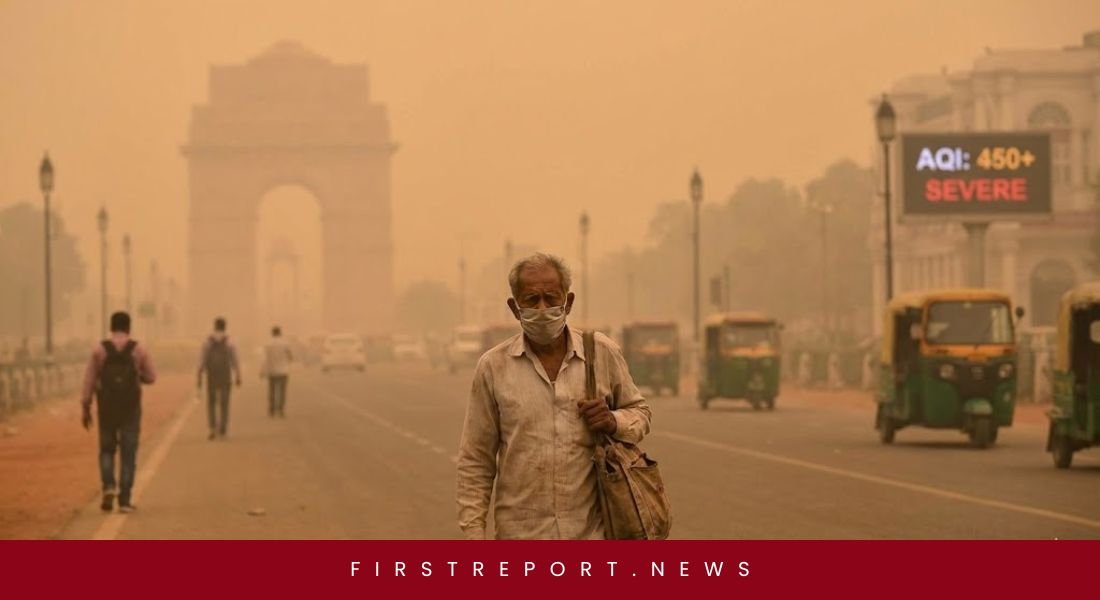
23 Days, Delhi still breathes toxic air. The city wakes up with a thick blanket of smog each morning. Yet there is still no national emergency announced by the government. Every day, hospitals report thousands of patients suffering from respiratory problems, and still increasing. Schools were closed due to the struggle to protect children. Delhiites are waiting for the crisis to be normal and continue their life normally. But the question is simple and serious – Why is the Govt Ignoring the Warning Signs? Despite the pollution persisting for so long?
Shocking Stats of Delhi Pollution
- Delhi recorded 23 continuous days of “severe” or “very poor” AQI this season.
- AQI crossed 450 in many areas.
- PM2.5 levels were 8–10 times higher than safe limits.
- Schools were closed for several days, flights were diverted, and hospitals saw an increase in respiratory illnesses.
- Doctors observed a 25–30% increase in pollution-related illnesses.
- More than 20 million people in NCR breathe toxic air daily.
Why No Delhi Air Pollution Emergency
23 days of breathing toxic air, no national emergency has been declared. The government does short-term efforts, but the situation needs long-term solutions. Political blame, poor accountability, and weak public pressure allow this crisis to recur every winter. Millions breathe polluted air, yet there is no appropriate steps taken for this.
Government Actions: Too Little, Too Late
| Action | Reality |
| GRAP restrictions | Works for a few days only |
| Odd-even plan | Inconsistent results |
| Smog towers | Low impact |
| Crackdown on violators | Poor enforcement |
| School closures | Punishes students, solves nothing |

Also Read: Pollution – Pros and Cons
Why Delhi Faces This Crisis Every Year
Stubble Burning Continues: Punjab and Haryana’s farmers’ stubble fires in their farms remain a major cause of seasonal pollution. Gusts of wind carry the smoke to Delhi, adding heavy particulate matter to the air. The government imposes temporary moratoriums and fines, but these don’t seem to be working. Farmers have no other recourse, so the problem continues year after year without any real change. And Delhi also breathes the same every year.
Increase in Vehicle Emissions: The number of vehicles on Delhi’s roads is increasing day by day, with 1,200-1,500 new registrations per day. Public transport expansion is slow, forcing people to rely on personal cars and two-wheelers. This leads to an increase in traffic congestion and as well as increased emissions. With little enforcement and few long-term solutions, air quality deteriorates every winter.
High Construction Dust: Construction projects continue throughout the city whole year. And many sites from them lack basic dust control. There are no rules set for it as well. Loose soil, debris, and the constant movement of trucks spread dust in the air. This is also a major source of contribution of pollution.
Weather Conditions Trap Pollutants: Weather also plays an important role in pollution. The winter season creates perfect conditions for trapping pollution particles in the air. Low wind speeds, sharp temperature drops, and frequent temperature changes trap pollutants near the ground. A city like Delhi is very congested, so these particles are not spreading in a wide area. Each and every emission remains trapped for days, worsening the crisis with each changing season.
Authorities Ignoring Warning Signals
- The governments of Delhi and the central government have been blaming neighboring states for a long time instead of addressing or finding solutions to the problem.
- There is no long-term solution, and the budget for clean air is limited.
- Delhi pollution has become a seasonal problem now that will be less effective after winter.
- There is no public pressure on the government to take strict action against pollution.

Impact on Daily Life
| Impact | Description |
| Burning eyes | Constant irritation due to polluted air and suspended particles. |
| Breathing problems | Difficulty in normal breathing, especially for sensitive groups. |
| Persistent cough | Ongoing throat discomfort caused by polluted air. |
| Low visibility | Thick smog reduces clarity on roads and in public spaces. |
| Stress and anxiety | Daily worry about health and unsafe air conditions. |
| Rising medical costs | Higher spending on treatment, medicines, and protective care. |
Also Read: 7 Tips for Staying Healthy During the Festive Season Peak Pollution Hours
Why Should Delhi Air Pollution Be Declared a National Emergency?
A national emergency is necessary because:
- Millions of people in Delhi and nearby states are affected due to this pollution.
- Schools are often closed, which affects children’s education.
- Hospitals are under tremendous pressure.
- The loss of productivity increases economic losses.
- Toxic air causes premature deaths.
What India Needs Now
| Action Needed | Description |
| Strict construction checks | Continuous monitoring to control dust and enforce rules. |
| Industrial pollution control | Round-the-clock checks on factories to limit emissions. |
| Vehicle restrictions | Emergency steps to cut traffic during severe pollution days. |
| Public transport expansion | Wider, cleaner transport options to reduce private vehicle use. |
| Renewable energy investment | Higher funding for cleaner energy sources across sectors. |
| Clear targets for states | Defined goals and timelines for pollution control. |
| Large-scale tree plantation | More green cover to help absorb pollutants. |
| Better waste management | Proper disposal systems to prevent open burning. |
| Support for farmers | Practical alternatives and incentives to reduce stubble burning. |

Conclusion – Delhi Air Pollution Emergency
Delhi’s pollution crosses its limit, but government action is still awaited. Twenty-three days of toxic air reveal just how serious the situation has become. The warnings are clear, and the health risks are real. India now needs to make sustained and concerted efforts to prevent a repeat of this trend next winter.