
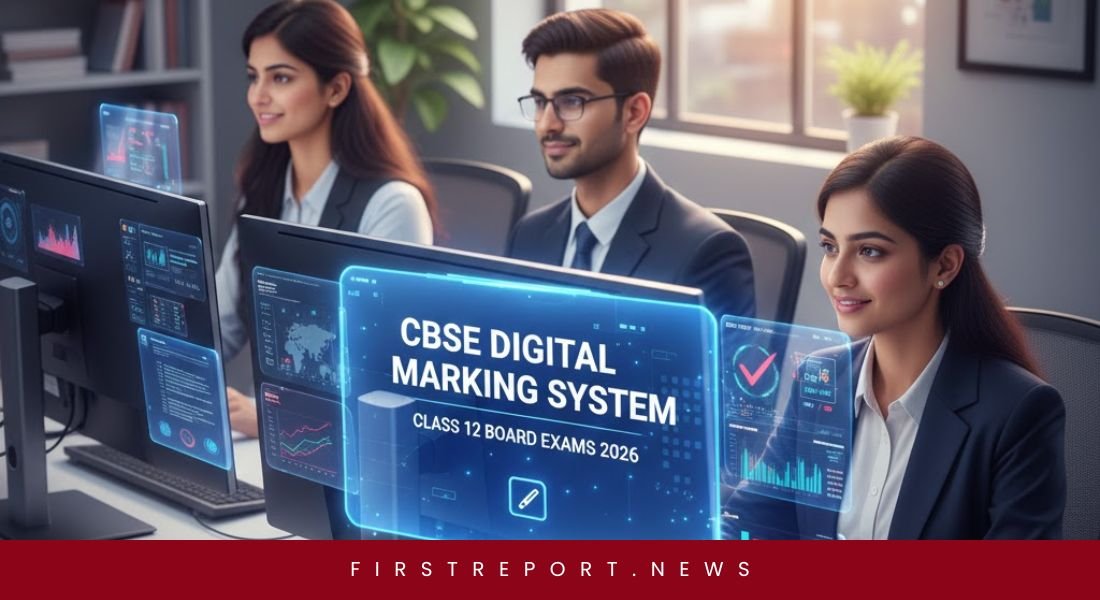
The Central Board of Secondary Education (CBSE) has announced a major change for the class 12 board exams 2026. Starting February 17, 2026, the board will use the On-Screen Marking (OSM) system to evaluate Class 12 answer sheets. This digital transition covers nearly 46 lakh students appearing for exams in India and 26 other countries. While Class 12 moves to digital mode, Class 10 evaluation will remain in physical mode for now. The scale of this digital shift is massive. Here are the core figures:
| Feature | Details |
| Total Students | Approximately 46 Lakh |
| Global Presence | India and 26 Foreign Countries |
| Exam Start Date | February 17, 2026 |
| System Name | On-Screen Marking (OSM) |
| Evaluation Level | Class 12 Senior Secondary |
Benefits of On-Screen Marking for CBSE Class 12 Board Exams
The new system offers several advantages for both teachers and students. First, it eliminates manual totalling errors. Second, it reduces the time spent on transporting physical answer books.
- Teacher Convenience: Teachers can evaluate papers from their own schools.
- Accuracy: Automated coordination reduces manual mistakes.
- Transparency: The system makes the assessment process faster and more reliable.
- Sustainability: Digital evaluation reduces the use of paper and transport fuel.
Infrastructure Requirements for Schools
CBSE has instructed schools to prepare their computer labs for this rollout. Schools must ensure the following technical standards:
- Windows 8 OS or higher with at least 4 GB RAM.
- A stable internet connection with a minimum speed of 2 Mbps.
- A Public Static IP for the computer lab.
- Uninterrupted power supply and updated Adobe Reader.
Also Read: Impact of Social Media on Youth
The board will conduct multiple dry runs and training sessions to help teachers adapt. This move aims to make the result declaration process quicker and more efficient.