
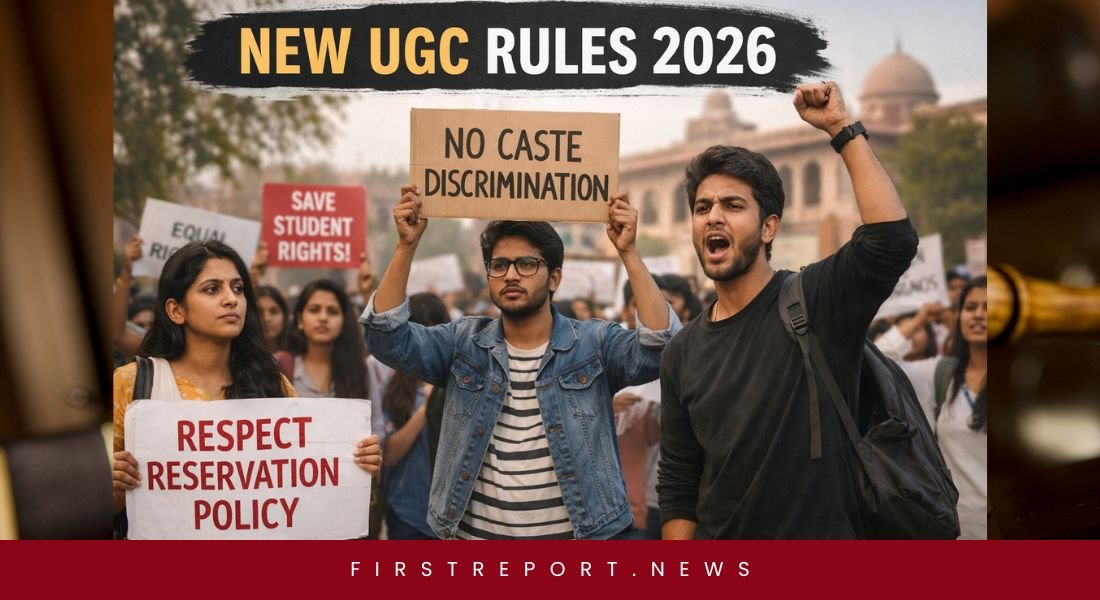
India has over 26 crore students enrolled in higher education, making policy changes in this sector deeply impactful. To stop discrimination in colleges and universities, the University Grants Commission (UGC) introduced new Equity Regulations in 2026. Although fairness and dignity are the main goals, the regulations have provoked strong reactions from teachers and students nationwide. Soon after the announcement, there were public discussions, debates, and protests. Concerns regarding how these regulations might impact caste identities, reservation policies, and campus dynamics were voiced by numerous students. The growing tension surrounding higher education reforms in India can be explained by knowing what the UGC Rules 2026 say and why students are protesting.
- One of the biggest higher education systems in the world is found in India.
- Millions of students from the SC, ST, and OBC communities are impacted by reservation policies.
- Courts have frequently connected education to the right to a dignified life.
- When significant changes are made to education policy, student protests frequently occur.
- Recent educational reforms continue to place a strong emphasis on equity and inclusion.
What Are the New UGC Rules 2026?
Preventing discrimination in higher education institutions is the goal of the UGC Equity Rules 2026. Every university and college is required by these regulations to establish an Equity Committee and an Equal Opportunity Centre. These organisations deal with complaints about discriminatory treatment on the basis of social background, gender, caste, religion, or disability.
In order to guarantee fair practices, the regulations also hold university administrators accountable. Institutions are required to regularly report compliance and run awareness campaigns. These regulations are mandatory and enforceable, in contrast to previous guidelines. The goal is to establish campuses where students are respected and feel safe. However, various student groups are concerned about the broad definition of discrimination.
Caste and Reservation Issues
In Indian education, reservations continue to be a delicate and significant topic. Many students worry that reservation policies may be indirectly impacted by the new equity regulations. Some organisations feel that by focusing on individual grievances rather than structural inequality, the regulations could undermine affirmative action.
Others are concerned that the new framework might limit or misunderstand conversations about caste discrimination. Caste-based disadvantage, according to students from marginalised communities, is systemic and requires strong institutional support in addition to grievance handling. The ambiguity surrounding the equity rules’ compatibility with current reservation laws is the root of these worries. Students, therefore, want unambiguous guarantees that constitutional reservation laws will be upheld.
Also Read: Children’s Education Allowance 2026
Why Are Students Protesting the UGC Rules 2026?

Fear and uncertainty were the main causes of student protests. Many students believe that there was little public consultation before the rules were implemented. Protesters contend that discussions with students and educators are necessary to address policies that impact equity and caste.
Misuse is another issue. Some students worry that ambiguous definitions could lead to selective targeting or stifle candid conversations about social injustice. Others think that rather than addressing actual discrimination, institutions might use the rules to stifle dissent.
Rather than being a rejection of equity per se, protests are a reflection of anxiety. Students want clear regulations that simultaneously safeguard academic freedom and marginalised groups.
Also Read: Co-Education- Pros and Cons
Concerns vs Intended Goals
| Student Concerns | Intended Goals |
| Impact on the reservation | Prevent discrimination |
| Misuse of complaints | Ensure accountability |
| Lack of clarity | Promote dignity |
| Limited consultation | Safer campuses |
| Control over dissent | Fair grievance system |
Also Read: Reservation System in India 2026
The goal of the New UGC Rules 2026 is to advance dignity and equity in higher education. However, nationwide student protests have been sparked by worries about academic freedom, caste, and reservations. The emotional and social significance of education policy in India is highlighted by these responses.
Transparency, communication, and clarity are essential going forward. When institutions, educators, and students work together, policies are most effective. Whether these regulations improve or worsen India’s higher education system will depend on how concerns are addressed without neglecting equity objectives.